



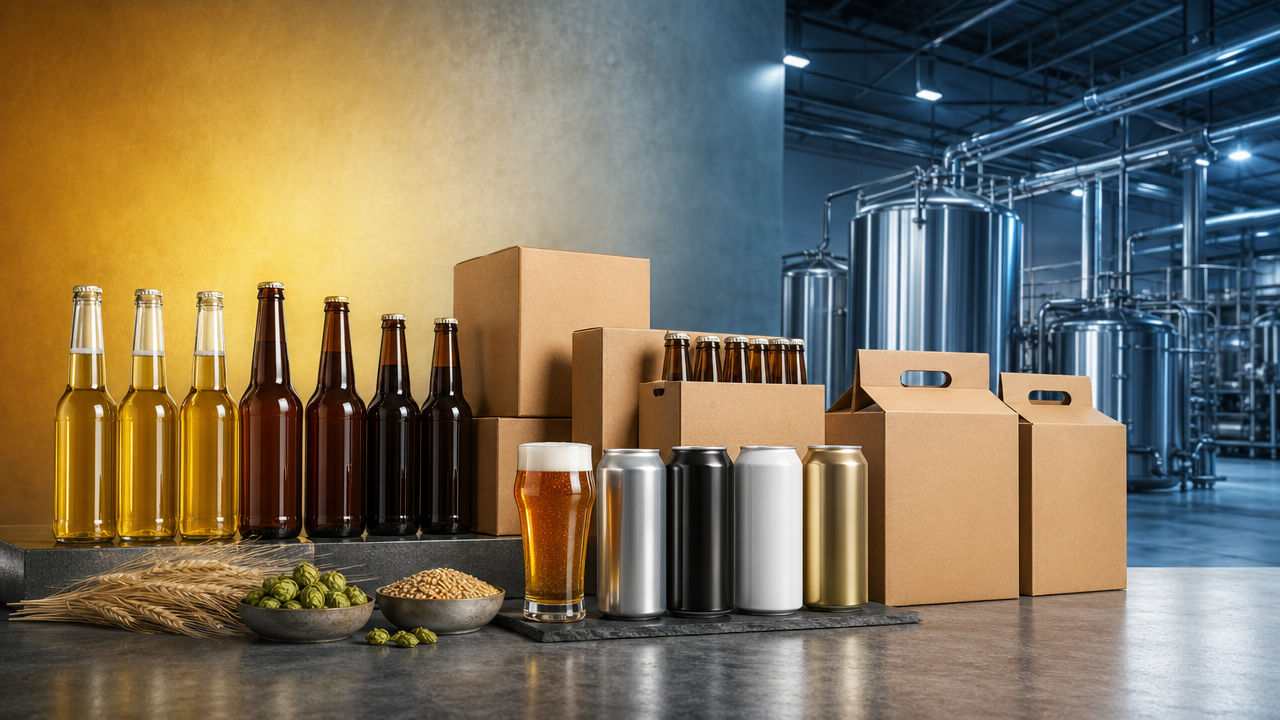
Choosing between contract brewing and beer OEM can shape your cost, speed to market and brand control. For importers, distributors and retail buyers looking for a Chinese beer factory or beer manufacturer China, understanding these two models is essential. This guide explains how contract brewing, private label beer production and custom beer manufacturing differ, and how to select the right bulk beer supplier or craft beer OEM China partner for scalable growth.
What do contract brewing and beer OEM actually mean in the beverage industry?
In practical beer sourcing, contract brewing usually means a brand owner works with an existing brewery to produce beer recipes under agreed capacity, process and quality terms. The brewery may contribute brewing expertise, raw material sourcing and packaging support, while the client focuses on branding, channel development and market positioning. This model is often used when a company wants faster market entry within 4–8 weeks rather than building its own brewing line.
Beer OEM, by contrast, is often more manufacturing-oriented. The buyer provides product requirements, branding direction, target market needs and packaging specifications, while the brewery handles production under the buyer’s label. In many export projects, beer OEM can also overlap with private label beer production and ODM services, especially when the factory offers formula adjustment, can or bottle selection, language-compliant labels and carton customization in 3 or more packaging formats.
For procurement teams, the difference is not just semantic. It affects recipe ownership, minimum order quantity, production flexibility, compliance workload and long-term margin structure. A restaurant group launching a house lager may value short lead time and stable taste. A distributor entering 2–3 regional markets may care more about private label exclusivity, shelf differentiation and repeat supply reliability from a beer manufacturer China partner.
Jinpai Beer operates across R&D, production and global distribution of craft beer, with products ranging from classic lager and German wheat to low-calorie and functional specialty beers. For buyers, this matters because one supplier that can support OEM/ODM, wholesale supply and custom development often reduces coordination across sampling, packaging, export documentation and replenishment cycles.
Why buyers often confuse the two models
The confusion comes from how breweries describe services. In some markets, contract brewing refers to recipe-based cooperative production. In others, it is used broadly for any outsourced beer manufacturing. Meanwhile, beer OEM may be understood as purely label customization, even though many factories also support formula tuning, alcohol content adjustment and market-specific packaging adaptation.
For accurate supplier evaluation, buyers should not rely on the label alone. Ask 5 core questions: who owns the formula, who controls ingredient substitution, what is the MOQ, how many packaging options are supported, and what is the standard lead time from sample approval to shipment. These answers reveal the real service model more clearly than sales terminology.
- Contract brewing is often stronger for recipe collaboration and brewing process involvement.
- Beer OEM is often stronger for branded packaging, repeat production and channel-ready export supply.
- Many Chinese beer factories can combine both, which is useful for importers testing 1–2 SKUs before scaling.
Which model gives better control over recipe, branding and speed to market?
If your top priority is building a differentiated beer identity, contract brewing may offer deeper participation in recipe development. You can discuss malt profile, bitterness range, target ABV, aroma style and drinking occasion in more detail. This is valuable for premium bar channels, seasonal launches and local-market craft positioning where sensory distinction matters more than simple packaging customization.
If your main objective is efficient commercialization, beer OEM often provides a clearer path. The brewery standardizes production steps, material planning and packaging execution, helping buyers move from concept to shipment in a more controlled workflow. For supermarket supply, chain retail and distributor replenishment, repeatability across 2–4 production batches is usually more important than fully bespoke brewing experimentation.
The table below compares contract brewing and beer OEM from a procurement decision perspective. It is especially useful for companies evaluating private label beer production, custom beer manufacturing and bulk beer supplier capabilities in China.
The decision is rarely about which model is universally better. It is about whether your business needs taste differentiation, packaging speed, low coordination cost or scalable replenishment. For many B2B buyers, a hybrid solution works best: start with OEM for faster launch, then expand into more customized contract brewing once market demand is validated over 1–2 selling seasons.
A practical decision rule for different buyer types
Procurement managers often prioritize cost visibility and supply continuity. Business owners may focus on brand identity and gross margin. Distributors care about SKU turnover, shelf appeal and exclusivity. End consumers, indirectly, influence repeat purchase through flavor consistency, calorie expectations and packaging convenience. That is why decision criteria should be segmented, not generalized.
Use contract brewing if you need:
- A more tailored formula with distinct bitterness, mouthfeel or aroma profile.
- A specialty product line for bars, taprooms or premium restaurant channels.
- A smaller portfolio with deeper brand storytelling rather than fast multi-SKU rollout.
Use beer OEM if you need:
- Quicker commercialization for 3–5 channel types such as supermarkets, convenience, bars and e-commerce.
- Repeat production of standard styles such as lager, wheat beer or fruit-flavored beer.
- Integrated support across artwork review, packaging sourcing and export-ready documentation.
How should importers and distributors compare cost, MOQ and operational risk?
Cost evaluation in beer outsourcing should never be reduced to unit price alone. A lower ex-works quotation can still lead to higher landed cost if the supplier has weak packaging coordination, unstable batch planning or limited export experience. Buyers should compare at least 6 dimensions: beer liquid price, packaging cost, MOQ, sample cycle, lead time and defect-response process.
Contract brewing can involve additional recipe trials, pilot batches or special ingredients, which may raise early-stage development cost. Beer OEM may reduce these variables when using proven base styles, but packaging customization can still change the cost structure significantly. Can size, bottle type, carton print complexity and market-specific label requirements all affect budget predictability across the first 30–90 days of launch preparation.
The cost and risk table below helps buyers compare sourcing models more realistically. It is intended for importers, private label beer buyers and wholesale channel operators evaluating a bulk beer supplier for stable growth.
A smart sourcing strategy is to evaluate total operating risk over the first 2–3 orders, not just first-order price. If a brewery can manage recipe standardization, packaging alignment and shipment coordination in one workflow, it often saves hidden costs in rework, delays and unsold stock. This is especially important when a distributor is launching multiple SKUs at once.
Where product positioning changes the economics
Not all beer products should follow the same model. A mainstream lager for chain retail may benefit from efficient beer OEM with stable packaging and replenishment rhythm. A better-for-you or niche concept may require more formula discussion before scale-up. For example, a buyer targeting calorie-conscious consumers may test a lighter-profile product such as Sugar-Free Low-Calorie Beer to assess demand before expanding into a broader private label line.
This is where supplier breadth becomes commercially useful. A brewery that can produce classic lager, German wheat, fruit-flavored beer and functional specialty beers allows distributors to balance fast-selling staples with higher-margin differentiated products. Instead of managing 3 separate factories, the buyer can often consolidate development, purchasing and replenishment under one coordinated manufacturing partner.
What should buyers check before choosing a Chinese beer factory or beer manufacturer China partner?
Supplier selection should begin with operational fit, not marketing claims. Ask whether the brewery supports OEM, ODM and wholesale simultaneously. Then examine whether it can handle your target product category, expected order rhythm and sales channel mix. A bar chain launching 1 seasonal SKU has different needs from a supermarket buyer managing 12-month replenishment and multilingual packaging review.
Buyers should also verify service depth across 4 stages: requirement confirmation, sample development, mass production and shipment coordination. In beer sourcing, problems often arise at the handoff points between these stages. If artwork confirmation, packaging procurement and production scheduling are fragmented, the chance of delay increases. Integrated project handling usually reduces communication loss and shortens execution cycles.
The checklist below is designed for purchasing managers, business owners and distributors comparing custom beer manufacturing options in China.
- Confirm product range. The supplier should match your market plan, whether you need lager, wheat beer, fruit beer, low-calorie options or functional specialty beers.
- Check development capability. Ask whether flavor adjustment, sweetness balance, aroma tuning and packaging format selection can be discussed before order confirmation.
- Review packaging support. Confirm bottle or can formats, secondary packaging, language adaptation and artwork review process.
- Ask for lead-time logic. Separate sample timing, production timing and shipment preparation timing instead of asking only for one generic number.
- Clarify compliance coordination. Destination labeling, shelf-life marking and ingredient declaration should be reviewed early for smoother import handling.
- Discuss replenishment planning. A supplier that can support both trial orders and follow-up scaling is more valuable than one that only suits a single batch.
For many overseas buyers, the best supplier is not the one promising the most customization. It is the one that aligns product feasibility, commercial practicality and export execution. Jinpai Beer’s combination of craft beer R&D, production, wholesale supply and OEM/ODM service is relevant here because it supports both channel expansion and portfolio flexibility without forcing buyers into a one-style-only sourcing model.
How channel type changes your ideal sourcing model
Restaurants and bars often prefer distinctive drinking experiences, so contract brewing or deeper ODM discussion can be useful. Supermarkets usually focus on label clarity, price laddering, turnover rate and carton efficiency. E-commerce channels may need more visual packaging differentiation and compact SKU strategy. Wholesalers typically prioritize supply continuity and broad consumer acceptance across 2–3 mainstream taste profiles.
End-consumer trends also influence B2B decisions. Demand for lower-sugar, lower-calorie and flavor-forward products can create space for niche SKUs alongside standard lagers. That is why many distributors are no longer launching only one flagship beer. They build a portfolio with 3 layers: core volume products, trend products and premium image products. A flexible brewery partner makes that portfolio strategy easier to execute.
Common misconceptions, implementation tips and next steps for scalable growth
One common misconception is that contract brewing always means premium craft quality while beer OEM always means low differentiation. In reality, both models can produce strong products when the brewery has capable R&D, disciplined process control and clear communication. The more important issue is whether the project scope matches the channel strategy, target consumers and reorder expectations over the next 6–12 months.
Another mistake is underestimating packaging and compliance preparation. Many delays happen after liquid approval, not before it. Label text, barcode placement, carton marks, market language rules and shipping coordination can affect launch more than recipe choice. Buyers should treat beer sourcing as a 4-step project: product brief, sample confirmation, packaging approval and production booking. Skipping any step often creates avoidable friction.
If you are comparing a bulk beer supplier, shortlist partners that can support both volume products and customized development. That gives you room to test core and niche demand without changing factories later. For buyers exploring healthier drinking trends, options such as Sugar-Free Low-Calorie Beer can be introduced as a selective SKU rather than replacing your entire lineup at once.
FAQ for procurement teams and distributors
How do I choose between contract brewing and beer OEM for a new market launch?
Start with your first-year objective. If you need rapid channel entry, repeatable packaging and easier replenishment, beer OEM is often the safer route. If your strategy depends on a highly distinctive flavor profile and premium brand story, contract brewing may be more suitable. In many cases, buyers test 1 standard SKU first, then add customized variants after early sales feedback.
What lead time should I expect from a Chinese beer factory?
Lead time depends on whether the product is standard or customized. Sample review may take around 7–15 days. Mass production often requires several additional weeks after final recipe, packaging and artwork confirmation. Buyers should request a stage-by-stage timeline rather than one total estimate, because packaging sourcing and export preparation can change the final schedule.
Is private label beer production only for large-volume buyers?
Not necessarily. Many projects begin with moderate-volume test orders, especially for distributors entering a new channel or region. The real constraint is not only volume but packaging complexity, number of SKUs and degree of formula customization. Buyers can reduce risk by launching 1–2 focused SKUs first instead of creating a broad line from day one.
What is the most overlooked risk in custom beer manufacturing?
The most overlooked risk is misalignment between product concept and commercial execution. A good recipe alone is not enough. You need suitable packaging, compliant labels, target-channel pricing and realistic reorder planning. That is why a supplier with both manufacturing and market-facing service capability is often more useful than a factory that only produces to specification.
Why work with us for beer OEM, ODM and wholesale supply?
Jinpai Beer combines craft beer R&D, production and distribution with a product portfolio covering classic lager, German wheat, sugar-free low-calorie beer, fruit-flavored beer and functional specialty beers. This gives buyers a practical advantage: you can source mainstream volume products and differentiated niche SKUs from one partner, reducing supplier fragmentation across 2–3 growth stages.
We support OEM/ODM services, wholesale supply and customized solutions for restaurants, supermarkets, bars and multiple retail channels worldwide. If you are evaluating contract brewing, private label beer production or custom beer manufacturing, you can consult us on product positioning, packaging format, sample support, lead-time planning, labeling requirements and quotation structure before committing to mass production.
For your next discussion, prepare 6 items: target market, preferred beer style, packaging format, estimated volume, channel type and desired launch timing. With that information, we can help you compare OEM versus contract brewing, identify a suitable production path and propose a more efficient roadmap for scalable growth.
Thank you very much for writing to us. Please leave your message and contact information, we will reply to you within 24 hours.