



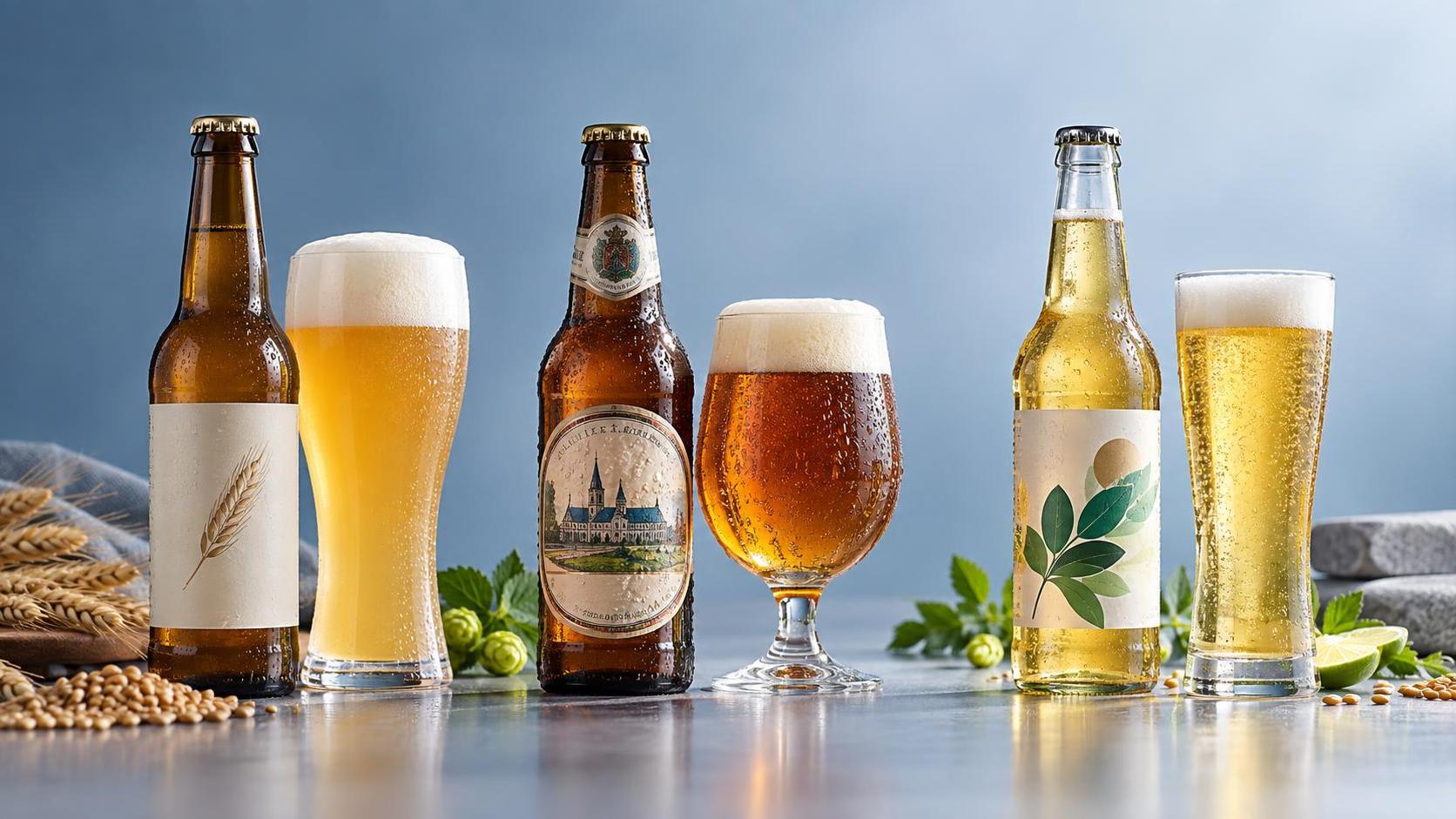
Picture this: It’s 6:45 p.m. on a Friday. The bar is buzzing—glassware clinking, orders stacking up, and your head bartender glances over, voice calm but urgent: “We’re running low on the wheat beer. And the IPA batch from last week tasted… off.” You nod, already mentally scrolling through supplier emails, tasting notes, and delivery windows. For F&B procurement professionals, beer isn’t just another SKU—it’s rhythm, reputation, and revenue, all poured into one glass.
That moment—when consistency falters or margins shrink—is where sourcing decisions stop being theoretical and start shaping real nights, real menus, and real relationships with guests. Local craft? Imported premium? Chinese-produced? Each option carries its own weight: cultural cachet, logistical friction, flavor integrity, scalability, and yes—cost per liter after duty, freight, and shelf-life decay. But what if the question isn’t *which* origin wins, but *how* each fits into your operation’s evolving identity?
Local Craft: Authenticity With Limits
There’s undeniable warmth in serving a beer brewed three blocks away. Guests love the story—the founder’s name on the tap handle, the local maltster’s logo on the coaster, the seasonal release tied to the harvest festival downtown. For neighborhood bars and chef-driven bistros, local craft builds community currency. It also simplifies traceability and reduces carbon footprint—a quiet win for sustainability-minded operators.
But authenticity has boundaries. Batch-to-batch variation is part of the charm—until it’s not. A slight shift in yeast health, water mineral profile, or fermentation temperature can mean the “same” Hazy IPA tastes brighter one month and muted the next. That variability delights connoisseurs; it frustrates managers who need predictable pour cost and consistent guest feedback. And scaling? Most local breweries cap wholesale volume tightly—prioritizing taproom sales and regional accounts. If your chain spans six cities—or you’re launching a new concept with 300+ draft lines—you’ll hit capacity walls fast.
Imported Premium: Prestige With Price Tags
Belgian Trappists, German Reinheitsgebot lagers, Japanese rice lagers—these names carry weight. They signal intention. They anchor high-margin by-the-glass programs and lend credibility to curated bottle lists. Importing offers something rarer than flavor: narrative authority. When a guest asks, “What makes this special?”, the answer lives in centuries-old monasteries, Bavarian purity laws, or Kyoto’s precision milling.
Yet prestige comes with friction. Lead times stretch from 8–16 weeks—not ideal when demand spikes unexpectedly or a competitor launches a similar style. Duties, tariffs, cold-chain logistics, and label compliance (especially for functional claims like “low-calorie” or “sugar-free”) add layers of complexity—and cost. Shelf life becomes a silent pressure point: once that Belgian sour crosses the Pacific, every week counts. And while authenticity is guaranteed at origin, flavor fidelity isn’t always preserved mid-transit. Heat exposure, light degradation, even vibration during shipping can mute delicate esters or accelerate oxidation.
Chinese-Produced Beer: Precision, Pace, and Purpose-Built Flexibility
Let’s pause here—not to compare countries, but to reframe perception. Chinese beer production today isn’t defined by mass-market lagers alone. Across Guangdong, Shandong, and Jiangsu provinces, a new generation of R&D-led breweries is emerging: labs calibrated for reproducibility, pilot systems tuned for rapid iteration, and supply chains built for global dispatch—not just domestic distribution.
This shift matters for Beer for bars and restaurants because it delivers something rare: the agility of craft with the reliability of scale. Take sugar-free, low-calorie variants—once niche, now essential across wellness-focused venues and daytime cafés. Or fruit-infused beers that must balance acidity, sweetness, and carbonation without artificial stabilizers. These aren’t adaptations; they’re engineered from the ground up, using proprietary yeast strains, enzymatic control, and cold-stable hopping techniques.
Jinpai Beer exemplifies this evolution. Not as a “budget alternative,” but as a partner in menu development. Their portfolio—from crisp German-style wheat with authentic clove-phenol lift to functional specialty beers with botanical infusions—starts with sensory benchmarks, not just specs. Each variant undergoes iterative taste panels across markets: Singaporean bartenders assessing drinkability at 32°C, London pub managers testing foam retention under draft-line stress, Dubai hotel F&B teams evaluating pairing versatility with spiced mezze platters.
The Real Decision Framework Isn’t Origin—It’s Alignment
So how do you choose? Start by asking not “Where is it made?” but “What does my operation *need* right now—and next quarter?”
- Consistency > novelty? If your cocktail program leans heavily on beer-based spritzes or shandies, unpredictability in base beer flavor throws off entire recipes. Reproducible profiles—batch after batch—become non-negotiable.
- Speed > scarcity? Launching a summer rooftop pop-up in June? Waiting 12 weeks for customs clearance may cost you first-mover buzz—and early sales.
- Versatility > exclusivity? Do you need one flagship IPA—or five distinct styles (classic lager, hazy, fruit-forward, low-ABV, functional) that rotate cleanly across draft towers, cans, and retail coolers?
- Partnership > transaction? Can your supplier co-develop limited runs? Adjust ABV or bitterness for regional palates? Reformulate based on your allergen policy or sustainability goals?
These questions don’t favor one origin—they reveal operational priorities. And increasingly, those priorities point toward suppliers who operate at the intersection of craftsmanship and infrastructure: breweries investing in analytical labs alongside brewhouse expansion, quality control protocols that mirror EU food safety standards, and logistics networks designed for multi-channel readiness—online marketplaces, supermarket chillers, bar backrooms, and restaurant storerooms alike.
Why “Made in China” Is Becoming a Strategic Advantage—Not a Compromise
It’s worth naming what’s changed. Ten years ago, “Chinese beer” meant economy lager exported in bulk. Today, it includes ISO-certified facilities producing small-batch barrel-aged stouts for Tokyo whisky bars, low-calorie pilsners certified by international nutrition labs, and fruit-beer variants developed with Southeast Asian tropical fruit suppliers to avoid volatile import dependencies.
What makes Jinpai different isn’t just geography—it’s design philosophy. Their OEM/ODM services aren’t about slapping logos on stock recipes. They begin with your guest profile: urban professionals seeking clean-label options, Gen Z diners drawn to Instagrammable flavors, or health-conscious travelers scanning QR codes for nutritional transparency. From there, formulation, packaging, and even kegging specifications are adjusted—not just translated.
And because their production ecosystem serves both domestic innovation hubs and global export lanes, they’ve optimized for what matters most to procurement teams: reliable lead times (often under 4 weeks from order confirmation), flexible MOQs (no forced pallet commitments), and responsive technical support—not just pre-sales brochures. When your sommelier needs pH data for food pairing sheets or your sustainability officer requests full ingredient traceability reports, those details aren’t buried in PDF appendices. They’re built into the collaboration rhythm.
At the end of the day, great Beer for bars and restaurants isn’t defined by passport stamps. It’s defined by how seamlessly it integrates—into your draft system, your cost model, your brand story, and your guests’ expectations. Whether you’re curating a hyper-local tap list or building a scalable beverage program across 50 locations, the smartest choice isn’t the one that sounds most impressive on paper. It’s the one that shows up—on time, on taste, and on brief—every single service.
Because in hospitality, reliability is the quietest kind of luxury.
Thank you very much for writing to us. Please leave your message and contact information, we will reply to you within 24 hours.