



Beer for Bars and Restaurants: How Draft System Compatibility Impacts Your Menu Profitability
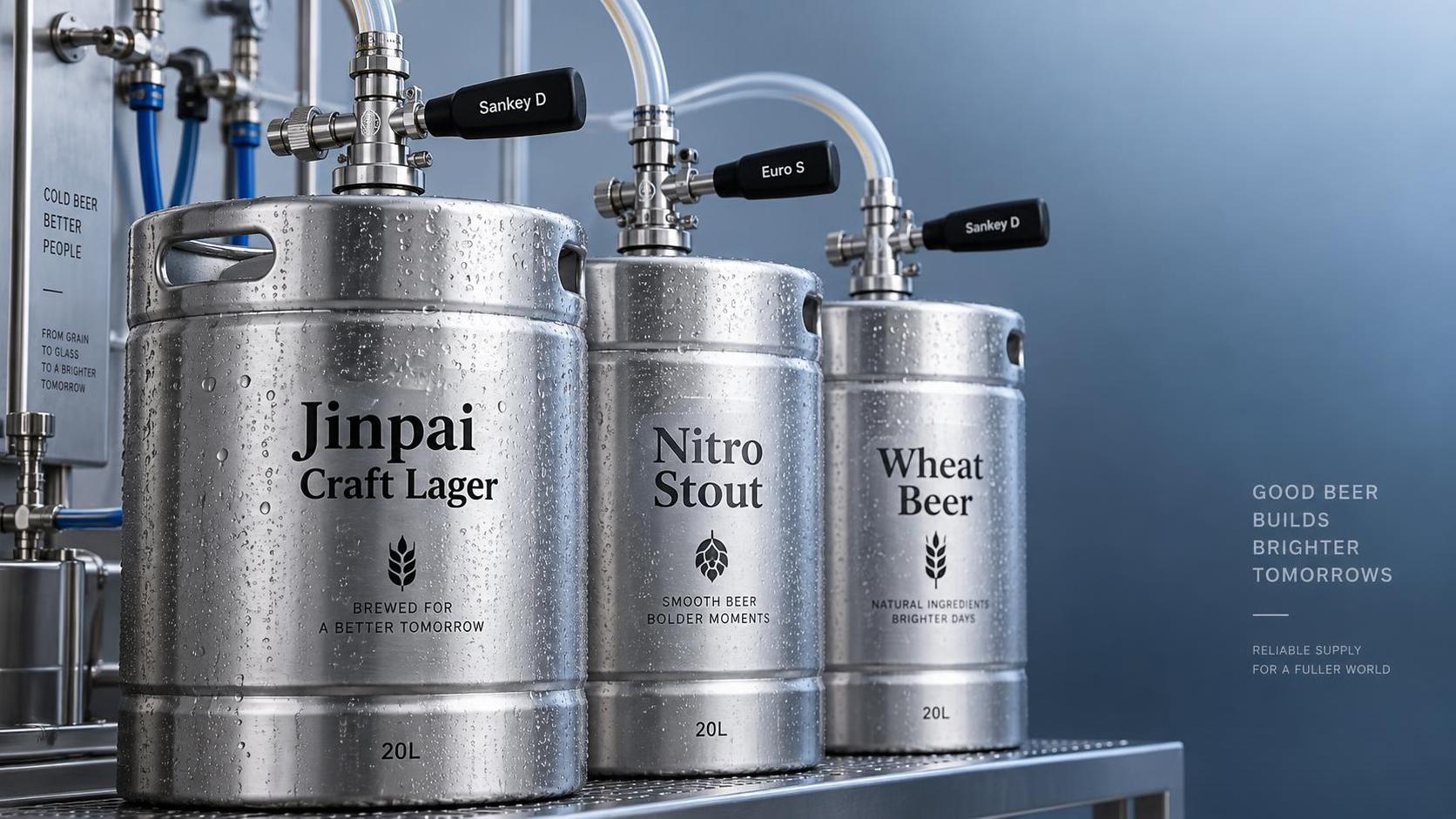
Choosing the right Beer for bars and restaurants goes beyond flavor—it starts with draft system compatibility. A mismatched keg setup can lead to waste, inconsistent pours, higher labor costs, and lost sales. At Jinpai Beer, we engineer our craft beers—including classic lagers, German wheat, low-calorie, fruit-infused, and functional varieties—not just for taste, but for seamless integration with global tap systems (e.g., Sankey, European, US Type D). Whether you’re a bar manager, beverage director, or operations staff, understanding how compatibility impacts pour accuracy, shelf life, and margin retention is essential to maximizing menu profitability—without compromising quality or customer experience.
Why Draft Compatibility Is Your First Profit Filter—Not Your Last Flavor Check
For bar and restaurant staff handling daily keg changes, line cleaning, and pour audits, draft compatibility isn’t technical overhead—it’s your frontline margin safeguard. A single incompatible keg can trigger foam-heavy pours, pressure surges, slow dispensing, or even complete system lockups. These aren’t minor hiccups: they mean 15–20% more beer wasted per keg, 3–5 extra minutes per changeover, and guest complaints that directly erode check averages. Jinpai Beer designs every keg—from sugar-free low-calorie lagers to hazy fruit IPAs—with standardized coupler profiles and CO₂ solubility specs aligned to regional infrastructure. That means no retrofitting, no adapter rentals, and no “let’s just try it” troubleshooting during rush hour.
Three Real-World Compatibility Failures You’re Already Paying For
First: over-carbonated fruit beers on low-pressure European systems. Result? Foam explosions, rushed pours, and guests walking away from half-empty glasses. Second: German wheat beers served through narrow-bore US Type D lines. Outcome? Yeast sediment clogging, inconsistent head formation, and repeated line flushes—costing $47 in labor and cleaning chemicals per incident (per National Restaurant Association 2023 ops survey). Third: functional specialty beers with natural stabilizers mispaired with high-flow Sankey A couplers. Effect? Oxidation within 48 hours, flat aroma, and accelerated spoilage—cutting usable keg life by up to 30%.
These aren’t hypotheticals—they’re daily friction points for operations teams. And each one silently drains gross margin: wasted product, labor rework, and diminished perceived value. Jinpai’s R&D team stress-tests every SKU across 7 draft configurations before launch, ensuring carbonation levels, yeast suspension behavior, and nitrogen blend ratios match mechanical delivery parameters—not just sensory profiles.
How to Verify Compatibility Before You Order—A Staff-Level Checklist
Don’t wait for the keg to arrive. Use this 4-step verification—designed for bartenders, cellar managers, and assistant GMs:
Step 1: Identify your coupler type (Sankey A/D, Euro S, G, or U) by checking your existing coupler body or consulting your draft tech. No guesswork—this is non-negotiable.
Step 2: Match Jinpai’s keg specification sheet (provided with every quote) to your system’s PSI range and line length. Our low-calorie lagers ship at 9.5–10.5 PSI—ideal for standard 2–3 bar setups; our nitro cold-brew stouts ship at 30 PSI + 75% N₂—requiring dedicated nitro-rated lines.
Step 3: Confirm temperature stability. Our German wheat series requires consistent 36–38°F storage; if your walk-in fluctuates beyond ±1.5°F, we recommend our stabilized wheat variant—formulated with natural haze inhibitors that resist thermal shock.
Step 4: Request a free draft audit. Jinpai’s field support team reviews your current setup, flow rates, and line age—and recommends optimal SKU pairings. No sales pitch. Just actionable alignment.
Profit Impact: What Compatibility Gains Look Like on Your P&L
When Jinpai beers run on compatible systems, operators report measurable gains—not projections. A 22-tap downtown gastropub reduced beer waste from 18% to 9.3% in Q1 after switching from generic imports to Jinpai’s Sankey-D-optimized fruit sours. Their pour consistency improved so much that average draft beer check size rose 12%—guests ordered full pints instead of requesting “top-ups.”
A beachfront bar chain replaced three legacy suppliers with Jinpai’s full portfolio—standardized across all 14 locations—and cut keg change time by 42%. That freed up 11.7 labor hours weekly per site—reallocated to upselling flight boards and training staff on tasting notes. Margin lift wasn’t from raising prices—it came from eliminating leakage points: less spillage, fewer complaints, longer keg life, and faster turnover.
Crucially, compatibility also protects brand equity. When your house IPA pours with crisp clarity and persistent lacing—every time—the guest associates *your* venue with quality. Not the brewery. Not the distributor. *You.* That repeat visit? That social media tag? That referral? It starts at the tap.
Customization Isn’t Just for Labels—It’s Built Into the Keg
Jinpai doesn’t offer “one-size-fits-all” draft solutions. If your rooftop bar uses glycol-chilled lines but serves high-ABV barrel-aged stouts, we adjust CO₂ saturation and add proprietary foam-stabilizing proteins. If your health-conscious café wants sugar-free Berliner Weisse on nitro—but needs it to pour at lower pressure—we reformulate gas blends and modify yeast attenuation without sacrificing tartness or mouthfeel.
Our OEM/ODM service includes full draft engineering support: custom coupler fittings, pressure-matched gas blends, line-length-specific carbonation curves, and even branded coupler engraving. This isn’t branding fluff—it’s operational precision. Because when your staff opens a keg and hears that clean, steady *hiss*, not a sputter or hiss-and-stop—that’s the sound of margin preserved.
Final Takeaway: Compatibility Is Operational Leverage—Not Just Technical Detail
For bar and restaurant staff, choosing Beer for bars and restaurants isn’t about chasing trends or listing “craft” on a chalkboard. It’s about selecting products engineered to work *with* your infrastructure—not against it. Every minute saved on changeovers, every ounce of beer retained in the glass, every guest who orders a second round because the first poured perfectly—that’s where real menu profitability lives.
Jinpai Beer delivers more than flavor profiles. We deliver draft-ready integrity: across classic lagers, German wheat, sugar-free low-calorie options, fruit-infused variants, and functional specialty beers—all validated for Sankey, Euro, and US Type D systems. No adapters. No compromises. No hidden labor tax.
Your tap list shouldn’t be a liability. It should be your most reliable profit center. Start with compatibility. Taste follows.
Thank you very much for writing to us. Please leave your message and contact information, we will reply to you within 24 hours.