



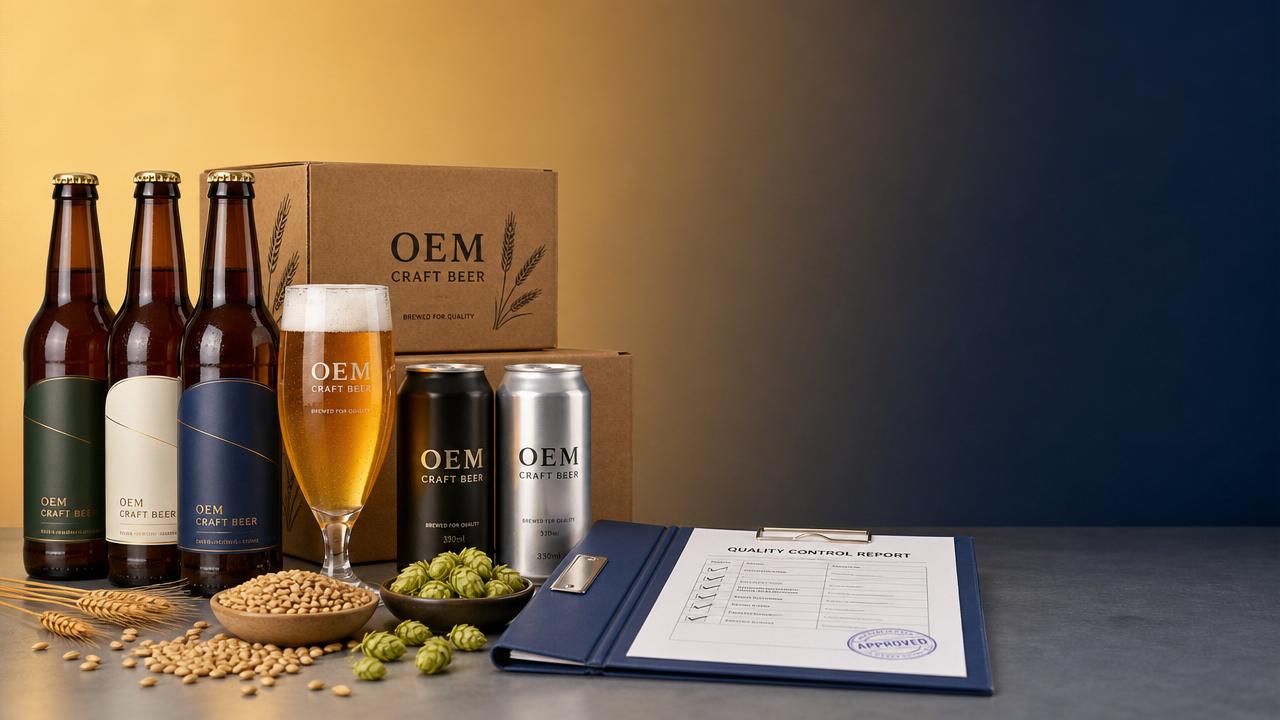
Entering the China beer OEM market can help new brands launch faster, but early mistakes in positioning, compliance and supplier selection often lead to costly delays. This article explains the most common missteps and safer ways to start, helping information-focused buyers evaluate partners, reduce risk and build a beer product line with more confidence.
Why the China beer OEM landscape is changing for new brands
The biggest shift in recent years is that China beer OEM is no longer only about low-cost manufacturing. New brands now enter the market with more specific goals: smaller trial runs, differentiated flavors, lower-sugar positioning, faster launch cycles, and export-ready packaging. At the same time, buyers are under more pressure to validate compliance, shelf appeal, and long-term supply stability before committing to a production partner.
This change matters because the risk profile has also evolved. In the past, many startups focused on getting a beer produced as cheaply as possible. Today, a weak formula, unclear labeling plan, or mismatched packaging specification can damage the brand before it gains distribution. In other words, the early-stage decisions around China beer OEM increasingly shape not only production costs, but also launch timing, channel fit, and repeat purchase potential.
For information-focused buyers, the market signal is clear: success depends less on finding the cheapest plant and more on choosing a supplier that can support product development, documentation, customization, and realistic scaling. That is especially true in beer categories where consumer expectations are shifting toward craft taste, functional concepts, fruit flavor innovation, and better-for-you options such as sugar-free or low-calorie beer.
Key trend signals shaping China beer OEM decisions
Several practical signals are reshaping how buyers should evaluate China beer OEM opportunities. First, demand is fragmenting. Instead of one broad lager concept, many new brands now test multiple SKUs for different channels, such as bars, restaurants, retail shelves, gifting, and e-commerce. Second, product claims are becoming more sensitive. Reduced sugar, low calorie, fruit-infused, or functional positioning may create marketing opportunities, but they also raise the bar for formulation discipline and packaging accuracy.
Third, lead time expectations are tightening. New brands often want to move from sample to market launch quickly, yet they underestimate how recipe confirmation, can or bottle sourcing, label review, and shipping coordination affect schedules. Fourth, buyers increasingly expect OEM partners to do more than fill tanks. They want support in R&D, format recommendations, product line planning, and channel-oriented customization.
The most common missteps new brands still make
Even with better market information available, new entrants to China beer OEM often repeat a similar set of mistakes. The first is starting with packaging instead of product-market fit. A visually attractive label cannot compensate for a beer style that does not suit the intended audience. A brand targeting premium casual dining needs a different profile from one built for convenience retail or social drinking in bars.
The second misstep is assuming all OEM breweries offer the same capabilities. Some plants are strong in classic lager consistency, while others may handle craft development, German wheat, fruit-flavored beer, or specialty functional concepts more effectively. If the buyer does not check category experience early, the project may become slower, more expensive, or technically compromised.
Third, many new brands underestimate compliance details. This includes ingredient disclosure, product naming, claim wording, shelf-life presentation, export documentation, and market-specific labeling requirements. These issues are rarely exciting, but they are among the most common reasons for rework and launch delay.
Another frequent error is poor quantity planning. Buyers may request a trial volume that is too small to optimize packaging materials, or too large before the recipe and sales channel are validated. In China beer OEM, practical scale planning reduces both inventory pressure and per-unit surprises.
The final misstep is treating the supplier as a simple manufacturer rather than a project partner. When communication only focuses on price, buyers often miss warning signs related to timeline, taste stability, packaging compatibility, or after-sales coordination.
What is driving these mistakes in today’s market
These missteps do not happen only because buyers are careless. They often result from larger market pressures. Social media and private-label growth encourage fast product launches, which compresses due diligence. Increased competition pushes brands to seek differentiation through novel flavors or functional concepts, yet innovation without process control can create inconsistencies. Global logistics uncertainty also makes buyers more sensitive to timing and cost, which can lead them to over-prioritize quick quotations instead of technical alignment.
At the same time, the beer category itself is becoming more segmented. Consumers no longer respond to one-size-fits-all beer products. Some want approachable classic lager, others seek authentic wheat beer, while younger segments may prefer fruit flavor, lower bitterness, or lower-calorie options. This diversity is an opportunity, but it means China beer OEM projects require clearer front-end decisions than before.
How the impact differs across buyers and business stages
Not every buyer faces the same level of risk. Startups with no prior beverage sourcing experience are usually most vulnerable to hidden delays. Importers and distributors may understand pricing better, but still misjudge how local consumer preferences should shape beer style and pack size. Hospitality groups launching a private-label beer often know their audience well, yet they may underinvest in technical validation because they assume brand recognition will compensate.
Safer ways to start in China beer OEM under current conditions
A safer entry path begins with narrowing the first launch idea. Instead of developing too many styles at once, define one lead concept based on target drinker, channel, and price position. For some brands, that may be a classic lager with broad appeal. For others, a German wheat or fruit-flavored beer may offer a clearer point of difference. If health-oriented positioning is central, reduced-sugar or low-calorie development should be discussed early with the OEM partner to avoid later claim adjustments.
The second safer move is to screen suppliers by capability, not only by quote speed. Ask whether the brewery supports R&D, sample refinement, multiple packaging formats, and export-oriented documentation. A capable China beer OEM partner should help identify practical trade-offs between taste, shelf stability, MOQ expectations, and packaging choices.
Third, build the launch timeline backward from the selling date. This should include formula confirmation, packaging design finalization, compliance review, production slot scheduling, shipping, and buffer time. New brands often treat these tasks as parallel and simple, but in practice they are connected. One unresolved label issue can affect the entire timeline.
Fourth, think in stages. Begin with a manageable batch, gather feedback from the intended sales environment, and optimize before aggressive expansion. This reduces the risk of locking into the wrong flavor profile or format. In many cases, a measured first run is the smartest way to use China beer OEM as a market-learning tool rather than just a production shortcut.
What to look for in a partner as demand becomes more specialized
Because demand is becoming more segmented, the value of a supplier increasingly lies in fit. A brewery involved in the R&D, production and distribution of craft beer, with experience across classic lager, German wheat, sugar-free low-calorie beer, fruit-flavored beer and functional specialty beers, is typically better positioned to support category exploration than a plant limited to one narrow production profile. The ability to provide OEM/ODM services, wholesale supply, and customized solutions also matters when a buyer wants to adjust recipes, branding, or pack configurations for different channels.
Equally important is whether the supplier understands where the beer will be sold. Products developed for restaurants, supermarkets, bars, and mixed retail channels may require different positioning, carton logic, and reorder planning. For global buyers, a partner with online and offline distribution awareness can often anticipate practical issues earlier in the process.
Signals worth monitoring before you scale up
Before increasing volume, watch for signals that show whether the initial China beer OEM decision is working. These include repeat-order interest from distributors, feedback consistency across channels, acceptable damage rates in logistics, and whether the flavor profile remains stable across batches. Also monitor how often packaging or documentation needs correction. Frequent revisions may indicate that the front-end specification process was not robust enough.
Another useful signal is whether one style clearly outperforms others. If fruit-flavored beer draws trial but lager drives repeat sales, the next production cycle should reflect that. If a low-calorie product gets attention but creates confusion around taste expectations, the positioning may need to be sharpened rather than simply producing more volume. Good China beer OEM strategy is iterative. It uses data from the first commercial stage to improve both the product line and the supplier relationship.
Questions buyers should ask before moving forward
Information-focused buyers can reduce risk by asking structured questions early. Which beer style best fits the target channel and price band? What packaging format is most practical for that channel? What documentation is needed for the intended market? Can the supplier support trial adjustments before mass production? What is the realistic timeline from sample approval to shipment? How will quality consistency be managed if the product scales?
These questions help distinguish a reactive quote-driven process from a strategic China beer OEM project. They also improve internal decision-making, because they force the buyer to connect branding, compliance, taste, and distribution instead of treating them as separate tasks.
A practical direction for starting with more confidence
The main industry change is not simply that China beer OEM is growing. It is that the market now rewards better judgment more than faster imitation. New brands can still launch efficiently through OEM production, but safer results come from disciplined positioning, realistic stage planning, and careful partner evaluation. The buyers most likely to succeed are those who read current signals correctly: demand is more segmented, product claims need more care, and channel fit matters earlier than many first-time brands expect.
If your business wants to assess whether China beer OEM is the right route, focus first on a few high-value questions: which beer concept is most aligned with your audience, what launch stage is realistic, what compliance and packaging details can affect timing, and whether the supplier can support both current needs and future SKU evolution. Answering those questions well is often the difference between a rushed first product and a brand line that can grow with confidence.
Thank you very much for writing to us. Please leave your message and contact information, we will reply to you within 24 hours.