



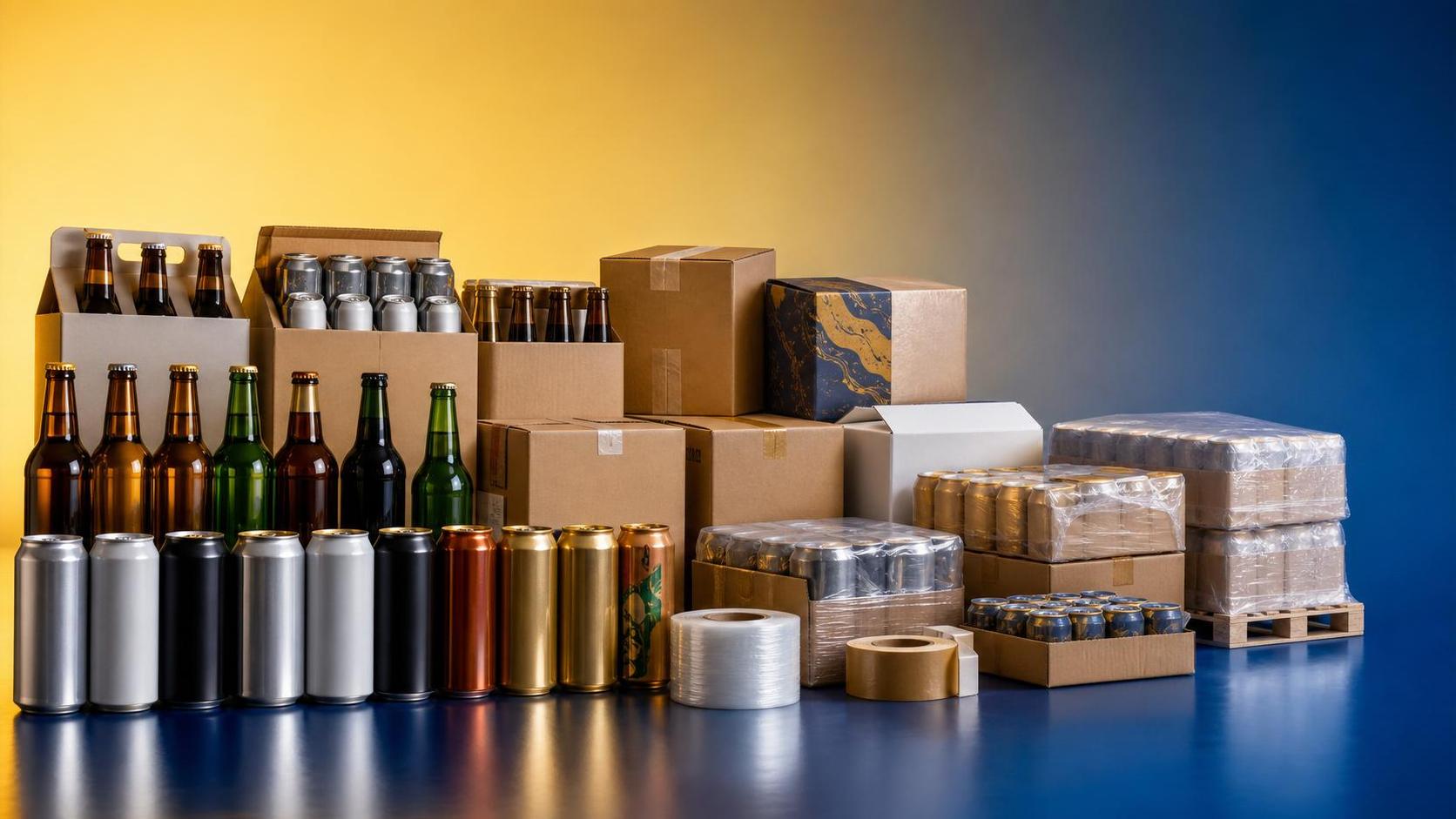
For many emerging beverage labels, the first private label discussion quickly turns to one practical issue: What is the typical MOQ for China beer OEM?
That number affects budget, packaging choices, launch timing, and the level of risk attached to a new SKU.
In beer, MOQ is not just a factory rule. It reflects production efficiency, packaging setup, ingredient sourcing, and how customized the final product needs to be.
Small brands often assume China OEM requires very large volumes. In reality, first-order expectations vary, especially when the supplier offers flexible OEM and ODM support.
Understanding those variables makes it easier to compare suppliers and build a launch plan that can grow without overcommitting capital.
What MOQ really means in beer OEM
MOQ, or minimum order quantity, is the smallest production volume a factory can accept under workable commercial conditions.
In beer OEM, that volume may be measured by bottles, cans, cartons, pallets, or even one full recipe batch.
This is why the answer to What is the typical MOQ for China beer OEM is rarely one single number.
A standard lager in existing packaging may require a far lower starting volume than a fruit beer with custom printed cans and a new formula.
MOQ also includes hidden thresholds. A brewery may accept a small liquid batch, but labels, crowns, cartons, or shrink wraps may have separate minimums.
What small brands can expect on first orders
Usually, first orders sit within a broad range rather than a fixed industry standard.
For entry-level projects using existing formulas and simpler packaging, lower MOQs are often possible.
For customized products, MOQ rises because the supplier must allocate tanks, filling time, materials, and quality control resources.
A practical way to view What is the typical MOQ for China beer OEM is through three common launch paths.
In other words, first-order MOQ is closely tied to complexity. The more originality required, the more volume the factory usually needs.
Why MOQ matters more than many buyers expect
MOQ shapes more than procurement. It influences market testing strategy.
A low MOQ allows a brand to validate taste, price positioning, and channel response before scaling.
A high MOQ can improve unit economics, but it increases inventory pressure and slows adjustment if the first launch misses expectations.
This is especially relevant in craft and flavored beer, where consumer response can vary sharply by region and retail format.
For restaurant supply, bar channels, supermarkets, and cross-border online sales, the ideal first order may differ significantly.
Channel strategy affects the right MOQ
A supermarket listing may justify a larger opening volume because sell-through potential is wider.
A niche bar concept or online-only launch often benefits from a smaller first run and tighter SKU control.
That is why the better question is not only What is the typical MOQ for China beer OEM, but also what MOQ matches the intended route to market.
The main factors that raise or lower MOQ
MOQ in beer OEM is built from several operational decisions. Understanding them helps avoid unrealistic requests and weak supplier comparisons.
Beer style and formulation
Classic lager often fits easier into regular production planning.
German wheat, sugar-free low-calorie beer, fruit-flavored beer, and functional specialty beers may require different ingredients or process controls.
That can increase batch constraints, especially for first-time customized recipes.
Packaging format
Bottle, can, cap type, carton design, tray pack, and label method all influence MOQ.
Printed cans usually need higher minimums than adhesive labels on standard cans or bottles.
Customization depth
Using an existing recipe with basic branding is easier for the factory.
A fully original concept means more approvals, more sampling, and more material coordination.
Regulatory and export requirements
Destination markets may require specific alcohol labeling, language content, barcode arrangements, or compliance testing.
Those details do not always increase brewing MOQ directly, but they can raise packaging minimums and planning time.
How flexible OEM partners reduce first-order risk
Not every supplier approaches MOQ the same way. Some breweries are built around large standardized output.
Others support a wider mix of OEM, ODM, wholesale supply, and customized development.
That flexibility matters when a brand wants to start with controlled volume, then expand after early market feedback.
A supplier with experience across classic lager, wheat beer, low-calorie beer, fruit beer, and specialty functional lines can often suggest a more realistic first step.
In practice, that may mean choosing a proven base formula, simplifying the first packaging run, or aligning production with existing material inventory.
For companies like Jinpai Beer, which combine R&D, production, distribution, OEM/ODM, and wholesale support, MOQ discussions can be tied to broader commercialization decisions instead of pure factory minimums.
Questions worth asking before confirming MOQ
When evaluating What is the typical MOQ for China beer OEM, the headline number is only the starting point.
The more useful conversation looks at the structure behind that number.
- Is the MOQ based on liquid volume, packaging materials, or both?
- Does the MOQ change by SKU, flavor, alcohol content, or package size?
- Can existing formulas reduce the first production threshold?
- Are printed packaging materials driving the minimum higher than the beer itself?
- What sampling, lead time, and repeat-order terms apply after the first run?
- Can the project scale smoothly if the launch performs well?
These questions often reveal whether a seemingly low MOQ is genuinely practical or simply incomplete.
A realistic first-order approach for growing brands
A measured launch usually performs better than an ambitious but rigid one.
For many first projects, the strongest approach is to control variables.
Start with one or two clear SKUs. Use packaging that balances shelf appeal with manageable minimums. Keep the recipe close to market demand.
This is especially effective when entering multiple channels, where sales patterns may differ between bars, retail stores, and online distribution.
A lower-risk launch creates cleaner data for the second order, which is often where margin planning and product expansion become more reliable.
When a higher MOQ may still make sense
There are cases where accepting a larger MOQ is justified.
For example, confirmed retail placement, distributor-backed rollout, or a strong seasonal campaign may support larger opening volume.
In those situations, the cost advantage of scale may outweigh the inventory risk.
The takeaway for MOQ planning in China beer OEM
So, What is the typical MOQ for China beer OEM? The practical answer is that MOQ depends on formula choice, packaging complexity, compliance needs, and the supplier’s operating model.
For first orders, small brands should expect flexibility only when the project is designed with production realities in mind.
The best next step is to define the target beer style, packaging format, sales channel, and initial SKU count before comparing quotations.
That makes MOQ discussions more accurate and turns supplier evaluation into a strategic decision rather than a simple price check.
With the right structure, a first OEM order can stay commercially cautious while still building a clear path toward repeat production and broader market expansion.
Thank you very much for writing to us. Please leave your message and contact information, we will reply to you within 24 hours.