



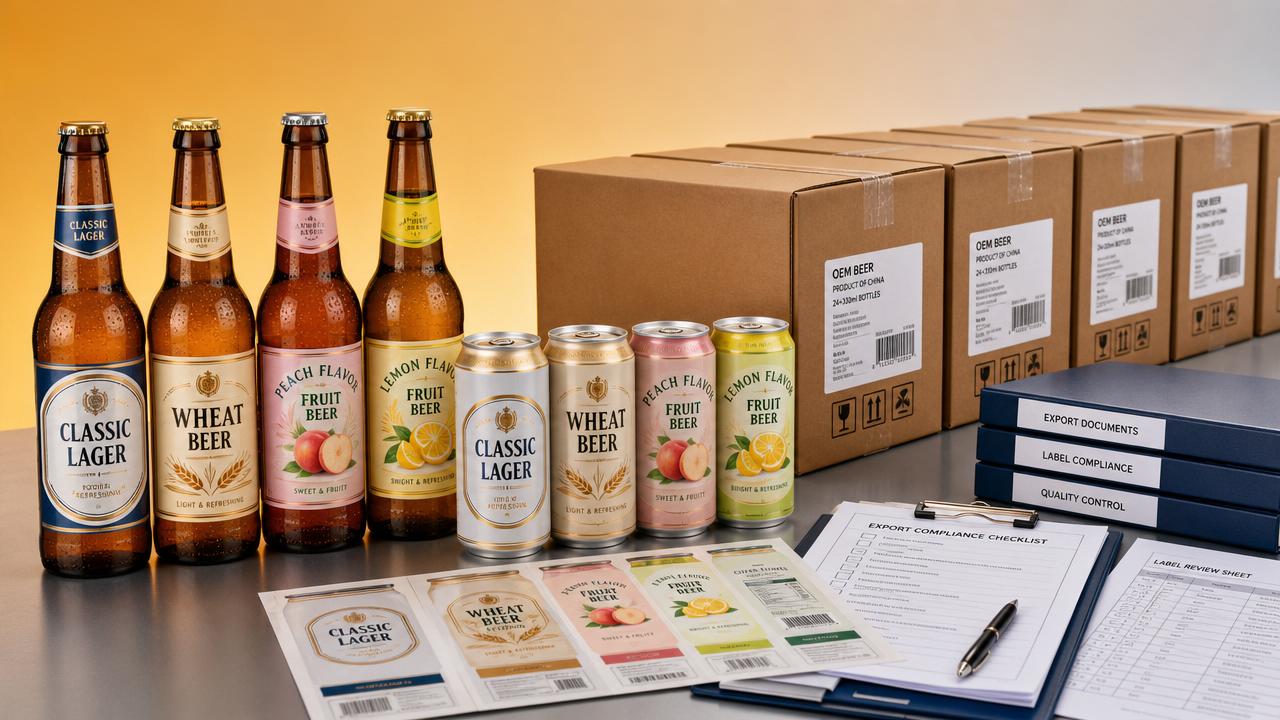
As China beer OEM regulations continue to evolve, quality control and safety managers face growing pressure to manage compliance, labeling accuracy and export risk. From ingredient claims to packaging review, even minor errors can lead to costly delays or market rejection. Understanding the latest compliance shifts is essential for protecting product integrity, maintaining brand trust and ensuring smoother global distribution.
Why China beer OEM compliance is changing faster than before
The beer category is moving under tighter scrutiny because buyers now expect clearer origin statements, more precise ingredient disclosure and stronger traceability. For China beer OEM projects, the risk is not only product quality; it also includes label wording, nutrition declarations, allergen communication and market-specific packaging rules.
For quality control teams, this creates a practical problem. A formula may be stable, yet a label can still fail if a claim is too broad, a translation is inconsistent or a required statement is missing. In export channels, these issues can trigger rework, customs delay or even a full shipment hold.
The China beer OEM landscape is also more segmented than before. Classic lager, German wheat beer, sugar-free low-calorie beer, fruit-flavored beer and functional specialty beers each carry different risk points. A label that works for one product type may not be safe for another.
- Classic lager usually needs stable ingredient naming and accurate alcohol-related statements.
- German wheat beer often requires careful attention to style description and yeast-related process wording.
- Sugar-free low-calorie beer must avoid unsupported nutrition or health claims.
- Fruit-flavored beer needs precise flavor source disclosure and allergen review.
- Functional specialty beers require extra caution because implied benefit claims can create compliance exposure.
What quality control and safety managers should check first
Before approving a China beer OEM product, managers should treat the label as a compliance document, not only a marketing surface. The most common failures happen when procurement, packaging and compliance teams review different versions and miss a final inconsistency.
A practical checklist helps reduce rework and protects the export timeline. The following table summarizes the areas that should be reviewed before mass production or shipment release.
This table reflects a simple truth: most China beer OEM issues are preventable when the label review happens early, with one owner responsible for final sign-off. For safety managers, the biggest gain is not only compliance; it is fewer production interruptions and a cleaner export handoff.
Which compliance shifts create the biggest labeling risk?
The highest-risk shifts are usually not dramatic rule changes. They are small updates in enforcement focus, interpretation and documentation expectations. In beer OEM, that often means stricter review of product identity, alcohol-related wording, nutrition claims and language alignment across packaging versions.
The comparison below shows where teams often underestimate the difference between a compliant label and a risky one.
For China beer OEM buyers, the safest strategy is to treat label management as a controlled workflow. Every change should be linked to a reason, a reviewer and a release record. That approach matters even more for export-oriented craft beer lines, where packaging often changes by channel and country.
How Jinpai Beer supports compliant OEM and ODM development
Jinpai Beer focuses on craft beer R&D, production and distribution, with a product range that includes classic lager, German wheat beer, sugar-free low-calorie beer, fruit-flavored beer and functional specialty beers. For China beer OEM projects, this variety matters because different formulas require different compliance checks and packaging logic.
The company provides OEM/ODM services, wholesale supply and customized solutions for online and offline channels worldwide. For quality control and safety teams, that means support can extend beyond brewing into formula alignment, artwork review and export-oriented packaging coordination.
- Product development support for style selection, taste positioning and channel fit.
- Customized packaging solutions to match retail, bar, supermarket and restaurant requirements.
- Bulk supply planning for stable replenishment and controlled release schedules.
- Long-term cooperation models for distributors, agents and channel partners.
In compliance-sensitive projects, this kind of support reduces the number of handoffs between product development and final label approval. When the same team understands both the formula and the market target, the chance of label mismatch drops significantly.
What procurement teams should ask before placing a China beer OEM order?
Procurement decisions in beer are rarely only about price. For safety managers and QC leaders, the real question is whether the supplier can keep the product compliant after the first sample and before the last pallet ships.
Use the following decision points when comparing suppliers for China beer OEM work.
- Confirm whether the supplier can support multiple beer styles without mixing artwork logic between SKUs.
- Ask how label revisions are controlled, approved and archived before mass printing.
- Check whether test data, ingredient specs and packaging claims are reviewed together.
- Verify whether the supplier understands export destination differences for beer labels and cartons.
- Assess whether sample feedback can be translated into a final production-ready version without extra rounds.
If a supplier cannot answer these points clearly, the project may still look acceptable at sample stage but become risky during export execution. In practice, a reliable China beer OEM partner should reduce internal workload, not add more reconciliation work.
Common mistakes in beer labeling and how to avoid them
Many compliance issues come from routine shortcuts. The best prevention is to identify the error pattern early and build a review step that catches it before printing.
- Using one master artwork for every market without checking local label rules.
- Copying nutrition data from a previous formula after changing ingredients or alcohol content.
- Adding marketing phrases such as “light,” “functional” or “healthy” without a substantiated basis.
- Skipping final translation review, especially for product name, ingredients and warning statements.
- Allowing packaging changes after approval without updating the compliance record.
For China beer OEM projects, the most effective control is a single final version with named approvers. That reduces confusion between sales intent and factory execution, especially when the same beer is sold through restaurants, supermarkets and bars with different packaging needs.
FAQ: China beer OEM compliance and labeling risk
How do I know if a beer label is too risky for export?
A label becomes risky when its claims are broader than the formula, its declarations are not aligned with test data, or its artwork is not adapted to the destination market. For China beer OEM exports, the safest review compares ingredient list, nutrition panel, alcohol-related wording and final carton artwork together.
Which beer products need the most careful compliance review?
Functional specialty beers, sugar-free low-calorie beer and fruit-flavored beer usually need the most attention because they can trigger claim review, nutrition scrutiny or flavor-source questions. Classic lager and German wheat beer still need review, but their risk often comes from naming and traceability rather than performance claims.
What should I request from a China beer OEM supplier before approval?
Request the formula sheet, final packaging artwork, revision history, sample reference and destination-market checklist. If you manage QC or safety, also ask who owns the final sign-off and how changes are documented after sample approval.
Why do some beer projects fail even when the sample tastes right?
Taste approval does not guarantee compliance approval. Many projects fail because packaging, labeling and market-specific declarations were not reviewed with the same rigor as the formula. A good China beer OEM process connects sensory approval with document control and release discipline.
What to do next if you need lower compliance risk
If your team is evaluating China beer OEM options, the next step is to confirm whether the supplier can support both product development and compliance control. Jinpai Beer can help with product selection, customized formulation, packaging review, sample support, wholesale planning and long-term OEM/ODM cooperation for different sales channels.
For QC and safety managers, the most useful discussion is practical: which beer style is being launched, which market it targets, which label statements need validation, what certification or document set is required, and how quickly samples and final production can be released. If you are comparing suppliers, start with those questions and request a clear compliance workflow before you place the order.
Thank you very much for writing to us. Please leave your message and contact information, we will reply to you within 24 hours.