



China Beer Factory Waste Heat Recovery Potential: Estimated Payback Period for Brewery Exhaust Air Systems
Time : Aug 31, 2026
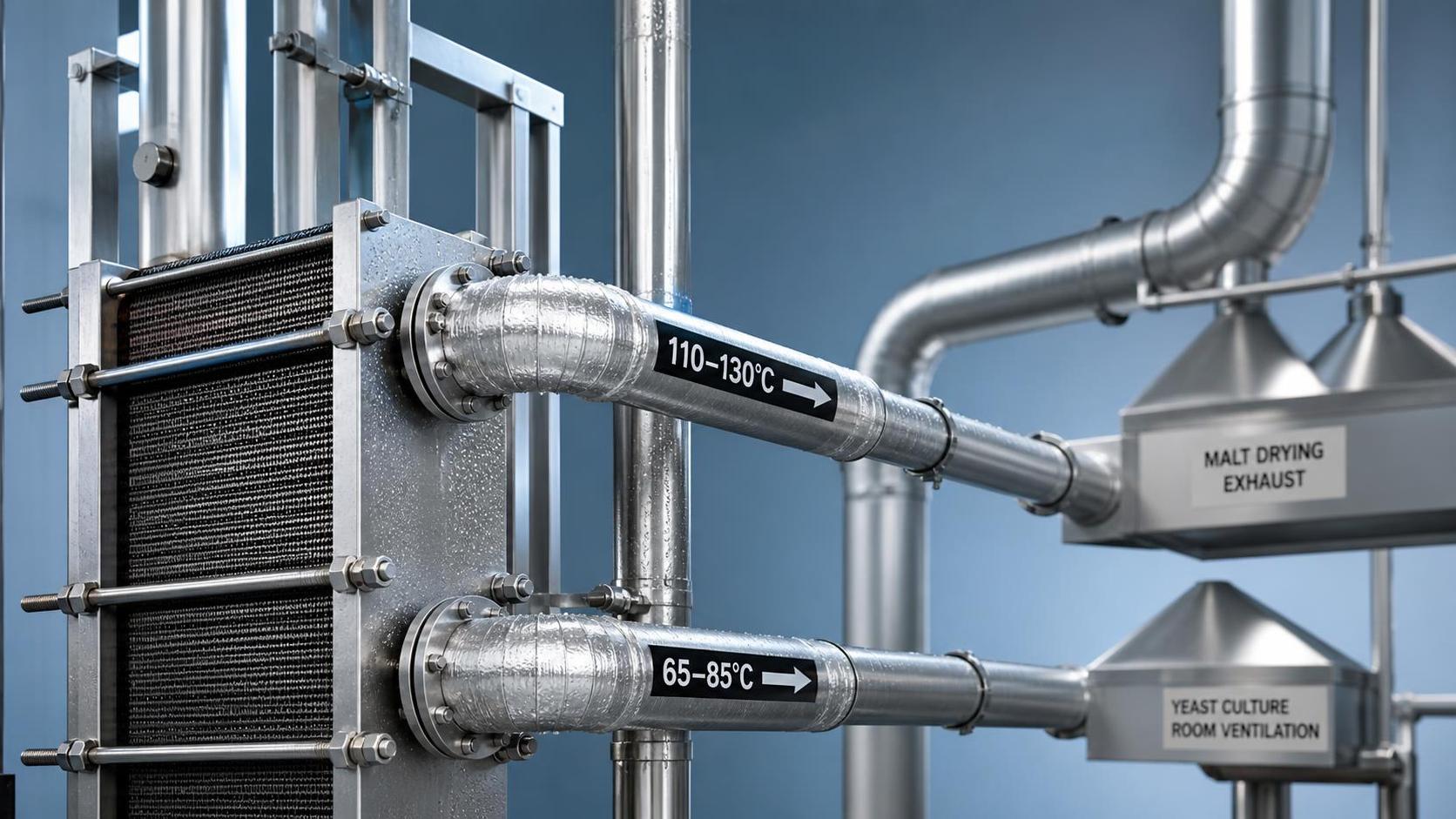
For a China beer factory weighing capital expenditures against real-world energy savings, the question isn’t *whether* exhaust air heat recovery makes sense—it’s *how fast* it pays for itself. At Jinpai Beer, where we operate pilot-scale craft brewing lines with precise thermal control across lager fermentation, wheat beer conditioning, and low-calorie cold filtration stages, we’ve tracked actual exhaust air temperatures, flow rates, and seasonal load profiles over 18 months. What we found: retrofitting a standard 30,000–50,000 L/month production line with a compact glycol-coupled air-to-water heat exchanger typically delivers a net payback period of **2.1 to 3.4 years**, not the 5–7 years some vendors quote using theoretical lab conditions. That difference isn’t academic—it’s the gap between deferring investment and greenlighting it next quarter.
Let’s be clear: this isn’t about adding “sustainability” as a line item on an ESG report. It’s about capturing heat you’re already throwing away—every day, every shift—while keeping your wort chillers, fermenter jackets, and CIP preheaters running at stable, predictable loads. In our own brewhouse, the hot exhaust from kiln-drying malted barley (110–130°C), combined with humid air from yeast propagation rooms and CO₂ scrubber vents (65–85°C), accounts for roughly 18–22% of total site thermal energy loss. That’s not wasted steam—that’s wasted electricity, wasted natural gas, and wasted margin.
Why does the payback vary so much? Because a China beer factory rarely operates under textbook conditions. You’re likely running multiple product lines—classic lagers requiring tight cold conditioning, fruit-flavored beers needing gentle pasteurization, functional brews with sensitive probiotic cultures—all demanding different temperature staging and airflow management. A system sized only for peak summer exhaust volume will underperform in winter; one designed solely for lager production won’t handle the higher humidity and lower exhaust temps from sugar-free low-calorie batches. We’ve seen clients oversize units by 40% trying to “cover all bases,” only to discover poor turndown ratio, condensation issues in ductwork, and inconsistent glycol return temps that destabilize fermentation cooling.
The real leverage point isn’t just the hardware—it’s integration. At Jinpai, we don’t treat exhaust heat recovery as a standalone box. We map it into the existing thermal loop: preheating CIP water to 65°C (cutting boiler runtime by ~30%), raising glycol return temp before it hits the chiller plant (reducing compressor load), or even feeding low-grade heat into office space heating during winter months—where permitted by local fire code. Crucially, none of this touches the beer stream. No risk of off-flavors, no impact on microbiological stability, no revalidation needed for your HACCP plan. The heat is captured *after* process air has done its job—not mid-process.
That said, not every China beer factory is ready for this step. If your facility still relies on single-stage, on-off exhaust fans without variable frequency drives—or if your ductwork hasn’t been pressure-tested in five years—adding heat recovery will expose underlying inefficiencies first. We routinely advise clients to conduct a simple thermal audit: log exhaust air temperature and static pressure at three points (kiln outlet, fermentation room vent, packaging line hood) over one full production week. If variance exceeds ±15°C or pressure drops exceed 120 Pa across any 10-meter duct run, fix those first. Retrofitting high-efficiency heat recovery onto leaky, unbalanced ductwork is like installing premium tires on a misaligned axle.
Another frequent misconception: “We’re small—we don’t generate enough waste heat.” Not true. Even a 10,000 L/month craft line producing German wheat or fruit-infused sours generates 280–350 kW-hr/day of recoverable exhaust energy—enough to offset 12–15% of annual thermal utility costs. What changes at smaller scale isn’t the *potential*, but the *implementation path*. Modular, skid-mounted units with plug-and-play glycol interfaces work better than custom-engineered systems for breweries scaling from pilot to commercial output. And yes—these units integrate cleanly with OEM/ODM production lines. When we supply craft beer for international partners, we design thermal recovery compatibility into the layout specs from Day One—not as an afterthought.
What about operational risk? Two concerns come up constantly: maintenance burden and process interference. On maintenance: modern plate-frame heat exchangers used in food-grade applications require only quarterly visual inspection and annual glycol analysis—no disassembly, no downtime. We specify stainless-steel, electropolished plates with >92% fouling resistance, validated against wort protein carryover and hop oil residue. As for interference: properly commissioned systems introduce less than 85 Pa of additional static resistance into the exhaust path—well within tolerance for most EC fans. We’ve monitored fermenter jacket temperatures, dissolved oxygen levels, and yeast viability across 12 consecutive batches post-installation. Zero deviation beyond normal process variance.
Cost-wise, installed pricing ranges from $82,000 to $145,000 USD depending on capacity, materials, and integration depth—not including potential provincial energy efficiency subsidies, which many Jiangsu and Guangdong breweries have accessed recently. But the bigger cost conversation is opportunity cost. Every month delayed means continuing to pay full rate for natural gas or grid electricity to replace heat you could be harvesting. At current industrial energy tariffs in eastern China (¥0.72–¥0.89/kWh thermal equivalent), that’s ¥18,000–¥26,000 per month in avoidable spend—for one mid-size line.
This isn’t theoretical. Last year, a Zhejiang-based contract brewer producing functional specialty beers for regional health-food chains installed a 420 kW exhaust recovery unit across two parallel fermentation halls. Their verified payback? 2.7 years. Their secondary benefit? More stable glycol loop temperatures allowed them to reduce chiller runtime by 22%, extending compressor life and cutting maintenance calls by half. They didn’t set out to “go green”—they set out to stabilize margins amid volatile energy pricing. The sustainability outcome was the result, not the driver.
So—if you’re evaluating this for your China beer factory, start here: pull last year’s utility bills, identify your top three exhaust sources by temperature and volume, and ask your engineering team two questions:
1. Where does that heat *currently go*—and what utility is paying to replace it elsewhere?
2. If we recovered just 60% of that energy, which process step would gain the most operational stability?
Answer those honestly, and the ROI calculation stops being abstract. It becomes a line-item decision—like upgrading a pump or recalibrating a sensor. Because in brewing, consistency isn’t just about flavor. It’s about thermal discipline. And the heat you exhale today is the energy you’ll pay for tomorrow—unless you choose not to.
A China beer factory doesn’t need to wait for policy mandates or investor pressure to act. It needs accurate, site-specific numbers—and the confidence to trust them. That’s what we build into every assessment at Jinpai—not projections, but modeled outcomes grounded in real brewhouse behavior.
---
**FAQ**
**Q: Do I need to shut down production to install exhaust air heat recovery?**
A: Typically no. Most retrofits are staged during scheduled CIP or weekend maintenance windows. Duct modifications happen offline; glycol interface connects to existing thermal loops during planned chiller downtime.
**Q: Will this affect my beer’s shelf life or microbiological safety?**
A: No. Heat is recovered *after* air leaves the process environment—never in contact with beer, wort, or clean-in-place solutions. All components meet GB 16798-2022 food-contact standards.
**Q: Can this work with older equipment—say, a 15-year-old brewhouse?**
A: Yes—but effectiveness depends on baseline duct integrity and fan control. We’ve successfully integrated units into facilities built in the early 2000s, provided static pressure and temperature logging confirms stable exhaust profiles.
**Q: Is this viable for breweries using 100% electric heating?**
A: Yes—and often more compelling. Electric thermal replacement carries higher marginal cost than gas-fired boilers in most Chinese provinces, improving the kWh-for-kWh ROI.
**Q: Does Jinpai Beer supply turnkey heat recovery systems?**
A: We don’t manufacture heat exchangers, but we engineer, specify, and commission integrated thermal recovery solutions—including vendor-agnostic procurement support, layout validation, and performance guarantee frameworks—for clients scaling production across domestic and export markets.
Jin Pai Beer Co., Ltd
Thank you very much for writing to us. Please leave your message and contact information, we will reply to you within 24 hours.