



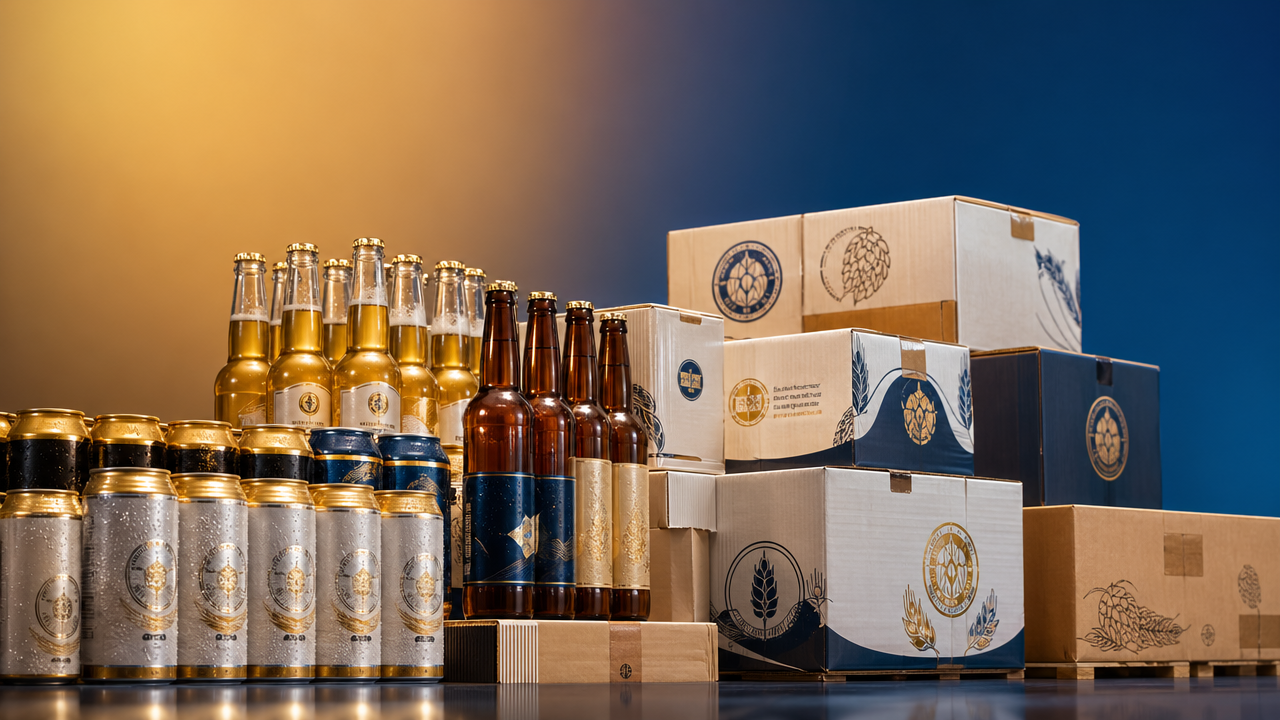
Choosing between a bulk beer supplier and a local importer can directly affect cost, quality control and market speed. For buyers evaluating a Chinese beer factory or beer manufacturer China, the right model depends on branding goals, order volume and supply-chain flexibility. From contract brewing to private label beer production, this guide helps distributors, retailers and decision-makers find the most practical sourcing path.
How do bulk beer suppliers and local importers really differ?
In the beverage alcohol industry, a bulk beer supplier usually works close to production. This model often suits importers, distributors, supermarket chains, bar groups and private label buyers that need medium-to-large volume purchasing, broader recipe choice and more direct control over packaging, taste profile and unit cost. A local importer, by contrast, usually buys, clears customs, stores stock and resells within one market. That adds convenience, but it can also add one more commercial layer between the buyer and the brewery.
For procurement teams, the difference is not only about price. It is about lead time, flexibility, compliance handling, SKU expansion and brand strategy. If you need 3–5 standard products for immediate local distribution, a local importer may reduce coordination work. If you plan to build a long-term beer program, launch private label beer, or scale across 2–4 regional channels, buying from a bulk beer supplier can offer better strategic control.
This decision is especially important when sourcing from a beer manufacturer China. Chinese breweries that support OEM/ODM, recipe development and export packaging can serve very different buyer needs, from restaurant house brands to supermarket promotional lines. Jinpai Beer, for example, operates across R&D, production and distribution, which matters when the buyer needs one partner for formulation, packaging coordination and wholesale supply rather than several disconnected vendors.
The practical question is simple: do you want speed and local stock access, or do you want customization, margin optimization and a more direct factory relationship? In many beverage procurement projects, the answer depends on 4 core variables: order size, time-to-market, label ownership and supply-chain tolerance.
A fast decision framework for buyers
Before comparing offers, buyers should classify their purchasing scenario. The wrong source model usually causes one of three problems within the first 6–12 months: excess landed cost, slow replenishment, or poor differentiation on the shelf. That is why the sourcing model should be selected before the SKU list is finalized.
- Choose a local importer if you need ready inventory, smaller trial orders and reduced coordination on customs, warehousing and domestic delivery.
- Choose a bulk beer supplier if you need direct factory pricing, recipe flexibility, custom packaging or long-term private label planning.
- Use a hybrid model if you want to validate 1–2 SKUs locally first, then shift larger confirmed demand to factory-direct sourcing.
This framework helps procurement managers, business owners and channel partners avoid treating all beer sourcing as a commodity purchase. In reality, the choice affects not only product availability but also margin structure, negotiation power and how fast your beer portfolio can evolve.
Which model fits your volume, brand and channel strategy?
Not every buyer needs the same sourcing route. A neighborhood retailer, a regional distributor and a hospitality chain all face different risk levels. When evaluating bulk beer supply versus local import, the most useful method is to align the sourcing model with channel depth, annual demand and branding requirements rather than relying only on ex-works price.
For example, a restaurant group launching a house beer may value custom taste, can design and stable repeat production more than same-week availability. A supermarket buyer may care more about seasonal promotions, mixed SKU support and predictable replenishment every 30–45 days. A distributor entering a new market may initially prefer easier access through a local importer, then switch to factory-direct when monthly volume becomes more stable.
Jinpai Beer’s product range is relevant here because channel strategies are no longer limited to standard lager. Buyers often need multiple styles in one sourcing relationship, such as classic lager for broad consumption, German wheat for premium positioning, fruit-flavored beer for younger retail demand, and functional specialty beers for niche placement. In some cases, a health-oriented line like Sugar-Free Low-Calorie Beer can help a buyer test a differentiated segment without building a separate supplier network.
The table below helps identify which sourcing path is usually more practical based on purchasing profile, market goals and operational complexity. These are typical industry patterns, not rigid rules, but they are useful during initial supplier qualification.
The main takeaway is that sourcing should follow business stage. During launch, convenience may matter more. During expansion, control and margin often matter more. Buyers who recognize this early can redesign supply structure before costs and channel expectations become difficult to change.
When does factory-direct become more attractive?
Factory-direct purchasing becomes more attractive when demand is forecastable over at least 2–3 reorder cycles. It also makes sense when the buyer wants to lock in packaging style, pursue market exclusivity, or align several SKUs under one brand system. In these situations, a beer manufacturer China can become not just a supplier, but a product development and supply planning partner.
For many B2B buyers, the shift happens once volumes move from trial lots to stable monthly or quarterly purchasing. At that point, a local importer’s convenience may no longer offset higher unit costs or limited customization. The decision becomes less transactional and more strategic.
What should procurement teams compare beyond price?
Price is visible, but total sourcing performance depends on several hidden factors. In beer procurement, buyers should review at least 5 key checkpoints: product consistency, packaging compatibility, order minimums, export documentation support and lead-time reliability. A cheaper quote can become more expensive if the beer arrives with the wrong language label, short shelf-life window or packaging unsuited to your retail channel.
A bulk beer supplier often gives better visibility into production scheduling, batch planning and formulation options. This matters when you need precise coordination between product launch and channel shipment. A local importer may shorten domestic lead time, but the buyer has less influence over brewing schedule, packaging variation and replenishment timing upstream.
Another major factor is portfolio breadth. If your sales plan includes mainstream, flavored and low-calorie beer in one procurement cycle, a supplier with broader production capability reduces complexity. Jinpai Beer’s integrated craft beer development and supply structure can help buyers consolidate SKUs for restaurants, bars, supermarkets and cross-border retail channels instead of sourcing style by style from separate vendors.
The next table outlines a practical comparison matrix that procurement teams can use during supplier assessment, request-for-quotation review and cross-department approval discussions.
Using a comparison matrix like this helps teams move beyond headline pricing. In beverage sourcing, the winning supplier is often the one that reduces rework, supports repeatable execution and gives room for future SKU development, not simply the one with the lowest initial quotation.
A 4-step procurement review process
From internal demand to supplier shortlist
Most successful beer sourcing projects follow 4 steps. First, define the channel target and expected reorder rhythm. Second, confirm style mix, package format and label ownership. Third, compare landed cost and timeline using at least 2–3 supply scenarios. Fourth, validate support capabilities such as OEM/ODM, sample handling and export documents.
- Map demand by channel: bar, supermarket, restaurant, distributor or online retail.
- Set the first-order scope: trial batch, seasonal batch or long-term line.
- Evaluate at least 3 commercial points: unit price, lead time and packaging readiness.
- Review risk factors before purchase order release: customs documents, labeling and shelf-life planning.
This structured process gives procurement personnel and business decision-makers a common review language. It also reduces disagreements between purchasing, marketing and sales teams after launch.
How do cost, speed and flexibility change the sourcing decision?
Cost comparison in beer sourcing should include more than the invoice price. Buyers need to estimate landed cost, domestic distribution cost, packaging adaptation cost, inventory holding pressure and potential margin loss from limited differentiation. In some cases, the local importer looks cheaper on a first small order but becomes less efficient over 2–3 reorders because the buyer pays repeatedly for convenience rather than building supply leverage.
Speed also has two meanings. There is order-to-delivery speed, and there is business-development speed. Local importers can be faster for urgent replenishment in days rather than weeks. Bulk suppliers can be faster for portfolio growth because they make it easier to add new SKUs, redesign packaging or expand from one channel to several channels without restarting the sourcing process from zero.
Flexibility is where many buyers underestimate factory partnerships. If your market needs mixed offerings such as classic lager for mainstream turnover and a lighter option like Sugar-Free Low-Calorie Beer for calorie-conscious consumers, a capable brewery can often align these within one development and supply plan. That is valuable for distributors and retailers trying to widen assortment while keeping supplier management efficient.
The choice becomes clear when you score each route against your business model. Buyers with short-term testing needs may accept higher per-unit cost in exchange for lower complexity. Buyers with private brand ambitions or quarterly replenishment planning usually benefit more from direct cooperation with a bulk beer supplier.
Common cost drivers buyers should not miss
- Packaging changes can add time and approval cycles if your market needs local language labels, deposit marks or channel-specific carton information.
- Smaller frequent orders may reduce storage risk, but they can increase total annual logistics and handling costs.
- A narrow SKU range may lower short-term complexity, yet it can limit upselling opportunities in bars, supermarkets and e-commerce bundles.
In practice, the lowest-risk sourcing setup is often a phased approach: start with a carefully scoped order, monitor sales over one or two cycles, then scale the source model that delivers better margin and channel fit.
What compliance, implementation steps and risks should buyers plan for?
Whether you buy from a bulk beer supplier or local importer, implementation should cover commercial, technical and market-entry details. In export beer trade, buyers commonly review label compliance, shelf-life management, packaging durability, ingredient declaration format and import documentation. The exact requirements vary by country, so early confirmation prevents delays after production is complete.
A realistic implementation plan usually has 3 stages. Stage 1 is product and packaging confirmation. Stage 2 is sampling, artwork review and order alignment. Stage 3 is production, shipment and post-arrival replenishment planning. Depending on complexity, these steps may take several weeks, especially when OEM/ODM elements are involved.
Buyers should also clarify who is responsible for each control point. With a local importer, many downstream tasks are simplified but upstream transparency may be limited. With a direct brewery partner, the buyer often gains better visibility and stronger customization options, but internal coordination must be more disciplined. That is why experienced suppliers that support wholesale, OEM/ODM and international channel supply can reduce friction across departments.
The final procurement decision should therefore be based on execution readiness as much as commercial preference. The best sourcing route is the one your team can manage consistently across forecast, launch and replenishment.
FAQ for beer buyers comparing supplier models
How long does a typical beer sourcing cycle take?
For local stock purchases, timing may be measured in days. For direct factory projects, especially private label or custom packaging orders, planning often runs in stages over several weeks. Buyers should ask for a clear timeline covering sample review, artwork approval, production slot and shipment arrangement before making a final commitment.
Which option is better for a new distributor?
A new distributor entering an untested market may begin with a local importer to reduce complexity and test sell-through. Once monthly demand becomes more predictable and the need for exclusivity or better margins grows, moving toward a bulk beer supplier often becomes more rational.
What is the most common mistake in imported beer procurement?
The most common mistake is comparing only unit price while ignoring total commercial fit. Buyers sometimes overlook label adaptation, reorder rhythm, SKU mix and the long-term value of direct supplier cooperation. This can result in weak assortment strategy and slower portfolio growth after the initial launch.
Can one supplier support both standard and differentiated beer lines?
Yes, if the brewery has broad product development and production capability. This is often useful for buyers that want one mainstream beer for volume and one specialty line for premium shelf positioning, online campaigns or health-focused retail segments.
Why work with a brewery partner that can support scale, customization and channel growth?
For buyers who need more than simple resale stock, the strongest partner is usually one that can connect product development, production and distribution support. Jinpai Beer operates across craft beer R&D, manufacturing and worldwide supply, with product coverage from classic lager and German wheat to fruit-flavored, low-calorie and functional specialty beers. That makes sourcing easier for businesses that want a single conversation covering assortment, custom solutions and long-term channel planning.
This matters for procurement personnel because supplier consolidation can save time across 3 operational areas: product selection, communication flow and repeat ordering. It matters for business decision-makers because a flexible brewery partner can support both wholesale and branded growth. It matters for distributors and agents because mixed channel demand often requires OEM/ODM support, stable production coordination and scalable packaging solutions.
If you are weighing a bulk beer supplier against a local importer, the best next step is not to ask only for price. Ask for a decision package: recommended SKUs for your market, suitable order structure, expected delivery window, packaging options, sample support and documentation scope. That gives you a practical basis for comparing sourcing routes in commercial terms rather than assumptions.
You can contact us to discuss product selection, OEM/ODM feasibility, private label beer planning, delivery cycles, sample arrangements, packaging confirmation, channel-specific beer recommendations and quotation details. If your target market includes restaurants, supermarkets, bars, retail chains or regional distribution, a tailored sourcing plan can help you choose the right model with fewer delays and better long-term control.
Thank you very much for writing to us. Please leave your message and contact information, we will reply to you within 24 hours.