



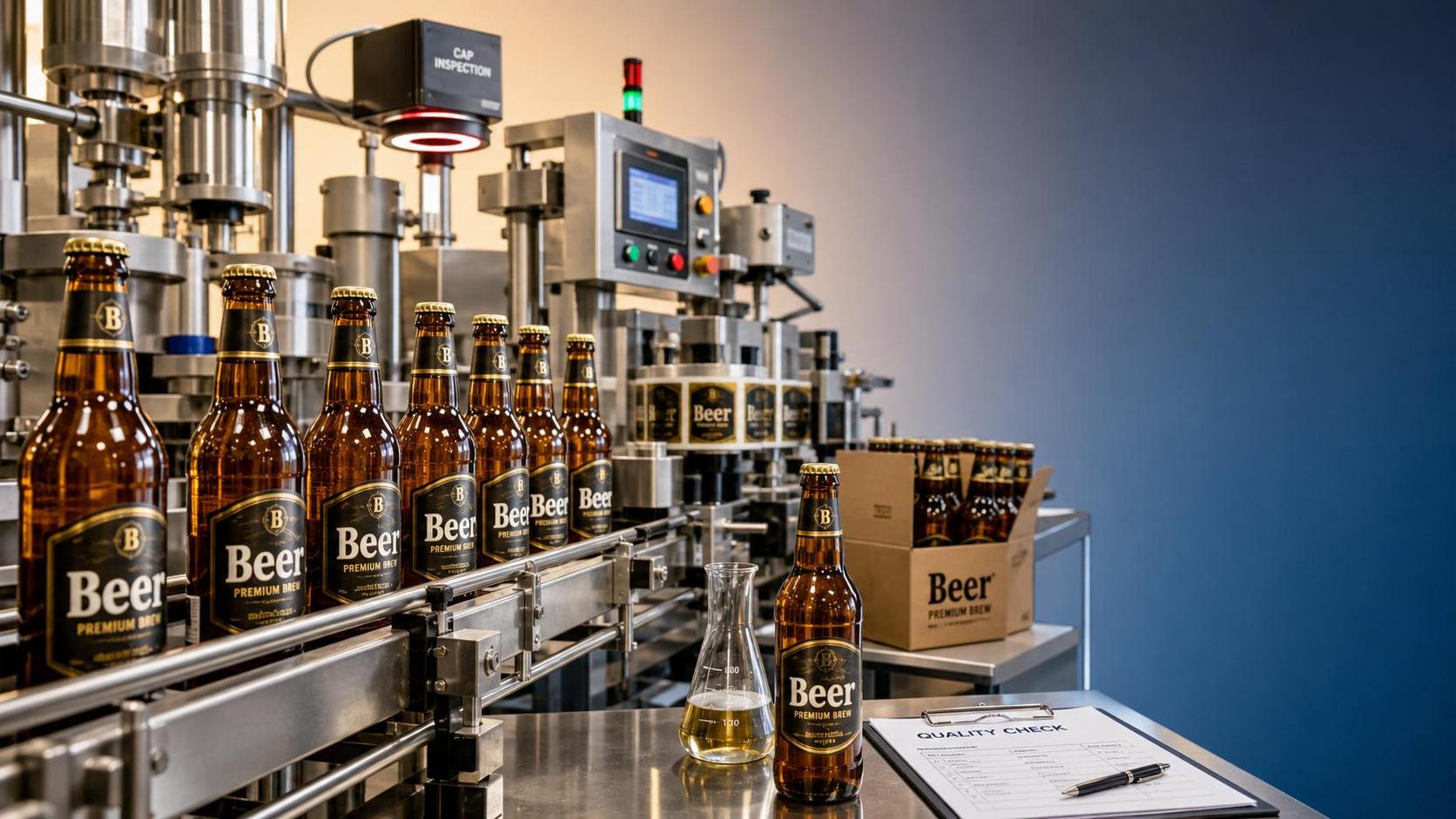
Beer Bottling Service for Startups: How to Choose Batch Size, Packaging, and QC
Launching a new beer brand requires more than a great recipe. It needs a beer bottling service for startups that supports cost control, launch speed, and stable product quality.
Batch size, packaging format, and QC standards shape the whole project. They affect procurement, filling efficiency, shelf life, brand image, and channel acceptance.
In practical terms, the right partner helps reduce avoidable mistakes. That matters when timelines are tight and every launch decision has downstream effects.
This guide explains how to evaluate a beer bottling service for startups. It focuses on batch planning, packaging choices, and quality systems that support scalable growth.
Why beer bottling service for startups is a strategic decision
A startup rarely has room for trial-and-error production. One weak packaging decision can increase breakage, slow distribution, or cause expensive rework.
A capable beer bottling service for startups does more than fill bottles. It aligns production constraints with market demand and brand positioning.
This is especially important in craft beer. Product styles vary widely, from classic lager to German wheat, fruit beer, and functional specialty beer.
Each style places different pressure on carbonation control, oxygen pickup, flavor stability, and packaging compatibility. The bottling plan must reflect those realities.
- Lower startup risk through predictable production runs
- Improve commercial fit across bars, retail, and online sales
- Protect product consistency from first run to repeat orders
- Build a cleaner path toward OEM or ODM scale-up
From recent market shifts, one clear signal stands out. Buyers want fast launches, but they also expect stable quality from day one.
How to choose the right batch size
Batch size is usually the first operational question. It directly influences unit cost, inventory pressure, material sourcing, and production scheduling.
For a beer bottling service for startups, the goal is not simply the smallest or largest run. The goal is the most defensible run size.
Start with channel demand, not tank capacity
Estimate first-month and first-quarter demand by channel. Separate restaurant orders, supermarket listing volume, distributor trials, and direct online sales.
This prevents overproduction. It also helps avoid rushed reorders that can strain scheduling and raw material availability.
Match batch size to shelf-life risk
Some beers move fast and hold well. Others are more sensitive to heat, light, or dissolved oxygen during storage and transport.
Fruit-flavored beer and specialty products often need tighter shelf-life discipline. A smaller launch batch may protect freshness and brand reputation.
Use pilot runs before full commercial scale
A staged launch is often the smarter route. Start with a pilot batch, validate sales velocity, then move into repeat production.
That approach makes a beer bottling service for startups more useful. It turns the manufacturer into a testing platform, not just a filling contractor.
How to select packaging that supports both brand and operations
Packaging is not just a design issue. It affects line efficiency, breakage rate, carton loading, warehouse density, and retailer acceptance.
When comparing a beer bottling service for startups, ask whether packaging options fit your actual route to market. That is where many launch plans become fragile.
Bottle size and format
Common bottle sizes work best when the target channels are still evolving. They simplify sourcing, labeling, secondary packaging, and distributor onboarding.
Custom bottle shapes may look distinctive, but they can raise mold cost, packing complexity, and lead time. Early-stage brands should weigh that carefully.
Primary packaging material
Amber glass remains a practical choice for light protection and premium shelf presence. It also works well for many classic and craft beer categories.
Still, the right beer bottling service for startups should explain tradeoffs clearly. Material choice must fit transport conditions, price targets, and market expectations.
Labels, cartons, and retail readiness
Good packaging performs well in stores and in logistics. Labels must resist moisture, and cartons must survive stacking and handling during distribution.
That also means barcode placement, date coding, and case identification should be verified before mass production. Small errors create large operational friction.
- Choose standard bottle sizes for easier procurement
- Confirm label material for cold-chain or humid storage
- Check carton strength for export and pallet stacking
- Review date code visibility before final approval
QC standards that matter in a beer bottling service for startups
Quality control is where many startup launches succeed or fail. Attractive packaging cannot compensate for unstable taste, haze, leakage, or inconsistent fill levels.
A reliable beer bottling service for startups should show its QC system in detail. General promises are not enough at this stage.
Core checks to review
- Microbiological testing for contamination risk
- Dissolved oxygen control during filling
- Carbonation level verification by product style
- Cap seal integrity and leakage inspection
- Net content and fill-height consistency
- Shelf-life simulation or stability review
These checks are especially relevant for wheat beer, low-calorie beer, and fruit variants. Flavor balance and freshness perception can shift quickly when QC slips.
Traceability is just as important
Every batch should be traceable to ingredients, packaging materials, line conditions, and test results. Without this, issue resolution becomes slow and expensive.
In real operations, traceability protects both the manufacturer and the brand owner. It also improves confidence with importers and distribution partners.
Ask for evidence, not claims
Request sample QC reports, defect handling procedures, and release criteria. That gives a clearer view of how the supplier operates under pressure.
A strong beer bottling service for startups should be comfortable discussing nonconformance, hold decisions, and corrective actions with precision.
Questions to ask before selecting a production partner
A short supplier list is useful, but structured comparison matters more. Ask questions that reveal execution ability, not just sales readiness.
- What is the minimum order quantity for each beer style and bottle format?
- Can the supplier support pilot runs and repeat orders without major setup changes?
- What packaging materials are stocked regularly, and what requires extended lead time?
- Which QC checkpoints are performed before, during, and after filling?
- How are artwork approval, carton proofing, and date coding managed?
- What export, labeling, and compliance support is available for target markets?
These questions help identify whether a beer bottling service for startups can support real commercialization, not just a one-time production run.
A practical route for startup beer projects
A practical rollout usually starts with one or two core SKUs. Keep packaging standardized, validate demand, and tighten QC documentation from the first batch.
As demand grows, expand into adjacent styles such as sugar-free low-calorie beer, German wheat, or fruit-flavored beer with a controlled launch sequence.
Jinpai Beer supports this model through craft beer R&D, production, and distribution. Its portfolio covers classic lager, wheat beer, low-calorie options, fruit beer, and functional specialty beers.
With OEM, ODM, wholesale supply, and customized solutions, the business can support brand development across online and offline channels worldwide.
The best beer bottling service for startups is the one that fits your launch plan, protects product quality, and scales without operational surprises.
Before locking your next production run, review batch assumptions, packaging risk, and QC evidence together. That simple discipline usually leads to better launches and stronger repeat business.
Thank you very much for writing to us. Please leave your message and contact information, we will reply to you within 24 hours.