



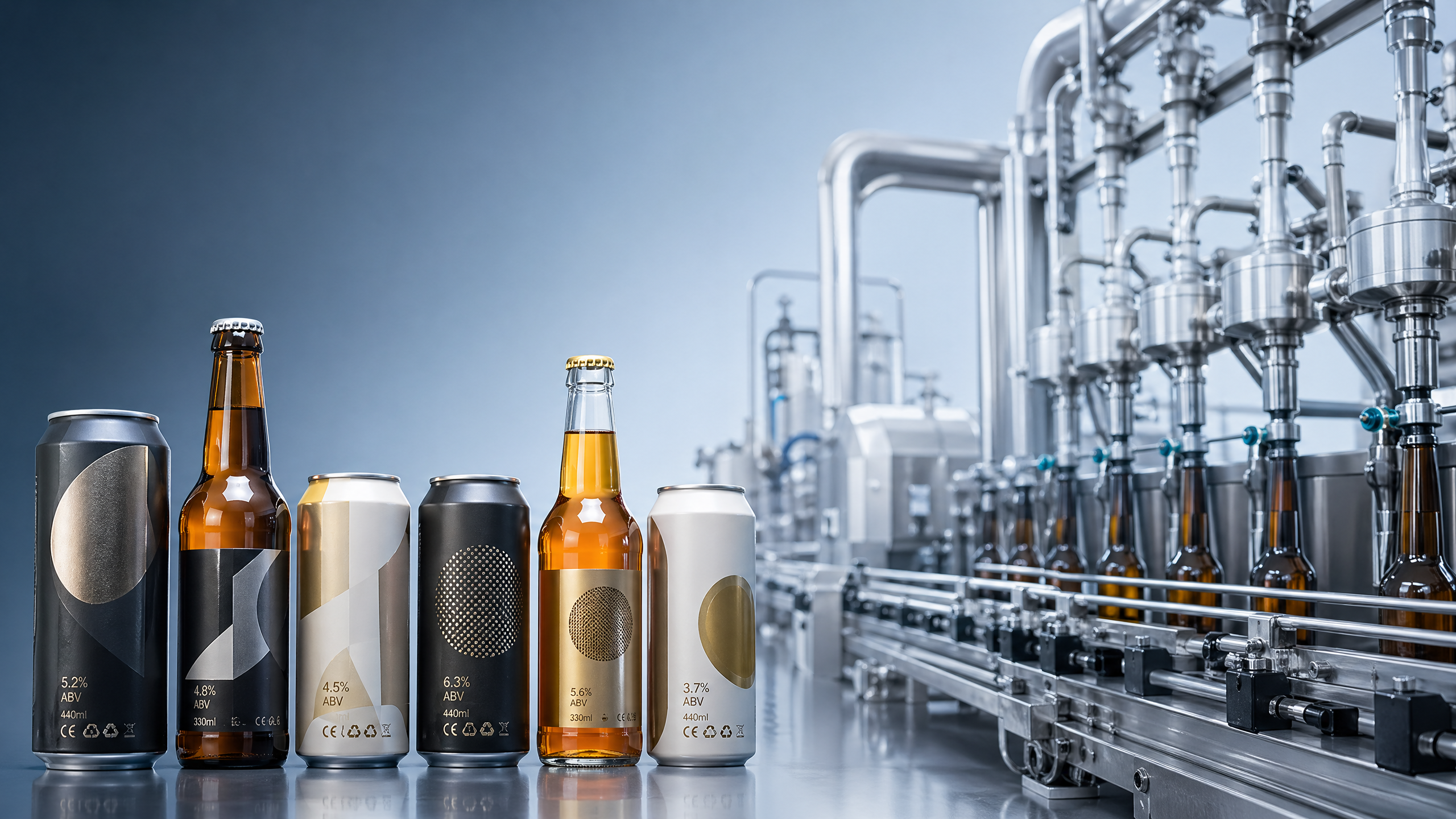
Asia beer contract manufacturer: What hidden costs show up after the first batch?
Choosing an Asia beer contract manufacturer promises speed and scale—but what hidden costs emerge after the first batch? From unexpected logistics surcharges and compliance recalibrations for European craft brewery standards to formulation adjustments for North American brewery taste profiles or Latin American brewery labeling laws, full-service brewing partnerships often reveal financial and operational surprises. At Jinpai Beer, our custom beer manufacturing and brewery outsourcing solutions—including beer OEM, beer ODM, and private label beer production—are built on transparency, not assumptions. Discover how proactive planning with a trusted partner avoids cost creep across global distribution channels.
Why “first-batch pricing” is rarely the real price
For procurement managers and business evaluators vetting Asian contract brewers, the initial quote often looks compelling—low unit cost, fast lead time, flexible MOQs. But that quote almost always reflects a narrow, idealized scenario: one SKU, standard packaging, domestic shipment, no regulatory revisions, and zero iteration on recipe or stability testing. The reality? Hidden costs typically surface in three phases—post-approval, post-production, and post-shipment—and compound rapidly if not anticipated.
At Jinpai Beer, we disclose all potential cost triggers upfront—not as fine print, but as part of your onboarding checklist. That includes formulation refinement cycles (e.g., adjusting bitterness or mouthfeel for regional palates), label reprints for EU allergen compliance or LATAM INCI requirements, and palletization surcharges for non-standard export cartons. Transparency isn’t a marketing claim—it’s how we prevent budget overruns before fermentation even begins.
The 5 most common hidden cost drivers—and how Jinpai mitigates each
1. Regulatory recalibration fees (often overlooked until customs clearance)
Exporting to the EU, UK, Canada, or Australia means mandatory ingredient declarations, nutritional labeling, alcohol-by-volume (ABV) verification, and sometimes country-specific health claims. A “standard” lager label approved for China may require 3–4 rounds of revision for EU Food Information Regulation (FIR) compliance—each round triggering design, print, and warehouse relabeling fees. Jinpai embeds regional regulatory consultants into every OEM project from Day 1, delivering pre-approved label templates and batch-level documentation aligned with target market authorities.
2. Logistics “soft surcharges” (beyond quoted freight)
These include container stuffing labor for mixed-SKU orders, ISPM-15-certified pallet fees, cold-chain monitoring devices for temperature-sensitive shipments, and port handling charges for non-FOB terms. We offer fixed-fee logistics packages—including bonded warehousing in Shenzhen and Shanghai—with no surprise line items. For distributors managing multi-country rollouts, this eliminates forecasting volatility in landed cost calculations.
3. Recipe stabilization & shelf-life validation costs
What works in a pilot batch doesn’t always scale. Oxidation sensitivity, yeast sediment consistency, or carbonation retention can shift at commercial volumes—requiring additional lab testing, accelerated aging trials, or reformulation. Jinpai’s R&D team co-develops stability protocols *with* your technical team pre-batch, using real-time data from our ISO 22000-certified labs. No retroactive testing fees. No delayed launch timelines.
4. Packaging iteration penalties (especially for premium or functional SKUs)
Custom cans, biodegradable labels, or specialty closures often involve tooling minimums and setup fees—reapplied for every design change. When launching our Sugar-Free Low-Calorie Beer, we absorbed first-run can liner certification costs for clients targeting keto-certified retail channels—because functional positioning demands precision, not compromise.
5. Post-launch support gaps (the silent margin eroder)
Many manufacturers treat the first shipment as “project complete.” But what happens when a supermarket chain requests a limited-edition variant? Or a bar group needs a quick-turn seasonal brew? Jinpai offers embedded project management for ongoing SKUs—including rapid-response formulation tweaks, short-run co-packing, and real-time inventory visibility via shared dashboards. That continuity prevents costly re-onboarding and duplicate QA cycles.
How to spot a truly transparent partner (before signing)
Ask these five questions—then verify the answers:
- “Can you share your full cost breakdown per 1,000 units—including label compliance, lab testing, and container loading?” — If they hesitate or say “it depends,” walk away.
- “What’s your process when a target market rejects our label? Who owns the revision cost?” — Jinpai covers first-round regulatory redesigns for agreed-upon markets.
- “Do you retain batch records, stability data, and raw material certs for 3+ years?” — Critical for audits, recalls, or retailer compliance portals.
- “Can we audit your production schedule and lab capacity in real time?” — Jinpai grants secure portal access to live capacity and QC logs.
- “What’s included in ‘OEM support’ beyond brewing?” — Our scope includes regulatory liaison, logistics coordination, and formulation IP protection—not just kettle time.
Final takeaway: Hidden costs aren’t inevitable—they’re negotiable, predictable, and preventable
For decision-makers evaluating Asia-based beer contract manufacturing, the real differentiator isn’t the lowest per-unit quote—it’s the partner who treats your total landed cost, compliance risk, and time-to-shelf as shared KPIs. Jinpai Beer doesn’t eliminate complexity; we front-load it, structure it, and absorb the friction points that derail global launches. Whether you’re scaling a craft lager across ASEAN, launching a functional Sugar-Free Low-Calorie Beer in Europe, or building a private-label portfolio for Latin American supermarkets—we align incentives from batch one onward. Because sustainable growth starts with predictable economics—not pleasant surprises.
Thank you very much for writing to us. Please leave your message and contact information, we will reply to you within 24 hours.