



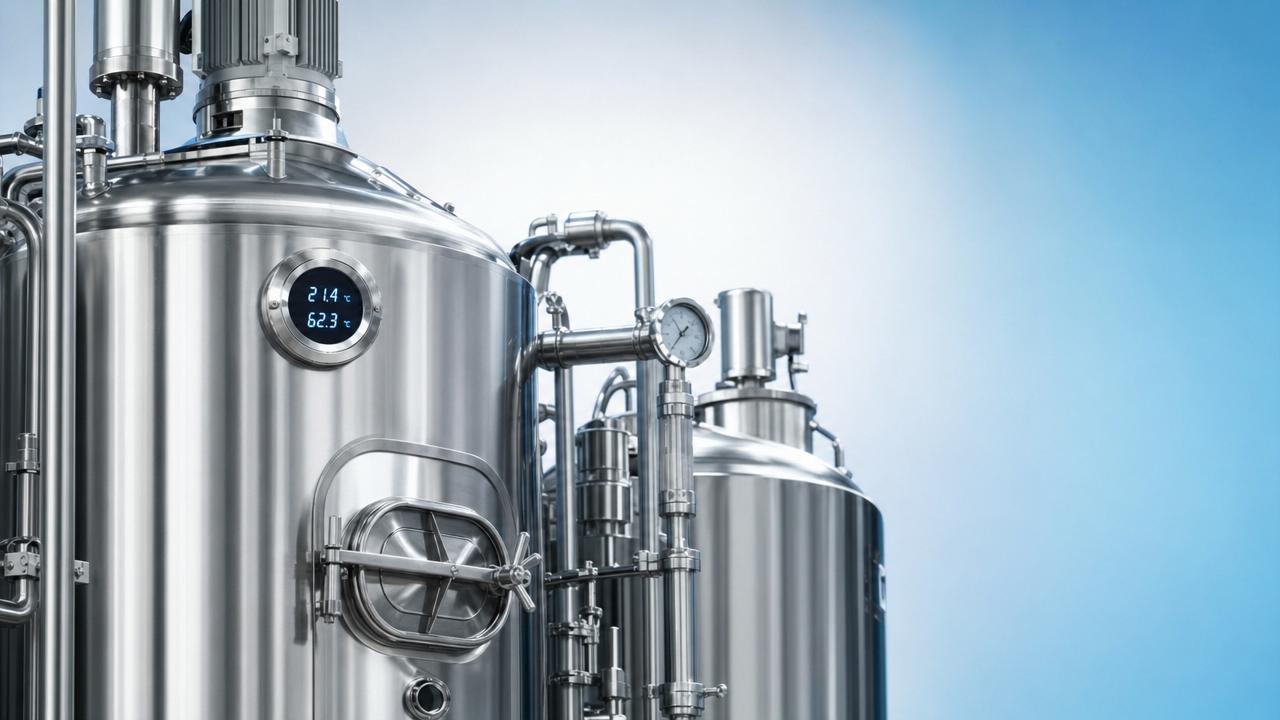
As U.S. craft beer brand owners face rising production costs, capacity constraints, and shifting consumer demands, more are turning to craft beer contract brewing as a strategic growth lever in 2026. This shift isn’t just about outsourcing—it’s about agility, scalability, and staying competitive without heavy CAPEX. At Jinpai Beer, we empower emerging and established beer brands with end-to-end contract brewing solutions: from R&D and recipe customization to scalable production of lagers, wheat beers, low-calorie, fruit-infused, and functional craft styles—delivered globally via OEM/ODM and wholesale channels.
A Structural Shift: From Brewpubs to Contract-First Branding
The U.S. craft beer landscape is undergoing its most consequential structural recalibration since the 2010s boom. According to the Brewers Association, over 32% of new craft beer brands launched in 2025 opted for contract brewing from day one—up from just 14% in 2020. This isn’t a temporary workaround; it reflects a deliberate pivot toward asset-light, market-responsive branding. Independent brewers no longer assume ownership of brewhouses as a prerequisite to authenticity or quality control.
What’s accelerating this trend? Three converging forces: first, average startup CAPEX for a 15-barrel brewhouse now exceeds $850,000—including permitting, utilities upgrades, and compliance infrastructure. Second, shelf-space competition has intensified: supermarkets now allocate only 12–18 months to evaluate new craft SKUs before delisting underperformers. Third, consumers increasingly prioritize novelty and functional benefits—e.g., sugar-free low-calorie formats (+29% volume growth YoY) and botanical-infused variants—demanding rapid iteration cycles that fixed-capacity breweries struggle to support.
This evolution signals a broader redefinition of “craft”: less about physical equipment ownership, more about recipe IP, sensory storytelling, and channel-specific formulation. Brands that treat brewing as a modular service—not a vertical obligation—are gaining speed, flexibility, and global scalability in parallel.
Key Drivers Behind the 2026 Contract Brewing Surge
- Regulatory complexity: TTB label approvals now average 78 days (up from 42 in 2021), making agile reformulation essential—contract partners with pre-approved templates reduce time-to-market by 40–60%.
- Ingredient volatility: Hops prices spiked 33% in Q1 2025; contract brewers with multi-region sourcing networks mitigate cost exposure across barley, yeast, and adjuncts.
- Distribution fragmentation: 68% of U.S. craft brands now sell through ≥3 channels (DTC, on-premise, retail); flexible batch sizes (as low as 500 L per SKU) enable channel-tailored packaging and ABV profiles.
Who Benefits Most—and Where Are the Risks?
Not all brand owners experience equal upside from contract brewing. The highest ROI is observed among three distinct segments: early-stage DTC-first brands launching ≤3 SKUs; regional restaurant groups expanding private-label beer programs; and health-focused CPG startups entering the functional beer space (e.g., adaptogenic, vitamin-fortified, or gut-health formulations). These groups share a need for rapid validation, minimal inventory risk, and regulatory-ready documentation—all delivered within 8–12 weeks from concept to pallet.
Conversely, risks intensify when brands overlook alignment on critical operational dimensions. A 2025 industry survey revealed that 41% of contract brewing partnerships faced delays due to mismatched expectations around minimum order quantities (MOQs), lead times, or co-packing certifications. For example, brands targeting Whole Foods require SQF Level 2 certification—a non-negotiable for 92% of Tier-1 U.S. retailers—but only 37% of domestic contract facilities maintain it.
Equally critical is recipe fidelity. While 94% of contract brewers offer lab-scale pilot batches, only 58% provide full analytical data (IBU, SRM, alcohol-by-volume variance ±0.1%, residual sugar) across all production runs. Without this, scaling from 100L trials to 5,000L commercial batches introduces unacceptable flavor drift.
Contract Brewing Readiness Assessment
This table underscores a pivotal insight: contract brewing success in 2026 hinges less on price per liter and more on operational alignment across time, compliance, and granularity. Brands prioritizing speed-to-shelf and channel readiness will outpace those optimizing solely for unit cost.
Beyond Lager & IPA: How Contract Partners Enable Category Expansion
The most strategic advantage of modern craft beer contract brewing lies not in cost savings—but in category acceleration. Jinpai Beer’s 2025 production data shows that brands leveraging our R&D-integrated contract services launched 3.2x more SKUs in functional and lifestyle categories than peers using traditional co-packers. Why? Because true partnership includes access to proprietary yeast banks (including non-GMO kveik strains), cold-fermentation capabilities for crisp low-calorie profiles (<90 kcal/330mL), and infusion systems calibrated for volatile fruit essences and water-soluble botanicals.
Consider sugar-free low-calorie beer: achieving balanced mouthfeel without maltodextrin or artificial sweeteners requires precise enzymatic hydrolysis and extended cold conditioning—processes demanding specialized tanks and microbiological oversight. Only 22% of U.S.-based contract facilities offer both certified gluten-reduced protocols and real-time glycol-controlled fermentation logs. Jinpai Beer delivers both, with full traceability from raw material lot to finished can lot.
Similarly, fruit-flavored and functional specialty beers demand rigorous allergen and cross-contact controls. Our dedicated fruit-infusion suite operates under positive-pressure HEPA filtration, with validated cleaning-in-place (CIP) cycles verified by ATP swab testing—ensuring zero carryover between raspberry sour and turmeric-ginger wellness variants.
Your Next Step: From Trend Recognition to Operational Action
Recognizing the 2026 contract brewing trend is only step one. The decisive move is evaluating how it aligns with your brand’s specific stage, goals, and constraints. If you’re a U.S.-based beer brand owner exploring this path, focus your due diligence on four actionable parameters: (1) your target launch timeline (e.g., holiday 2026 requires facility engagement by April 2026), (2) required certifications for your priority retail partners, (3) ideal batch size range across core vs. experimental SKUs, and (4) whether you need embedded R&D support—or just production execution.
Jinpai Beer supports U.S. craft brands at every inflection point—with scalable production across classic lager, German wheat, sugar-free low-calorie, fruit-infused, and functional specialty beers. We provide full OEM/ODM services, including recipe development, sensory panel testing, label compliance support, and global logistics coordination. Whether you’re validating your first pilot batch or scaling to 50,000 cases annually, our team delivers documented consistency, regulatory readiness, and responsive communication—no gatekeepers, no hidden MOQs.
To begin your assessment, contact us today to request: (a) a facility capability dossier with SQF audit summary, (b) sample timelines for your target SKU portfolio, (c) formulation consultation for functional or low-calorie variants, and (d) wholesale pricing tiers based on annual volume commitments. Let’s build your next phase—not around equipment, but around opportunity.
Thank you very much for writing to us. Please leave your message and contact information, we will reply to you within 24 hours.