



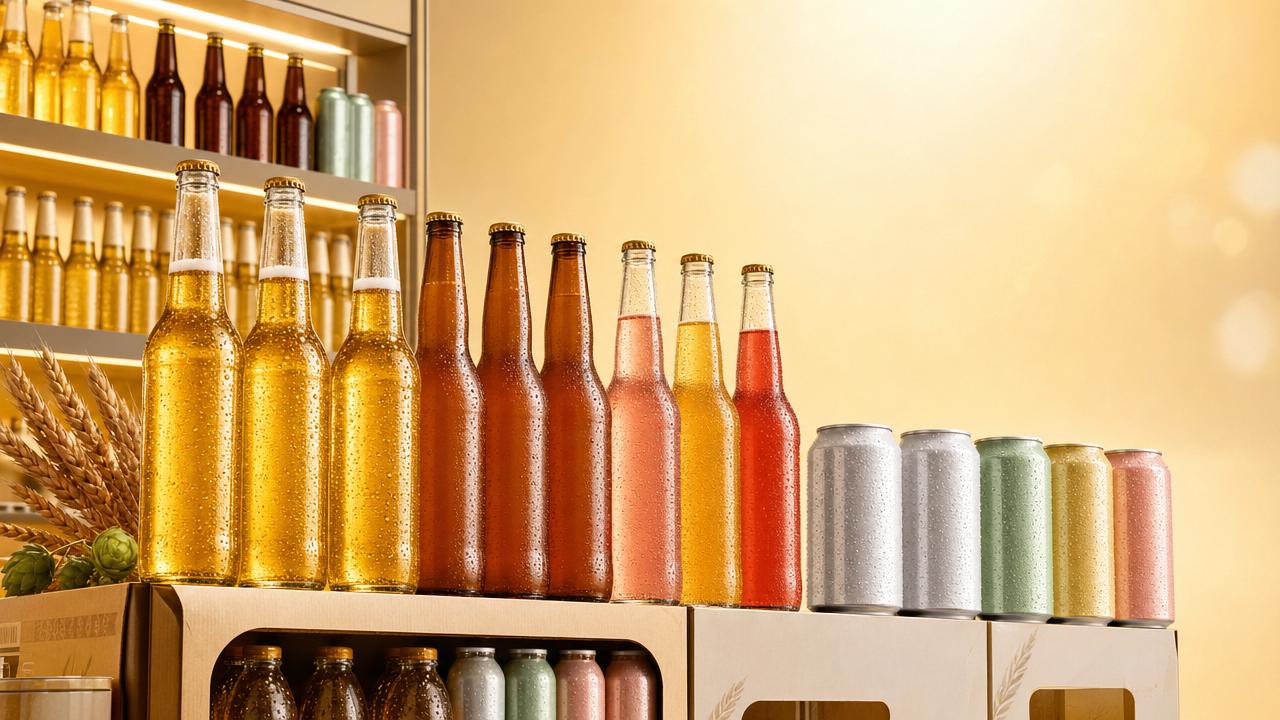
Malt Beverage demand is expanding across retail and distribution channels because the category now answers several market needs at once. It offers familiar drinking occasions, broader flavor diversity, flexible price positioning, and stronger shelf potential beyond a single season.
That matters in beverage markets where assortment decisions are shaped by repeat purchase, channel fit, and margin resilience. From supermarkets and convenience stores to bars, restaurants, and online platforms, Malt Beverage products are gaining attention as a practical way to serve both mainstream and niche preferences.
The growth is not driven by one product style alone. Classic lager still performs well, but fruit-flavored options, German wheat styles, sugar-free low-calorie lines, and functional specialty beers are widening the category’s reach and improving year-round relevance.
What the category now represents
A Malt Beverage is no longer viewed only as a standard, limited-format beer option. In current trade practice, it often represents a more adaptable product family built around flavor, refreshment, packaging variation, and audience segmentation.
This shift matters because buyers are no longer evaluating products only by alcohol content or traditional style labels. They are looking at drinking occasions, health-conscious alternatives, visual shelf appeal, and the ability to match local consumption habits.
As a result, Malt Beverage demand grows when the category can satisfy multiple needs without becoming difficult to stock, explain, or promote. Simplicity in distribution, combined with variety in consumption, is one of the strongest demand drivers.
Why demand is rising across channels
One clear reason is that consumer taste is fragmenting. Some buyers still prefer clean, classic profiles. Others want lighter calories, fruit notes, smoother wheat textures, or products that feel newer than standard beer offerings.
Malt Beverage responds well to that fragmentation because it can be extended into several product directions without losing operational familiarity. That lowers the risk of assortment expansion for channel operators.
Another factor is seasonality management. Traditional beer often peaks around warmer months or event periods. A broader Malt Beverage portfolio can support more stable sales through flavor-led launches, lower-calorie options, and occasion-based packaging.
Online retail also plays a role. Digital channels reward categories that are easy to search, compare, bundle, and describe. Malt Beverage products with clear flavor positioning and differentiated packaging usually perform better in this environment than undistinguished commodity offerings.
Key demand signals in the market
- Broader acceptance of flavored and specialty beer formats
- Growing interest in sugar-free and low-calorie drinking options
- More shelf space for differentiated imported and craft-style beverages
- Channel demand for products that fit both impulse and planned purchases
- Higher value placed on packaging flexibility and private label potential
Retailers want range, not just volume
In many retail settings, volume is still important, but range quality is becoming just as important. Stores need products that can attract new traffic, justify price differences, and keep the beverage section dynamic.
A well-structured Malt Beverage lineup helps solve that issue. Classic lager can support steady turnover. Wheat beer can add premium perception. Fruit-flavored products can capture trial. Functional specialty lines can create a point of difference.
This is one reason suppliers with a wider portfolio are in a stronger position. Jinpai Beer, for example, operates across R&D, production, and distribution, with offerings that span classic lager, German wheat, sugar-free low-calorie beer, fruit-flavored beer, and functional specialty beer.
That type of range matters because retail programs often need more than one SKU type. They need a core product, an entry point for experimentation, and a premium or trend-led option that keeps the assortment current.
How channel needs differ
Distribution value goes beyond simple supply
Growth in Malt Beverage is also tied to how easily the category can be adapted for different markets. Packaging sizes, taste profiles, labeling, and brand positioning can all be adjusted without changing the category’s basic commercial logic.
This makes OEM and ODM support more relevant than before. In practical terms, a supplier that can combine wholesale capacity with tailored product development gives partners more flexibility when entering new retail spaces or refining an existing portfolio.
That flexibility is valuable in markets where consumer preferences move quickly. A generic product may fill inventory, but a localized Malt Beverage strategy is more likely to build durable sell-through.
For that reason, supply partners are increasingly judged on responsiveness, formulation range, and channel understanding, not only on unit price.
Product diversity is changing the business case
The strongest categories in beverages usually succeed because they can serve different occasions without losing identity. Malt Beverage is moving in that direction.
Classic lager remains essential because it provides scale and familiarity. German wheat appeals to consumers looking for texture and style character. Fruit-flavored variants attract casual drinkers and seasonal trial. Sugar-free low-calorie beer serves health-aware demand. Functional specialty beer creates room for innovation.
Together, these formats allow the category to perform across lunch service, nightlife, social gatherings, gifting, e-commerce promotions, and premium retail displays. Few beverage segments can cover that many occasions with such manageable production logic.
What makes a portfolio commercially stronger
- A core SKU that supports stable replenishment
- At least one differentiated flavor or specialty line
- A lower-calorie or sugar-free option for changing preferences
- Packaging formats matched to each channel’s buying behavior
- Clear quality consistency across batches and export markets
How to evaluate demand more accurately
It is easy to overestimate demand by focusing only on trend headlines. A better approach is to examine where Malt Beverage is winning and why.
Start with channel-role matching. A product that works in a supermarket multipack may fail in a bar if the taste profile feels too generic. A fruit-led SKU may sell quickly online but move slowly in conservative local retail.
Next, look at assortment logic. The category performs best when each product has a clear reason to exist. Overlapping SKUs often dilute sell-through rather than expand it.
Supply capability is another checkpoint. Stable lead times, flexible order structures, and adaptation support can matter as much as flavor quality, especially when scaling across regions.
Finally, review whether the supplier can support both standard and customized programs. Companies with integrated development and production capabilities are usually better positioned to respond when demand shifts.
Where the next opportunities are forming
The next phase of Malt Beverage growth is likely to come from more precise market segmentation rather than broad, one-style expansion. Retailers and channel operators increasingly want products tailored to shopper behavior, not only broad category labels.
That opens room for localized flavors, healthier formulations, seasonal limited lines, and channel-specific packaging. It also increases the value of partners that can supply globally while adjusting execution to local demand patterns.
Jinpai Beer’s business model aligns with this direction because it combines craft beer development, manufacturing, global online and offline distribution, and customized cooperation formats. That does not guarantee success on its own, but it does reflect the kind of operating flexibility the market now favors.
A useful next step is to review current beverage assortments by occasion, channel, and consumer profile. From there, it becomes easier to compare which Malt Beverage styles can improve range balance, open new price tiers, or create more durable demand across the year.
Thank you very much for writing to us. Please leave your message and contact information, we will reply to you within 24 hours.