



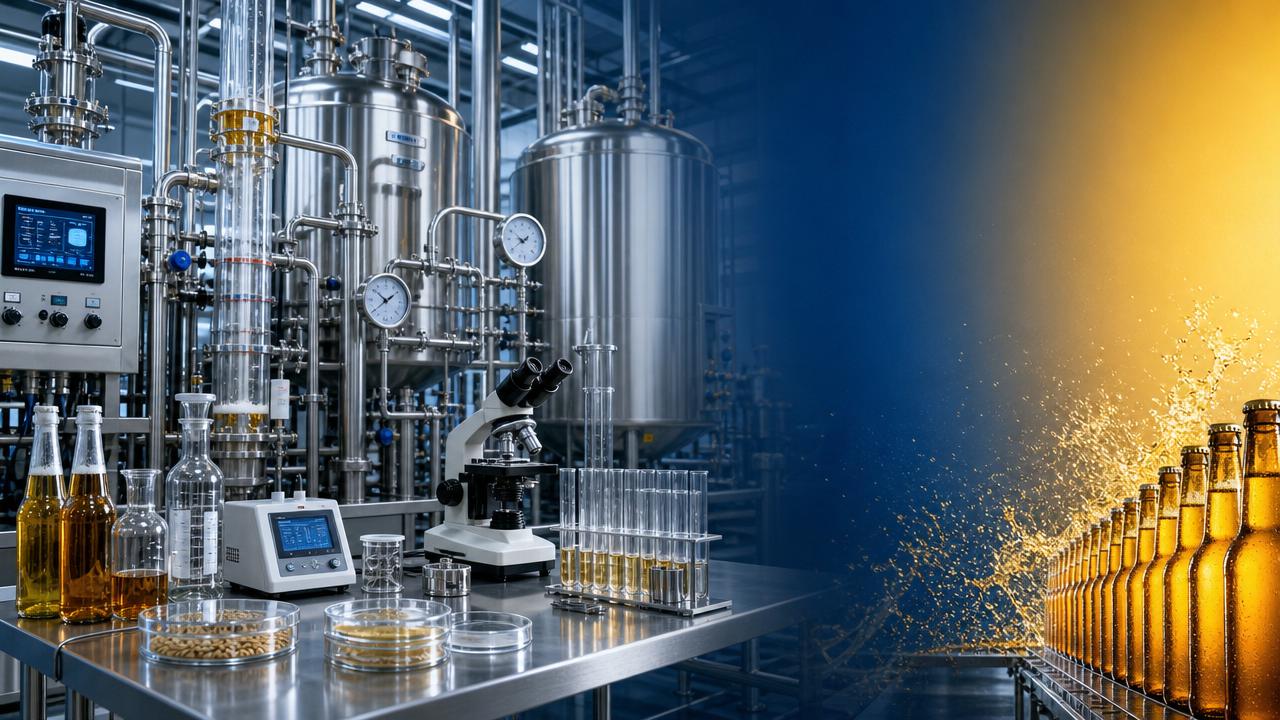
Why 0.0% Alcohol Control Starts Long Before Final Testing
Producing 0.0% Alcohol beverages that taste clean and stay compliant is never about one final lab result. It depends on dozens of small controls working together, from recipe design to packaged product release.
In beer and flavored malt beverages, the challenge is even sharper. Removing alcohol can also strip aroma, thin body, and expose microbiological risks that standard beer processes usually suppress.
That is why taste stability and compliance need to be managed as one system. If one point drifts, both product character and regulatory safety can move out of range.
For companies with broad portfolios like Jinpai Beer, including classic lager, German wheat, sugar-free low-calorie beer, fruit-flavored beer and functional specialty beers, process discipline matters even more. Different styles react very differently during 0.0% Alcohol production.
The Process Controls That Protect Flavor and Compliance
The most reliable plants do not wait for problems to appear. They lock in control points early, then verify them with simple, repeatable checks.
- Define the alcohol limit at formula stage, not after production. Set an internal target below the legal threshold to absorb normal process variation and test uncertainty.
- Match the base beer to the dealcoholization method. A recipe that works for full-strength lager may collapse in body or aroma after alcohol removal.
- Control fermentation endpoints tightly before alcohol removal. Excess residual fermentables can create flavor drift, refermentation risk, and unstable 0.0% Alcohol declarations during shelf life.
- Monitor temperature and residence time during dealcoholization. Even short overheating can flatten hop notes, darken color, and create cooked flavors that are hard to correct later.
- Track dissolved oxygen after every transfer step. Low-alcohol and 0.0% Alcohol products are especially vulnerable to stale notes because their flavor matrix is lighter.
- Verify carbonation, pH, and extract together instead of separately. These three factors strongly shape perceived fullness, freshness, and sweetness balance in 0.0% Alcohol beverages.
- Build microbiological barriers beyond normal beer standards. Once alcohol is removed, contamination tolerance becomes much lower, especially in fruit-flavored and functional lines.
- Use packaging validation as a release gate. Seam quality, fill consistency, oxygen pickup, and closure integrity directly affect compliance, stability, and consumer experience.
Base Beer Design Matters More Than Many Teams Expect
One common mistake is trying to create 0.0% Alcohol products by simply removing ethanol from an existing beer SKU. In practice, that often leaves the final drink thin, sharp, or empty.
A better approach is to design a base beer specifically for alcohol removal. Slightly higher body, adjusted bitterness, selected yeast behavior, and controlled ester formation usually give better final balance.
This matters for OEM and ODM development too. When products are customized for retailers, bars, or regional channels, the production route should be defined together with the flavor target, not afterwards.
Small Deviations Often Create the Biggest Sensory Problems
In 0.0% Alcohol production, a minor shift in vacuum efficiency, membrane performance, blending ratio, or carbonation can become obvious in the glass. The product has less sensory masking than standard beer.
That is why sensory review should be linked to process data. When tasting notes are connected to real operating records, recurring defects become easier to predict and prevent.
Key Checks at Different Production Stages
The most useful controls are the ones teams can repeat every batch without confusion. Clear stage-by-stage checks keep decisions practical.
- Set in-process alcohol checks before and after dealcoholization. This shortens response time and prevents a full packaging run from depending on one final release result.
- Review aroma retention with each parameter adjustment. Better legal compliance means little if the 0.0% Alcohol product loses the signature profile expected by buyers.
- Treat post-blend water and flavor additions as critical inputs. Poor water hygiene or unstable natural flavors can quietly undermine an otherwise controlled process.
- Check label claims against analytical data and local rules. Requirements for 0.0% Alcohol wording, nutrition, and functional claims can vary across export markets.
Where Taste Stability Usually Gets Lost
Taste instability rarely comes from one dramatic error. More often, it comes from several small compromises that seem harmless during production but become obvious after storage.
Oxygen Is Still One of the Biggest Threats
Once alcohol is reduced, oxidation feels sharper. Cardboard notes, muted fruit character, fading hop brightness, and rough sweetness can appear earlier than expected.
This is especially important in fruit-flavored beer and sugar-free low-calorie formulas. Their flavor systems are usually more delicate, so oxygen control needs tighter limits and faster correction.
Microbial Risk Changes After Alcohol Removal
A line designed for standard beer may not automatically be safe for 0.0% Alcohol beverages. Lower alcohol means weaker natural inhibition, and post-process contamination becomes more significant.
Areas often overlooked include blend tanks, flavor dosing points, membranes, filler bowls, and package rinsing quality. A clean fermenter alone does not protect the finished product.
- Tighten sanitation verification around post-dealcoholization zones. ATP checks, environmental swabs, and CIP confirmation should focus where alcohol no longer provides protection.
- Hold microbiological samples from both bulk and package. A clean tank result does not always match what happens after filling and distribution handling.
- Validate shelf-life with real storage abuse scenarios. Warm transport, delayed refrigeration, and repeated temperature swings can expose hidden weakness in 0.0% Alcohol stability.
- Review flavor ingredient compatibility before launch. Fruit, botanical, vitamin, or functional additions may change pH, haze, foam, and microbial behavior more than expected.
Practical Scenarios Across Beer and Beverage Portfolios
In a classic lager style, the main issue is usually keeping a crisp finish without making the product feel watery. Carbonation, bitterness shaping, and sulfur control are often the deciding factors.
For German wheat styles, haze appearance, ester balance, and softness matter more. If the alcohol removal step is too aggressive, the product can lose its familiar roundness very quickly.
In fruit-flavored or functional specialty products, control becomes broader than alcohol alone. Sweetness source, flavor stability, acidity, preservative strategy, and package compatibility all influence the final 0.0% Alcohol result.
For wholesale and customized projects supplied to supermarkets, bars, restaurants, and international retail channels, documentation also becomes part of quality control. Buyers often need stable specs, traceability, and repeatable release standards across batches.
Execution Points That Make Daily Control Easier
Good systems are not complicated on paper only. They are simple enough to run every day and strong enough to catch drift early.
- Create batch records that connect sensory notes with process values. This helps teams identify which parameter shifts actually affect 0.0% Alcohol flavor stability.
- Use tighter internal limits than the minimum legal requirement. A safety margin is essential when different labs, export standards, or production scales are involved.
- Standardize hold and release rules for rework decisions. Clear thresholds reduce confusion when an in-process alcohol or microbiology value lands near the action limit.
- Revalidate critical controls whenever recipe, flavor system, packaging, or line speed changes. Even small commercial adjustments can shift 0.0% Alcohol performance unexpectedly.
Do Not Separate Compliance From Product Experience
A beverage can meet the legal definition of 0.0% Alcohol and still fail in the market if it tastes flat, ages poorly, or varies from batch to batch. Compliance is necessary, but it is not enough.
The strongest operations measure success in three ways at once: alcohol accuracy, microbiological security, and sensory consistency. When those move together, product confidence becomes much easier to scale.
Final Focus for Stable 0.0% Alcohol Results
Stable 0.0% Alcohol production comes from disciplined control, not last-minute correction. Base beer design, dealcoholization parameters, hygiene management, oxygen control, and release verification all shape the final result.
For breweries and beverage partners developing customized 0.0% Alcohol products, the best next step is to review where flavor loss, contamination risk, or compliance uncertainty can enter the process first. Once those points are visible, daily control becomes much more practical and much more reliable.
Thank you very much for writing to us. Please leave your message and contact information, we will reply to you within 24 hours.