



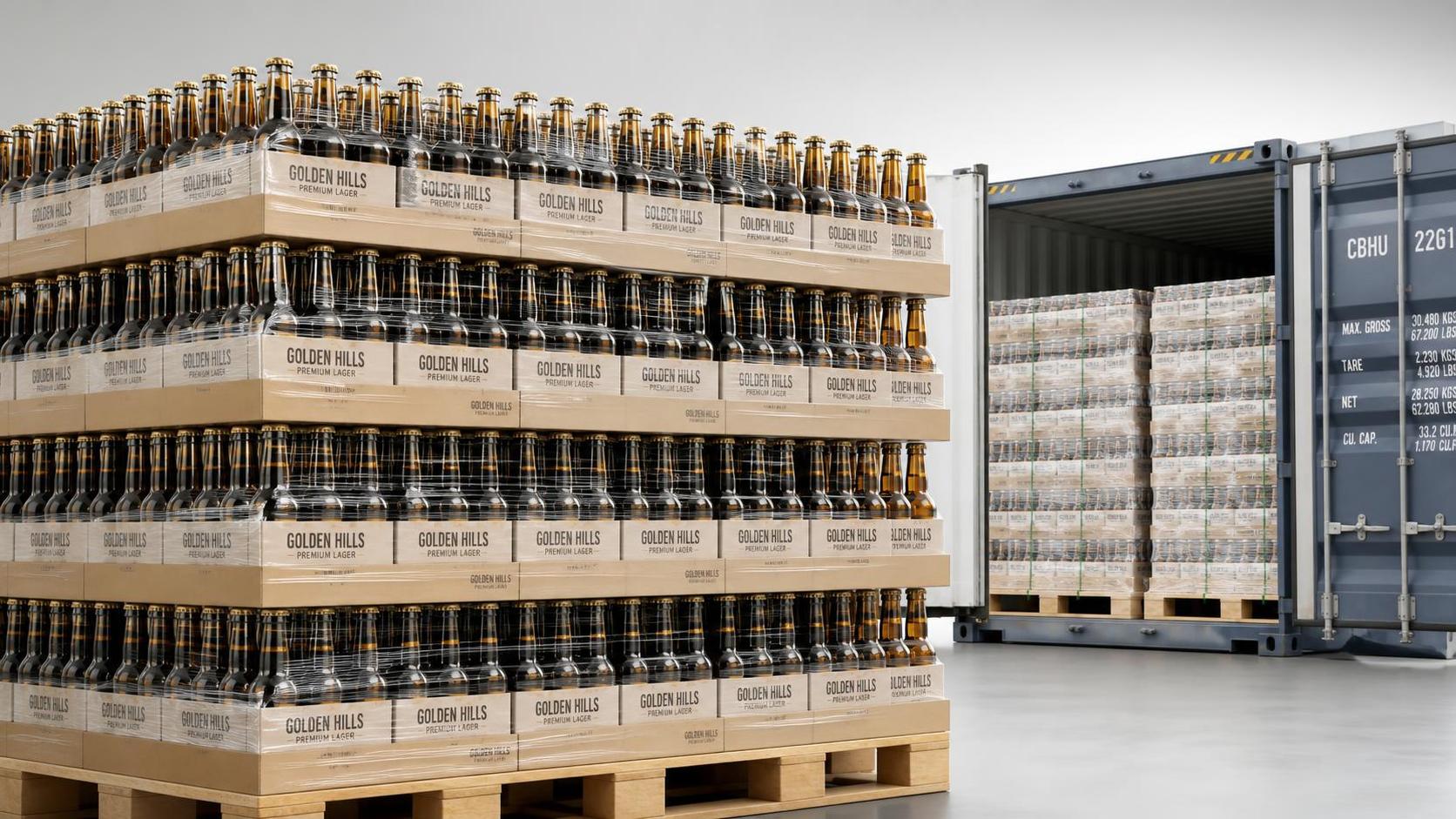
Minimum order volume for glass bottle private label beer production varies significantly across manufacturers, depending on bottle size, labeling method, packaging configuration, and compliance requirements. Unlike canned or kegged formats, glass bottle runs involve higher setup costs—especially for custom molds, label application systems, and line changeovers—making MOQ a critical factor in total landed cost calculation. For standard 330ml or 500ml amber or green glass bottles with sleeve or pressure-sensitive labels, most established private label beer manufacturers set baseline MOQs between 12,000 and 24,000 units per SKU. This range reflects the operational threshold needed to amortize mold preparation, quality validation batches, and regulatory documentation across a single production run.
Bottle geometry directly impacts volume thresholds. A 330ml bottle typically allows tighter palletization than a 650ml stubby or 750ml specialty format. When using non-standard shapes—such as shoulderless cylinders or wide-mouthed wheat beer bottles—the same physical warehouse space holds fewer units, increasing per-unit handling and storage overhead. As a result, manufacturers often raise MOQs by 25–40% for irregular or oversized glass containers. Labeling method further influences scalability: wet-glue labels require precise humidity control during application and longer drying time, limiting line speed and raising minimum batch sizes. Sleeve labeling, while more tolerant of dimensional variance, demands pre-printed shrink film rolls with fixed diameter tolerances—introducing minimum roll quantities that indirectly constrain viable order volumes.
Glass bottle compliance adds another layer of constraint. Every production lot must meet food-contact safety standards for leachable heavy metals, especially cadmium and lead, which accumulate in recycled glass cullet. Manufacturers sourcing cullet from mixed streams may require larger batches to ensure consistent melt chemistry and thermal stability during annealing. Batch-level testing for extractables is rarely performed below 10,000 units due to lab cost allocation; smaller runs often rely on historical process data rather than lot-specific verification—a risk some buyers accept for pilot launches but avoid for sustained distribution.
Customization depth correlates strongly with MOQ flexibility. A private label beer manufacturer offering only front-label artwork changes on stock bottle shapes may accommodate orders as low as 8,000 units—if the client supplies approved artwork, adheres to existing neck finish specifications (e.g., 28mm or 30mm crown closure), and accepts standard case pack configurations (e.g., 12×330ml in corrugated trays). Introducing bespoke bottle color—like cobalt blue or frosted white—requires furnace temperature recalibration and extended trial melts, pushing MOQs toward 20,000+ units. Similarly, embossed logos or textured glass surfaces necessitate new mold inserts and extended press maintenance cycles, effectively doubling the minimum viable run size compared to plain cylindrical bottles.
Logistics integration affects effective MOQ more than many buyers anticipate. Glass bottles are heavy and fragile, making freight cost per unit disproportionately high at low volumes. A 12,000-unit order of 500ml bottles weighs approximately 18 metric tons—barely filling a 20-foot container. Shipping partial containers incurs premium LCL (Less-than-Container Load) rates and extended customs clearance timelines due to mixed cargo documentation. Some manufacturers absorb this inefficiency only above 18,000 units, where full-container utilization becomes feasible without compromising pallet integrity. Others build the freight premium into unit pricing below that threshold, effectively raising the breakeven point for buyers evaluating total landed cost.
Label and packaging material sourcing introduces hidden dependencies. Pressure-sensitive labels require backing liner compatibility with the manufacturer’s applicator rollers; mismatched liner thickness or adhesive formulation can cause jams, increasing scrap rate. Most private label beer manufacturers maintain approved vendor lists for label stock and case cartons. Using non-approved materials—even if technically compliant—triggers additional qualification testing, often requiring a 500-unit test batch before full production. That test batch counts toward MOQ fulfillment but does not contribute to salable inventory, tightening the functional minimum for commercially deployable output.
Regulatory alignment also constrains small-batch viability. Alcohol beverage labeling regulations differ across markets—not just in language and font size, but in mandatory elements like health warnings, alcohol-by-volume rounding rules, and country-of-origin declarations. A single SKU destined for multiple jurisdictions may need separate label versions, each requiring its own print plate or digital file validation. Manufacturers capable of multi-market compliance typically enforce higher MOQs per variant to cover administrative overhead, unless all target markets share identical labeling requirements—a rare scenario outside regional trade blocs like the EU.
Production scheduling discipline matters as much as numerical MOQs. Glass bottle lines operate most efficiently with continuous runs exceeding 48 hours. Frequent changeovers between SKUs increase glass breakage, reduce throughput, and elevate labor cost per unit. A private label beer manufacturer may quote an MOQ of 12,000 units but reserve the right to consolidate orders across multiple clients sharing identical bottle specs and fill dates—delaying individual delivery windows by up to six weeks. Buyers prioritizing speed over absolute minimum volume often find that accepting slightly higher MOQs with guaranteed quarterly production slots delivers better supply chain predictability than chasing the lowest possible number.
Ultimately, MOQ negotiation hinges less on fixed thresholds than on shared risk allocation. Manufacturers willing to lower MOQs usually require advance payment terms, longer contract commitments, or acceptance of standardized quality tolerance bands—such as ±0.2% ABV deviation instead of ±0.1%. These trade-offs shift cost structure rather than eliminate constraints. The most operationally resilient private label beer manufacturers treat MOQ not as a static barrier, but as a dynamic parameter calibrated against bottle specification, compliance scope, logistics pathway, and production rhythm—all factors visible only when reviewing technical execution plans, not marketing brochures.
Thank you very much for writing to us. Please leave your message and contact information, we will reply to you within 24 hours.