



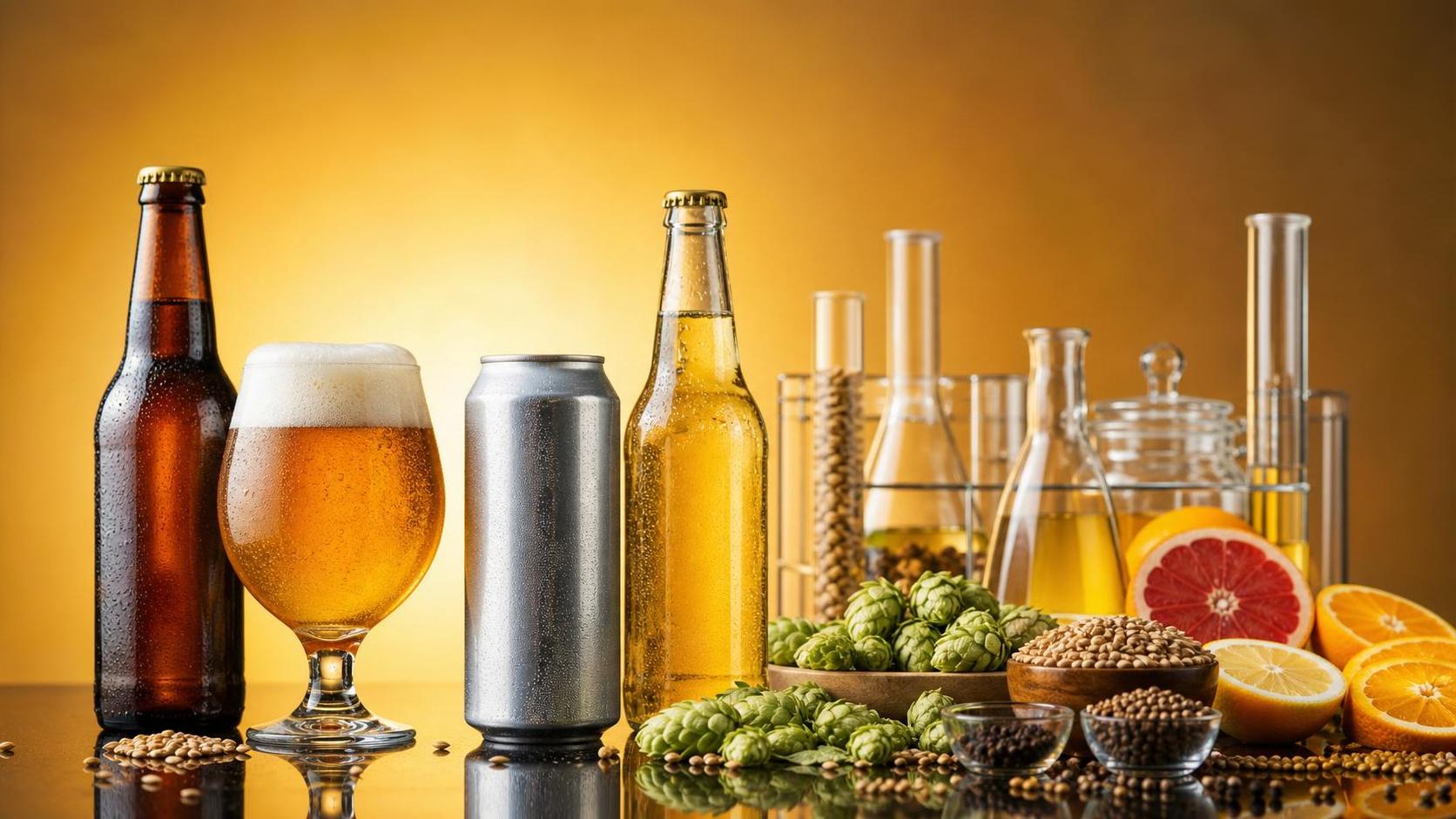
Do China beer OEM factories offer R&D support? For brands exploring private-label or custom beer opportunities, the answer can shape product quality, speed to market and long-term growth. A capable China beer OEM partner can provide formula development, flavor innovation, packaging optimization and market-driven customization, helping businesses create distinctive craft beer products that match consumer trends and channel needs.
What does R&D support from a China beer OEM partner actually include?
When buyers ask, “Do China beer OEM factories offer R&D support,” they are usually not asking only about recipe creation. They want to know whether a supplier can turn a market idea into a stable, compliant and commercially viable beer product.
In practical terms, R&D support in the beer and beverage sector often covers product concept design, formulation trials, sensory adjustment, ingredient selection, shelf-life considerations, packaging matching and production feasibility review.
For importers, distributors, retail brands and hospitality groups, this support reduces guesswork. It also helps avoid common launch problems such as inconsistent taste, unclear positioning, poor foam retention, unstable fruit flavor, or packaging that does not fit the sales channel.
Core R&D functions buyers should expect
- Formula development for classic lager, wheat beer, low-calorie beer, fruit beer and functional specialty beer styles.
- Sensory refinement based on target drinkers, such as lighter bitterness for supermarkets or richer aroma for craft-focused bars.
- Ingredient and process advice to balance taste, cost, alcohol content, sugar level and production stability.
- Packaging development for cans, bottles, outer cartons and label claims aligned with channel needs.
- Pilot sampling and adjustment before mass production, reducing the risk of a mismatch between sample and final batch.
A supplier with real product development capability does more than fill cans. It helps define what kind of beer should be made, why it fits the target market and how it can be repeated consistently at scale.
Why is R&D support so important for private-label and custom beer projects?
Beer is a category where consumer preference changes quickly. A product that works in a pub may not work in a convenience chain. A fruity profile that succeeds online may taste too sweet in a restaurant setting. This is why strong R&D support matters.
Brands entering a new market often face three pressures at once: they must launch fast, control cost and still offer a taste profile that stands out. Without technical and market-oriented development support, these goals often conflict.
Typical pain points solved by an OEM with R&D capability
This is where the answer to “Do China beer OEM factories offer R&D support” becomes highly practical. Good R&D is not only technical support. It is also a route to lower trial-and-error costs and better channel fit.
Which beer products can be customized through OEM R&D?
An experienced craft beer manufacturer can usually support a broad range of styles, from entry-level products to more trend-driven concepts. The best partner will also explain what is feasible at industrial scale and what should remain a limited pilot release.
Jinpai Beer focuses on craft beer R&D, production and distribution, with products including classic lager, German wheat, sugar-free low-calorie beer, fruit-flavored beer and functional specialty beers. This broad product coverage is useful for buyers who want one supply partner for multiple channels.
Common customization directions
- Classic lager for mainstream retail, convenience and volume-driven distribution.
- German wheat beer for restaurants, bars and consumers seeking richer aroma and fuller mouthfeel.
- Sugar-free or low-calorie beer for health-conscious segments and modern grocery channels.
- Fruit-flavored beer for younger drinkers, seasonal promotions and social retail.
- Functional specialty beer concepts aimed at differentiated positioning, provided formula and labeling are reviewed for the destination market.
The strongest OEM relationships are often built around a product roadmap, not just one SKU. A partner with multi-style development capability makes future line expansion easier and more cost-efficient.
How to judge whether a China beer OEM factory has real R&D strength
Not every factory that claims OEM service can provide meaningful development support. Some only manufacture based on fixed formulas. Others can support ideation, formulation tuning, packaging selection and production adaptation. Buyers need to separate these two types early.
The table below helps procurement teams evaluate whether the answer to “Do China beer OEM factories offer R&D support” is backed by real capability or just sales language.
A reliable beer OEM partner should be able to explain why a certain bitterness level, aroma expression, sugar profile or package size fits your business model. If the answers stay vague, the development service may be shallow.
Questions to ask before starting
- Can you develop from a concept brief, or do you only work from an existing recipe?
- How many sample revisions are usually possible before confirming mass production?
- Which beer styles have you already produced at commercial scale?
- Can you advise on low-calorie, sugar-free or fruit-beer stability issues?
- How do you align flavor design with supermarkets, bars, restaurants or e-commerce channels?
What does the R&D and OEM service process usually look like?
A structured process is one of the clearest signs of a mature supplier. It shortens communication time and helps buyers track decisions across formula, packaging and delivery planning.
For custom beer projects, the development path usually moves from concept to sample, then to verification and production. Each step should have clear checkpoints.
Typical service workflow
This type of workflow is especially valuable for overseas buyers. It makes communication measurable and reduces the risk of misunderstandings between brand owners, importers and production teams.
How should buyers choose beer styles for different channels?
R&D support becomes more useful when it is tied to channel strategy. A beer that looks innovative on paper may fail if it is priced, flavored or packaged for the wrong retail environment.
Jinpai Beer serves online and offline channels worldwide and works with restaurants, supermarkets, bars and retail partners. That matters because successful product design depends on where and how the beer will actually be sold.
Channel-oriented product selection guide
- Supermarkets often favor easy-drinking lager, wheat beer and low-calorie concepts with broad acceptance and clean label communication.
- Bars and restaurants can support stronger differentiation, including fruit-flavored beer or richer craft-style profiles with more aroma.
- Online channels benefit from visual packaging, novelty flavors and combination packs that encourage trial purchases.
- Regional distributors often need a balanced portfolio: one high-volume mainstream product and one or two higher-margin differentiated SKUs.
This is another reason the question “Do China beer OEM factories offer R&D support” matters. The right supplier helps you avoid choosing products based on personal taste instead of channel reality.
What about compliance, labeling and export readiness?
Beer export projects involve more than taste and packaging design. Buyers also need to consider destination-market labeling, product description, ingredient statements, alcohol declaration, shelf-life communication and transport packaging suitability.
A competent OEM partner should not make exaggerated claims about compliance. Instead, it should provide practical support, prepare product information clearly and help buyers confirm market-specific requirements before production.
Key compliance checkpoints
- Review whether low-calorie, sugar-free or functional wording is acceptable in the destination market.
- Check carton strength, container loading and packaging durability for long-distance shipment.
- Align label content with local importer, retailer or platform requirements before final printing.
- Confirm sample approval and final batch consistency to reduce claims risk after arrival.
For global beer supply, operational discipline is as important as creative flavor development. The best R&D support connects both sides.
Common misconceptions when asking if China beer OEM factories offer R&D support
“R&D means only inventing exotic flavors”
Not true. In beer OEM, R&D often means making a product commercially workable. Sometimes the smartest solution is a clean lager with better drinkability, not a highly experimental formula.
“If a sample tastes good, mass production will be easy”
Not always. Some profiles are easier to produce consistently than others. Fruit additions, sugar-free positioning and aroma intensity can all create scale-up challenges. A strong OEM partner will discuss this before confirming the order.
“Any brewery can adapt to any market quickly”
Market adaptation takes knowledge. The same bitterness level, sweetness level and package design may perform very differently across countries and channels. R&D support should include this commercial perspective.
FAQ about R&D support from China beer OEM factories
How long does custom beer development usually take?
Timing depends on formula complexity, sample revisions, packaging confirmation and production scheduling. A straightforward lager project is usually faster than a fruit-flavored or functional specialty beer that needs more formulation adjustment.
Can a beer OEM help if I only have an idea and no formula?
Yes, this is one of the clearest signs of real R&D support. If you only know your target market, desired taste, package type and price band, a capable partner can build a development path from that brief.
Which buyers benefit most from OEM R&D support?
Distributors launching private label, supermarket buyers developing exclusive products, bar groups creating signature house beer and cross-border sellers expanding product lines all benefit strongly. The less internal brewing expertise a buyer has, the more valuable external R&D becomes.
Is R&D support only useful for premium craft beer?
No. It is equally useful for mainstream products where consistency, cost control and mass-channel drinkability are critical. Even a classic lager can require careful technical tuning to meet a target price and flavor expectation.
Why choose us for beer OEM, ODM and product development support?
If you are evaluating whether China beer OEM factories offer R&D support that is practical, scalable and market-oriented, Jinpai Beer can support both product development and supply execution. Our business covers craft beer R&D, production and distribution, with a portfolio that includes classic lager, German wheat, sugar-free low-calorie beer, fruit-flavored beer and functional specialty beers.
We provide OEM and ODM services, wholesale supply and customized solutions for different retail and foodservice channels. Whether you need a mainstream private-label lager, a fruit beer for seasonal promotion, or a differentiated low-calorie concept for modern retail, we can discuss formula direction, packaging options and supply planning based on your target market.
You can contact us to discuss
- Product selection for supermarkets, bars, restaurants, distributors and online sales channels.
- Custom beer development for lager, wheat, sugar-free, low-calorie, fruit-flavored and specialty concepts.
- Sample support, taste adjustment and packaging confirmation before order placement.
- Lead time planning, order scale discussion and export-oriented packaging coordination.
- Quotation communication based on style, format, quantity and customization requirements.
If your team is comparing suppliers and still asking, “Do China beer OEM factories offer R&D support,” the most effective next step is to share your target market, flavor idea, packaging preference and expected order plan. That allows a meaningful discussion about feasibility, sample development and the right custom beer solution for your brand.
Thank you very much for writing to us. Please leave your message and contact information, we will reply to you within 24 hours.