



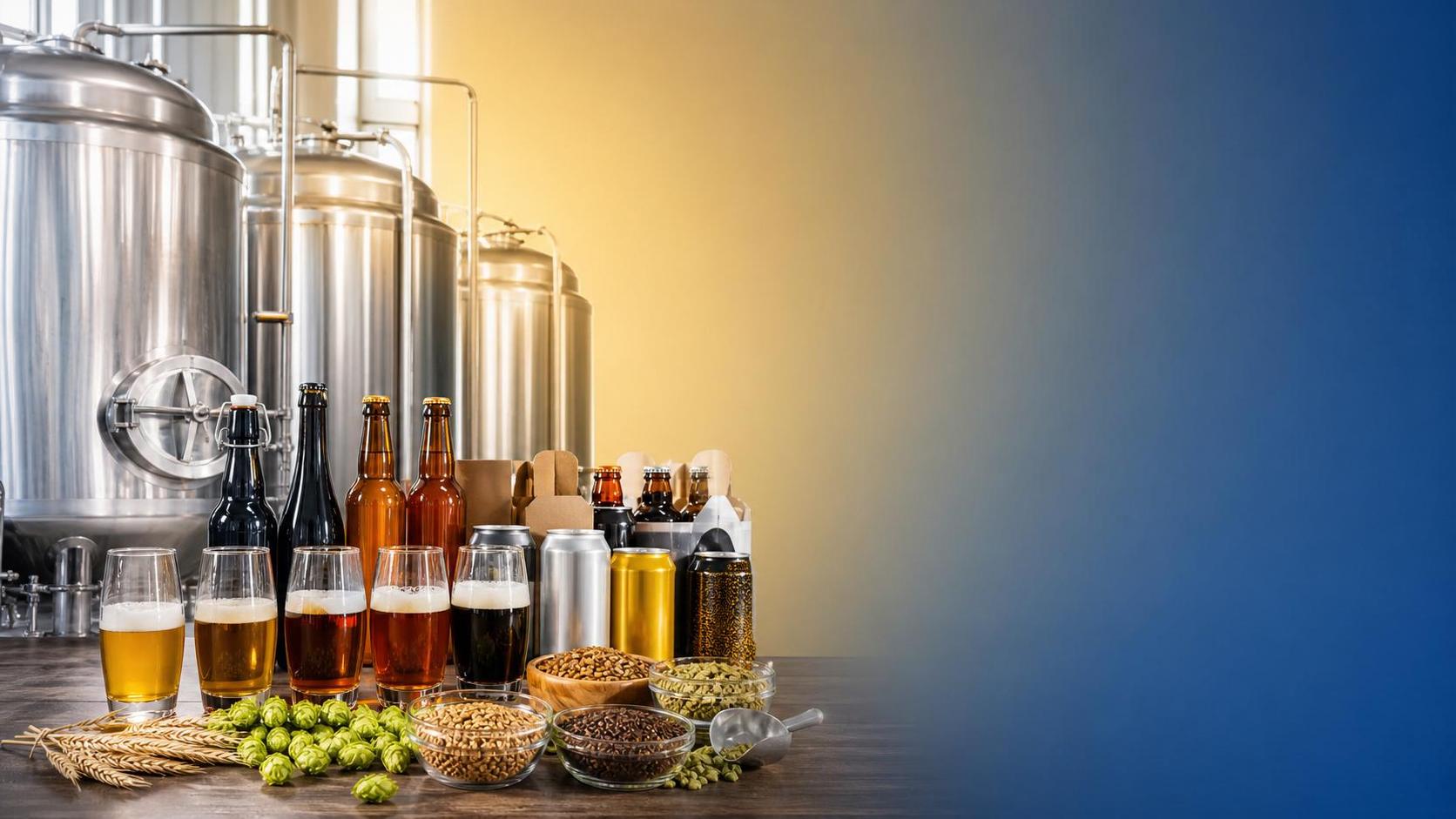
Do China beer OEM factories offer R&D support? For brands looking to launch or upgrade craft beer products, the answer often determines speed, quality and market fit. Leading Chinese beer OEM manufacturers can support recipe development, flavor testing, packaging optimization and functional innovation, helping partners turn ideas into competitive products. Understanding this capability is essential when choosing a reliable OEM/ODM brewery for long-term growth.
What does R&D support from a China beer OEM factory actually include?
When buyers ask, “Do China beer OEM factories offer R&D support,” they are usually not asking about brewing alone. They want to know whether the factory can help shape a sellable product, reduce trial-and-error costs, and align flavor, packaging and compliance with the target market.
In the beer and beverage industry, real R&D support often covers formula design, sensory evaluation, raw material matching, process adjustment, shelf-life considerations, label communication and channel suitability. This is especially important for private label craft beer, functional beer, low-calorie beer and fruit-flavored products.
A capable OEM/ODM brewery should not simply wait for a finished recipe from the client. It should be able to translate a product concept into a feasible production plan while balancing taste, cost, stability and delivery requirements.
Typical R&D support areas
- Recipe development based on target alcohol level, bitterness, aroma, color and mouthfeel.
- Style adaptation for classic lager, German wheat, sugar-free low-calorie beer, fruit beer and specialty functional beer.
- Sampling and pilot testing before mass production to reduce market launch risk.
- Packaging advice for bottles, cans and outer cartons based on retail, bar, supermarket or e-commerce channels.
- Label and specification coordination to support different markets and distribution needs.
Why do overseas beer brands increasingly need OEM breweries with R&D capability?
The global craft beer market has become more segmented. Buyers are no longer searching only for low-cost production. They are looking for faster product iteration, differentiated taste profiles and stronger channel fit. That is why the question “Do China beer OEM factories offer R&D support” matters more than before.
A distributor entering supermarkets may need a stable, approachable lager with competitive pricing. A bar chain may want a stronger wheat beer with a recognizable aroma. An online seller may focus on fruit flavors, visual packaging and seasonal launches. These goals require more than standard contract filling.
China has developed a mature manufacturing ecosystem for beverage packaging, ingredient sourcing and export coordination. For qualified breweries, this can create practical advantages in prototyping speed, packaging customization and cross-channel product planning.
Common buyer pain points
- Unclear recipe direction when building a new private label beer line.
- Difficulty balancing flavor quality with target landed cost.
- Need for quick sampling under tight seasonal launch schedules.
- Packaging choices that affect transport, shelf presence and channel pricing.
- Concerns about whether the supplier can scale from small trial runs to larger repeat orders.
Do China beer OEM factories offer R&D support for different product categories?
The answer is yes, but the depth of support varies widely. Some factories only handle basic production according to an existing formula. Others can help design products from concept to commercialization. The table below shows how R&D needs differ by beer category and why supplier capability matters.
This comparison makes one point clear: asking whether China beer OEM factories offer R&D support is not enough. Buyers should also ask what kind of support is available for the exact beer style and sales channel they plan to target.
How to judge whether an OEM brewery has real product development strength
Many suppliers say they can do OEM/ODM, but their capabilities may stop at changing labels or adjusting alcohol content. A stronger partner can discuss formulation logic, ingredient options, sample refinement and production feasibility in a structured way.
For beverage buyers, the most useful evaluation method is to link supplier claims with practical decisions. Can the team explain why one malt bill fits a lager better than another? Can they suggest flavor profiles for a fruit beer aimed at convenience retail? Can they identify packaging risks in long-distance export shipping?
Practical evaluation checklist
- Ask whether the supplier supports concept-based development or only follows finished formulas.
- Review how samples are refined: one round only, or multiple rounds with tasting feedback.
- Confirm whether packaging suggestions are linked to channel use, transport and merchandising needs.
- Check if the brewery handles a broad craft beer portfolio, which usually reflects stronger formulation experience.
- Discuss minimum order quantity and whether small pilot runs are possible before scale-up.
Jinpai Beer’s product scope is relevant here. A brewery engaged in the R&D, production and distribution of craft beer across classic lager, German wheat, sugar-free low-calorie beer, fruit-flavored beer and functional specialty beers is often better positioned to support varied OEM/ODM briefs than a single-style producer.
What should buyers compare when selecting a China beer OEM with R&D support?
If you are screening suppliers, compare them by development logic, not only by unit price. The next table is designed to help buyers evaluate whether the answer to “Do China beer OEM factories offer R&D support” translates into useful commercial value.
For buyers with strict timelines, this comparison often changes procurement decisions. A supplier with stronger R&D participation may help reduce failed samples, reposition weak concepts earlier and speed up market entry.
Which application scenarios benefit most from OEM beer R&D support?
Not every beer project needs the same level of development input. However, several common business scenarios benefit heavily from a brewery that can provide genuine OEM/ODM product support.
Private label launch for distributors
Distributors often know their sales network well but may not have internal brewing expertise. In this case, the OEM factory should help define style direction, pricing logic, package configuration and a flavor profile that suits local consumer preferences.
Restaurant and bar channel customization
On-premise channels usually need products with a clearer identity. Wheat beer, seasonal fruit beer or exclusive house-label craft beer can strengthen menu differentiation. R&D support is useful when designing beers for food pairing, menu themes or region-specific demand.
Supermarket and retail expansion
Retail shelves are crowded. Products must balance cost, visual appeal and repeat purchase potential. A China beer OEM factory with R&D support can help develop approachable but distinctive beers that fit mainstream shelf competition without losing brand character.
Health-oriented and trend-driven innovation
Sugar-free low-calorie beer and functional specialty beer require extra care. Buyers must consider taste compensation, consumer communication and production feasibility. This is where development support becomes more technical and more valuable.
How does the development process usually work?
A structured workflow helps buyers avoid delays and misunderstandings. If you are evaluating whether China beer OEM factories offer R&D support that is useful in practice, look at the process they follow from concept to shipment.
This process matters because strong product development is not a one-time event. It should continue after launch. Brands that collect channel feedback and work with the brewery on version updates usually improve product-market fit faster.
What risks should buyers watch for when asking for beer OEM R&D support?
The phrase “R&D support” can sound impressive, but buyers should stay practical. In beer OEM sourcing, the biggest risks usually come from misaligned expectations rather than obvious manufacturing failure.
- A concept may be attractive on paper but too costly for the intended retail price.
- Fruit or functional ideas may create flavor instability if not tested carefully.
- A beer designed for bars may not perform well in supermarket retail without packaging or taste adjustments.
- Import market requirements may affect label content, pack language or documentation expectations.
- Short deadlines can limit sample rounds, which increases the chance of a weak first launch.
The best approach is to align commercial targets early: target audience, taste direction, pack size, intended channel, budget range and expected lead time. Clear inputs allow the brewery to provide more useful development recommendations.
FAQ: Do China beer OEM factories offer R&D support in real projects?
Can a brewery develop a beer if I only have a market idea, not a full recipe?
Yes, many OEM/ODM breweries can work from a concept brief instead of a finished recipe. A useful brief should include target consumer group, desired beer style, alcohol range, channel type, packaging preference and price expectations. This helps the factory turn an idea into a practical sample plan.
Is R&D support only for premium craft beer?
No. Development support is also valuable for mainstream lager programs, retail-focused private label products and promotional seasonal beers. Even standard products benefit from optimization in taste, cost structure and packaging strategy.
What should I prepare before asking for samples?
Prepare your target market, expected volume, preferred package, benchmark flavor references, planned sales channel and price band. If you already know whether the product is for bars, supermarkets, restaurants or e-commerce, the factory can recommend a more accurate development path.
How do I know whether the factory’s R&D support is commercially useful?
Look for whether the supplier asks commercial questions, not just technical ones. A strong partner will connect recipe suggestions with channel needs, repeat purchase logic, packaging practicality and cost targets. That shows the R&D work is market-oriented rather than purely theoretical.
Why work with a brewery that combines craft beer R&D and OEM/ODM service?
For growing brands and distributors, the ideal supplier is not only a producer. It is a product development partner that understands brewing, packaging, channel logic and long-term portfolio expansion. This matters even more when your plan includes multiple beer styles or differentiated retail strategies.
Jinpai Beer focuses on the R&D, production and distribution of craft beer, with offerings that include classic lager, German wheat, sugar-free low-calorie beer, fruit-flavored beer and functional specialty beers. This broad category coverage supports OEM/ODM projects that need both variety and practical product adaptation.
The company also provides wholesale supply and customized solutions for online and offline channels worldwide, serving restaurants, supermarkets, bars and different retail formats. For buyers, this means discussions can go beyond brewing and into product selection, package planning and channel-oriented customization.
Why choose us for beer OEM/ODM development support?
If you are evaluating whether China beer OEM factories offer R&D support that can truly move your project forward, we can help you assess feasibility from both product and business angles. Our team can discuss recipe direction, suitable beer styles, packaging options and channel matching based on your brand goals.
- Need help choosing between lager, wheat beer, fruit beer or low-calorie options? We can suggest a product path based on your target market.
- Unsure about packaging for supermarkets, bars or export retail? We can discuss bottle or can formats, pack combinations and presentation priorities.
- Planning a private label launch under a tight timeline? We can review sample planning, order quantity expectations and delivery scheduling.
- Exploring a functional or sugar-free concept? We can talk through formulation direction, taste considerations and practical customization options.
- Need a quote or sample support? Share your product brief, target channel and destination market to start a focused discussion.
Whether you are launching a new beer line, upgrading an existing product or searching for a long-term OEM/ODM brewery partner, contact us to discuss product selection, sampling, delivery cycle, customization details and quotation planning in a more targeted way.
Thank you very much for writing to us. Please leave your message and contact information, we will reply to you within 24 hours.