



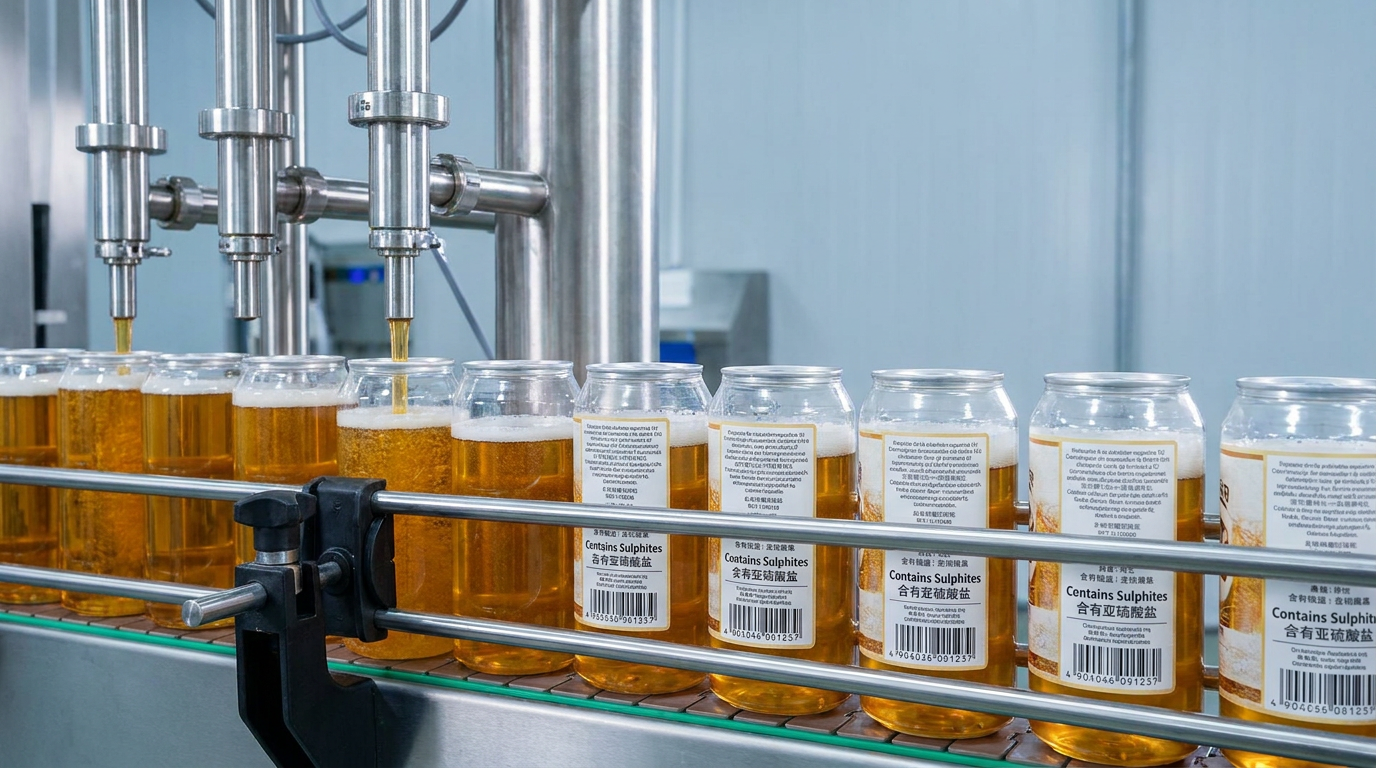
For project managers overseeing new beverage launches in 2026, understanding what ODM beer services truly entail—beyond brewing and branding—is critical. Many startups mistakenly assume ODM beer services begin and end with recipe development and packaging; in reality, they encompass end-to-end regulatory compliance, label approval across multiple jurisdictions, ingredient traceability, alcohol-by-volume certification, and market-specific formulation adjustments. At Jinpai Beer, our ODM beer services integrate craft R&D, scalable production, and global compliance scaffolding—ensuring your launch meets FDA, EU EFSA, China NHC, and local health authority requirements from day one. Don’t let overlooked compliance derail your timeline.
Why “ODM beer services” is more than a sourcing checkbox in 2026
Regulatory fragmentation has accelerated. The EU’s updated Food Information Regulation (EU No 1169/2011) now mandates allergen cross-contamination declarations on labels. China’s 2025 NHC Technical Guidelines require functional beer claims (e.g., “low-calorie,” “sugar-free”) to be substantiated by batch-level lab reports—not just formulation sheets. Meanwhile, the U.S. TTB enforces stricter ABV tolerance thresholds (±0.3% v/v) for imported craft beers, triggering retesting and relabeling if unverified pre-shipment.
Startups often treat ODM beer services as a tactical procurement step—selecting a brewer, approving a can design, and moving to logistics. But in 2026, that approach carries compound risk: delayed shelf entry, rejected customs clearances, or post-launch recalls due to non-compliant labeling or undeclared processing aids (e.g., isinglass finings in vegan-labeled products).
The 2026 ODM beer services checklist: 7 non-negotiable components
- Validate raw material origin documentation for every ingredient—including malted barley lot codes, hop COA (Certificate of Analysis) with alpha-acid profiles, and yeast strain registration numbers per destination country.
- Conduct jurisdiction-specific label audits: confirm font size compliance for mandatory statements (e.g., “Contains Sulphites” in EU), bilingual formatting for Canada/Mexico, and QR-linked nutritional databases accepted by China’s SAMR.
- Perform ABV verification using AOAC Method 935.23 (distillation + hydrometry) on three consecutive production batches—not just pilot runs—and retain certified lab reports for customs submission.
- Map functional claims to scientifically supported mechanisms: e.g., “low-calorie” requires full carbohydrate and ethanol calorimetric breakdown per 100mL; “sugar-free” demands HPLC-confirmed sucrose/glucose/fructose levels below 0.5g/L.
- Integrate traceability protocols into the BOM: assign unique batch IDs to each fermentation vessel, filtration run, and carbonation tank—linking physical logs to digital records accessible for NHC or FDA inspection.
- Pre-certify packaging materials: verify PET can liners comply with EU 10/2011 migration limits for ethyl acetate; validate ink formulations meet FDA 21 CFR 175.300 for direct food contact.
- Execute market-specific reformulation: adjust IBU/hop oil ratios for Japan’s strict bitterness thresholds; reduce residual sugars for Middle East halal-certified variants; eliminate propylene glycol alginate in Australia due to FSANZ Schedule 18 restrictions.
How application context changes ODM beer services scope
Launching a fruit-flavored sour beer in Southeast Asia demands dual-track compliance: ASEAN harmonized standards for microbial limits (≤10 CFU/mL for lactic acid bacteria) plus Singapore’s SFA requirement for preservative-free declaration—even if natural fermentation inhibits spoilage. Jinpai Beer embeds this duality into its ODM workflow, running parallel stability trials under tropical ambient conditions (32°C / 75% RH) alongside standard 20°C shelf-life modeling.
For functional specialty beers—like magnesium-enriched session IPAs targeting fitness retailers—the ODM scope expands to include third-party bioavailability testing (per EFSA Panel on Dietetic Products guidance), GMP-certified mineral premix integration, and dossier preparation for health claim pre-approval in target markets.
Top 3 compliance blind spots in startup ODM beer projects
Assuming “certified organic” status transfers across borders: USDA NOP certification does not satisfy EU Organic Regulation (EC) No 834/2007—requiring separate control body audits and distinct labeling layouts (e.g., EU leaf logo placement rules).
Overlooking excise tax classification triggers: Germany classifies beers with >1.2% ABV and added fruit puree as “mixed fermented beverages,” subject to higher tax bands and requiring separate Zoll tariff code assignment—unrelated to food safety but critical for landed cost accuracy.
Treating label artwork as final before regulatory sign-off: TTB-approved labels must include exact font metrics (x-height, weight), while China’s GB 7718-2024 requires Chinese characters to occupy ≥50% of total label surface area—rules easily violated during creative adaptation.
Actionable steps to align ODM beer services with 2026 realities
Initiate compliance scoping before recipe lock-in: share target markets and claims with your ODM partner at the concept stage—not after sensory approval. Jinpai Beer’s intake questionnaire includes 12 jurisdiction-specific checkpoints, generating a live compliance gap report within 72 hours.
Require batch-level compliance documentation—not just master files. Every shipment must include: (1) signed Certificate of Conformance referencing specific batch ID, (2) ABV test report with analyst signature and accreditation number, (3) ingredient traceability matrix linking malt lot → kettle batch → finished can lot.
Designate a single compliance liaison—internal or external—who holds authority to halt production if documentation deviates from pre-agreed specs. Jinpai Beer assigns a dedicated Regulatory Affairs Lead per client, with direct access to our internal NHC, EFSA, and FDA regulatory consultants.
Final takeaway: ODM beer services is your compliance co-pilot—not a vendor
In 2026, ODM beer services is no longer defined by who brews the beer—but who owns the end-to-end assurance chain. Jinpai Beer delivers ODM beer services anchored in proactive jurisdiction mapping, auditable process controls, and real-time regulatory intelligence—not reactive fixes. Whether launching sugar-free low-calorie lagers in Dubai or German wheat beers in Toronto, our framework turns compliance from a bottleneck into a launch accelerator.
Ready to stress-test your next beer launch against the 2026 ODM beer services checklist? Contact Jinpai Beer’s Global Compliance Team for a free jurisdictional readiness assessment—including label mock-up review, ABV validation protocol alignment, and ingredient sourcing risk scoring.
Thank you very much for writing to us. Please leave your message and contact information, we will reply to you within 24 hours.