



What are the key delivery clauses in malt beverage contracts? When Incoterms® aren’t explicitly defined—common in craft beer agreements—buyers face significant logistical, financial, and compliance risks. For global partners evaluating Jinpai Beer’s OEM/ODM, wholesale, or custom malt beverage solutions, understanding protective clauses like FOB origin, title transfer timing, risk allocation, inspection rights, and force majeure triggers is critical. This article unpacks enforceable, beverage-industry-tailored delivery terms that safeguard buyers across bars, supermarkets, and import-distribution channels—ensuring clarity where Incoterms® fall short.
Why “No Incoterms®” Is Not Neutral — It’s a Risk Transfer Default
Many craft malt beverage contracts—especially those negotiated directly between breweries and regional distributors or foodservice operators—omit Incoterms® entirely. That silence isn’t benign. Under most national commercial laws (including the UCC in the U.S. and the CISG for cross-border sales), absence of agreed delivery terms triggers statutory defaults: risk often passes to the buyer upon shipment, title may transfer at the seller’s facility, and responsibility for customs clearance, duties, and inland transport falls unpredictably on one party or the other. In practice, this means a supermarket chain in Spain could absorb full liability for temperature excursions during ocean transit from China—even though it had no control over palletization, container pre-cooling, or reefer monitoring. Worse, disputes rarely hinge on intent; they turn on whether the contract *defined* when risk shifted—not whether it *should have*.Five Clauses That Actually Work—When Incoterms® Aren’t Specified
These aren’t boilerplate additions. They’re precision tools calibrated for malt beverages’ unique vulnerabilities: temperature sensitivity, alcohol-by-volume (ABV) regulatory thresholds, shelf-life compression under humidity or UV exposure, and high-value packaging (e.g., cans with specialty coatings, glass bottles with embossed labels). Their enforceability depends less on legal jargon and more on operational specificity.- FOB Origin (with named facility and time window): Not just “FOB China,” but “FOB Jinpai Brewery, Shandong Province, at point of loading onto carrier’s trailer, verified by third-party logistics audit report issued within 2 hours of departure.” This anchors risk transfer at a verifiable physical event—not an ambiguous port or vague “shipment date.” Crucially, it shifts responsibility for pre-shipment damage (e.g., can dents from improper stacking, label adhesion failure due to warehouse humidity) to the seller, where control resides.
- Explicit Title Transfer Timing: Separate from risk allocation. A clause stating “Title to goods vests in Buyer only upon presentation of clean bill of lading, full customs entry documentation, and proof of temperature logs meeting ≤15°C average for entire transit” prevents premature ownership—and thus premature liability—for goods that arrive non-conforming. This matters especially for functional specialty beers: if a sugar-free variant arrives with compromised stability due to heat exposure, title delay gives the buyer contractual leverage to reject before assuming inventory liability.
- Risk Allocation Beyond Transit: Malt beverages degrade in ways cargo insurance rarely covers—like flavor taint from container odors or accelerated oxidation from inconsistent cold chain breaks. Effective contracts define who bears cost and responsibility for: (a) pre-shipment conditioning (e.g., stabilizing beer at 2–4°C for 72 hours pre-loading); (b) real-time telematics data access during transit; and (c) mandatory re-testing upon arrival at destination warehouse—not just visual inspection. Without this, “risk passed at origin” becomes a shield for avoidable quality failures.
- Inspection Rights With Teeth: Generic “right to inspect” language fails when applied to beer. Enforceable clauses specify: (i) sampling methodology (e.g., ASTM D4306 for volatile organic compound screening); (ii) acceptable deviation thresholds (e.g., ±0.3% ABV from declared value, not “within tolerance”); and (iii) binding consequences—such as automatic rejection if >2% of sampled units exceed dissolved oxygen (DO) limits above 80 ppb at receipt. These thresholds reflect actual industry benchmarks for shelf-life integrity, not arbitrary tolerances.
- Force Majeure Tailored to Beverage Logistics: Standard FM clauses collapse under beer-specific stress points. A pandemic may halt production—but so does a regional hop harvest failure or a sudden tightening of ethanol export licensing in the source country. Strong clauses enumerate beverage-relevant events: “failure to obtain required health certificates from local provincial authorities,” “unavailability of certified food-grade CO₂ for carbonation due to industrial supply disruption,” or “closure of key refrigerated warehousing hubs serving EU import corridors.” Critically, they require documented mitigation efforts—not just notice—and cap FM duration to preserve supply continuity planning.
Where Standard Assumptions Break Down—Three Real-World Gaps
Buyers often assume their freight forwarder handles compliance, their distributor manages quality, and “standard trade practice” covers gaps. In malt beverages, those assumptions create exposure:Gap 1: “Refrigerated” ≠ “Temperature-Controlled”
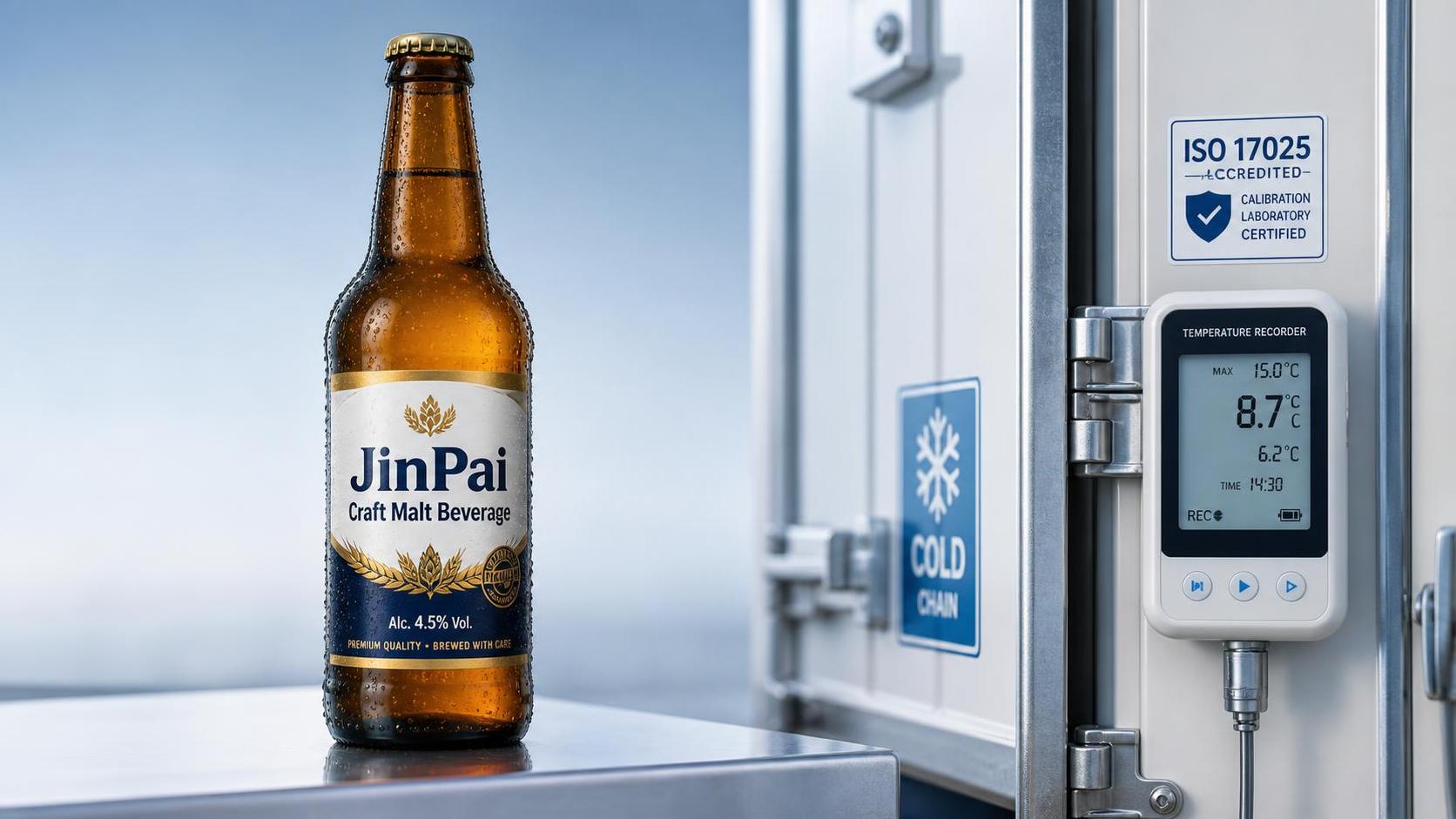
Many contracts state “goods shipped refrigerated” but omit setpoints, monitoring frequency, or alarm thresholds. A reefer container held at 18°C meets “refrigerated” definitions in some jurisdictions—but will accelerate staling in a German wheat beer by 300% versus 4°C storage. Protective clauses mandate minimum/maximum ranges, with data loggers validated to ISO 17025 standards—and require raw telemetry files (not just summary reports) to be shared pre-unloading.
Gap 2: Label Compliance Is a Delivery Condition—Not a Post-Arrival Check
In the EU, non-compliant ingredient declarations or missing QR-code traceability links invalidate market authorization—even if beer quality is perfect. Clauses must treat regulatory readiness as a *delivery milestone*: “Seller warrants all labeling complies with Regulation (EU) No 1169/2011 as of date of loading, with final artwork approved in writing by Buyer 10 business days prior to shipment.” Without this, the buyer inherits recall risk for errors introduced upstream.
Gap 3: “Customs Cleared” Doesn’t Mean “Duties Paid”
A common trap: contracts state “seller responsible for customs clearance,” but omit duty payment. In many ASEAN markets, clearance requires duty deposit *before* release—even if classification disputes are pending. Buyers caught mid-transit with unpaid duties face demurrage, storage fees, and spoilage. Protective language specifies: “Seller bears all import duties, taxes, and fees payable to customs authorities of destination country, confirmed via official receipt issued prior to cargo release.”
Next Steps for Evaluating Any Malt Beverage Contract
Don’t ask whether Incoterms® are used. Ask instead:- Where is the *first verifiable point* at which condition, temperature, and documentation are objectively confirmed—and who controls that verification?
- Which party holds leverage to correct deviations *before* risk transfers? (If it’s not you, renegotiate.)
- Are quality and compliance thresholds defined in measurable, testable terms—or left to subjective interpretation?
- Does the clause anticipate beverage-specific failure modes (oxidation, light-struck flavor, yeast viability loss, label adhesion in humid ports)?
For partners assessing Jinpai Beer’s OEM/ODM or wholesale programs, these questions separate transactional procurement from resilient sourcing. Clarity isn’t about adding legalese—it’s about embedding operational accountability where malt beverages are most vulnerable: between the brewhouse and the bar rail, the warehouse and the supermarket shelf. When the contract doesn’t name an Incoterm, the real work begins—not ends.
Thank you very much for writing to us. Please leave your message and contact information, we will reply to you within 24 hours.