



How do Beer manufacturer / Malt beverage manufacturer certifications differ across Guangdong and Shandong provinces?
Time : Aug 30, 2026
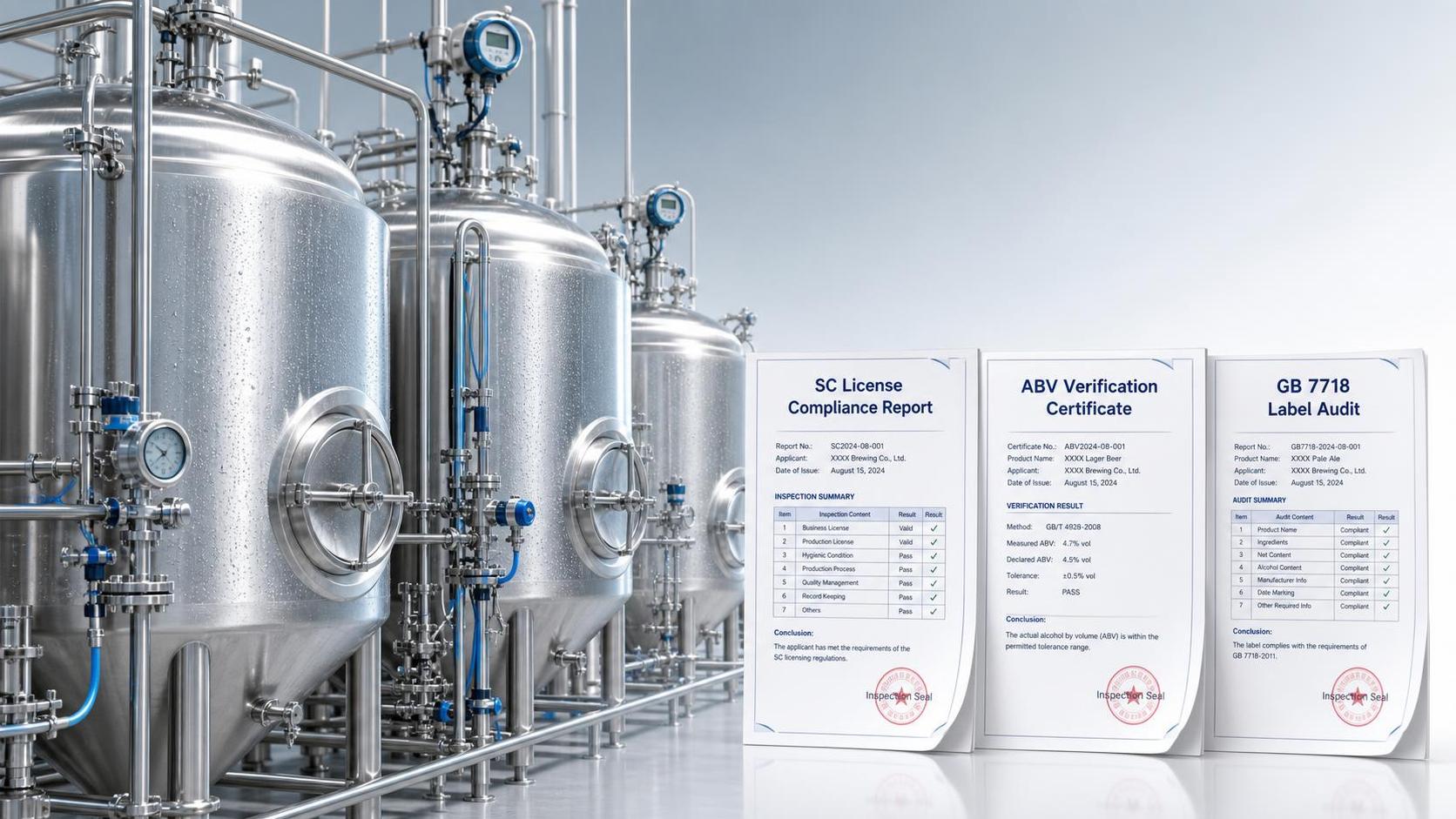
For technical evaluators assessing compliance and market access, understanding how Beer manufacturer / Malt beverage manufacturer certifications differ between Guangdong and Shandong provinces is critical—especially when sourcing or partnering with craft beer producers like Jinpai Beer. As a certified R&D, production, and distribution partner specializing in lagers, wheat beers, low-calorie, fruit-infused, and functional malt beverages, we navigate provincial regulatory nuances daily. This article compares key certification requirements—including production licensing, food safety standards, labeling rules, and inspection protocols—across these two major brewing hubs, helping evaluators streamline supplier vetting and ensure regional compliance for OEM/ODM, wholesale, or distribution initiatives.
Guangdong and Shandong are China’s top two provincial contributors to domestic malt beverage output—not just by volume, but by regulatory maturity and enforcement intensity. Yet their approaches to certifying Beer manufacturer / Malt beverage manufacturer operations diverge significantly where it matters most to technical evaluation: traceability infrastructure, raw material verification, alcohol content classification thresholds, and post-market surveillance rigor. These differences aren’t administrative formalities—they directly impact batch release timelines, audit frequency, and the feasibility of launching novel formulations (e.g., sugar-free functional beers or fruit-infused variants) across regional markets.
The foundational requirement—Food Production License (SC license)—is nationally standardized under GB 14881-2013 and the *Administrative Measures for Food Production Licensing* (State Administration for Market Regulation Order No. 24). However, implementation varies. In Shandong, the provincial market regulation bureau mandates pre-license technical review by designated third-party labs accredited under CNAS (ISO/IEC 17025), with mandatory validation of fermentation control parameters (pH stability, yeast viability monitoring, dissolved oxygen tracking during primary fermentation). Guangdong, by contrast, permits self-declaration of process controls for small-to-mid-scale craft brewers (annual output < 5,000 kL), provided they submit documented SOPs covering temperature-critical steps and microbial hold points. This creates a practical divergence: Shandong-certified facilities typically demonstrate tighter process documentation at the unit-operation level; Guangdong-certified ones may rely more heavily on real-time monitoring logs than prescriptive procedural records.
Alcohol content classification triggers different compliance pathways—and here, provincial interpretation matters. Under national law, beverages ≥0.5% ABV fall under “alcoholic beverage” licensing, while those below are regulated as “non-alcoholic drinks.” But Shandong enforces this threshold strictly at the point of final packaging, requiring lab-tested ABV confirmation for every SKU before SC license issuance. Guangdong allows provisional licensing for products labeled “<0.5% ABV” based on formulation modeling—provided the brewer commits to quarterly third-party ABV verification and retains full chromatographic raw data. For technical evaluators vetting OEM partners producing low-calorie or functional malt beverages (where ABV often hovers near 0.4–0.49%), this means Shandong-certified suppliers offer higher confidence in label accuracy pre-launch, whereas Guangdong-certified ones may require deeper scrutiny of their analytical validation protocol and retention time for GC-FID chromatograms.
Labeling compliance reveals another operational fault line. Both provinces enforce GB 7718-2011 (general labeling standard) and GB 2758-2012 (alcoholic beverage-specific requirements), but Shandong requires bilingual ingredient declarations (Chinese + English) on all export-directed batches—even for domestic-distribution SKUs destined for duty-free or cross-border e-commerce channels. Guangdong applies bilingual labeling only when explicitly requested by customs for bonded warehouse clearance. More critically, Shandong mandates batch-specific allergen statements referencing actual raw material lot numbers used in that run—not generic “may contain traces” disclaimers. Guangdong accepts standardized allergen warnings unless the product contains declared allergens (e.g., wheat protein isolates in gluten-reduced beers). For evaluators validating supply chain transparency, Shandong’s approach forces tighter integration between procurement, production logging, and packaging—making traceability audits more granular but also more actionable.
Inspection frequency and enforcement posture further differentiate risk profiles. Shandong conducts unannounced inspections at minimum quarterly for licensed malt beverage manufacturers, with priority focus on water treatment validation (requiring annual third-party testing against GB 5749-2022), spent grain disposal records, and cleaning-in-place (CIP) chemical residue testing. Guangdong’s inspection cycle is risk-tiered: facilities producing only pasteurized, non-fermented malt-based soft drinks face biannual checks; active fermentation sites undergo annual inspection—but only if no consumer complaints or food safety incidents occurred in the prior 12 months. This means Guangdong-certified breweries may operate longer intervals between regulatory touchpoints—a factor relevant when evaluating long-term consistency in microbiological control or sanitation validation.
Crucially, neither province treats “craft” or “small-batch” as a regulatory exemption. Both apply identical SC license categories (Category 1503: Alcoholic Beverages) regardless of scale. However, Shandong’s local implementation guidance (Shandong Market Regulation [2022] No. 67) explicitly prohibits shared facility licensing for multiple brands unless each brand maintains segregated fermentation tanks, independent CIP systems, and separate raw material storage zones. Guangdong permits co-packing under single-license frameworks if the contract manufacturer demonstrates validated cleaning protocols between client batches and maintains auditable brand-specific logbooks. For technical evaluators managing multi-brand OEM portfolios, this affects facility selection: Shandong-certified sites offer stronger physical segregation assurance; Guangdong-certified ones demand rigorous validation of cross-contamination mitigation procedures.
Finally, functional ingredient claims—increasingly common in Jinpai Beer’s specialty portfolio—trigger province-specific scrutiny. Shandong requires pre-market filing with the provincial health commission for any added bioactive compound (e.g., GABA, L-theanine, botanical extracts), including stability data across shelf life and proof of GRAS status or prior approval in at least one major jurisdiction (EU, US, Japan). Guangdong follows national guidelines (GB 16740-2014) but defers to national-level health commission approvals—meaning foreign-sourced functional ingredients approved by NMPA can be deployed faster there, provided labeling avoids therapeutic language. Evaluators must therefore map ingredient origin, regulatory history, and claim scope against provincial filing capacity—not just national registration status.
These distinctions don’t imply one province is “stricter” or “more flexible” in absolute terms. They reflect divergent risk models: Shandong prioritizes upstream process control and physical segregation to minimize systemic failure modes; Guangdong emphasizes outcome-based verification and adaptive oversight calibrated to operational history. For technical evaluators, the decision isn’t about choosing “better” certification—but identifying which provincial framework aligns with your specific risk tolerance, product complexity, and supply chain architecture. A low-ABV functional beer with multiple botanical additions demands Shandong’s pre-market discipline; a stable, pasteurized fruit-flavored lager may deploy efficiently via Guangdong’s validation-light pathway—provided analytical traceability is embedded in the partner’s QA system. The real work begins not at license issuance, but in mapping how each province’s enforcement logic translates into measurable process controls, documentation depth, and audit resilience.
Jin Pai Beer Co., Ltd
Thank you very much for writing to us. Please leave your message and contact information, we will reply to you within 24 hours.