



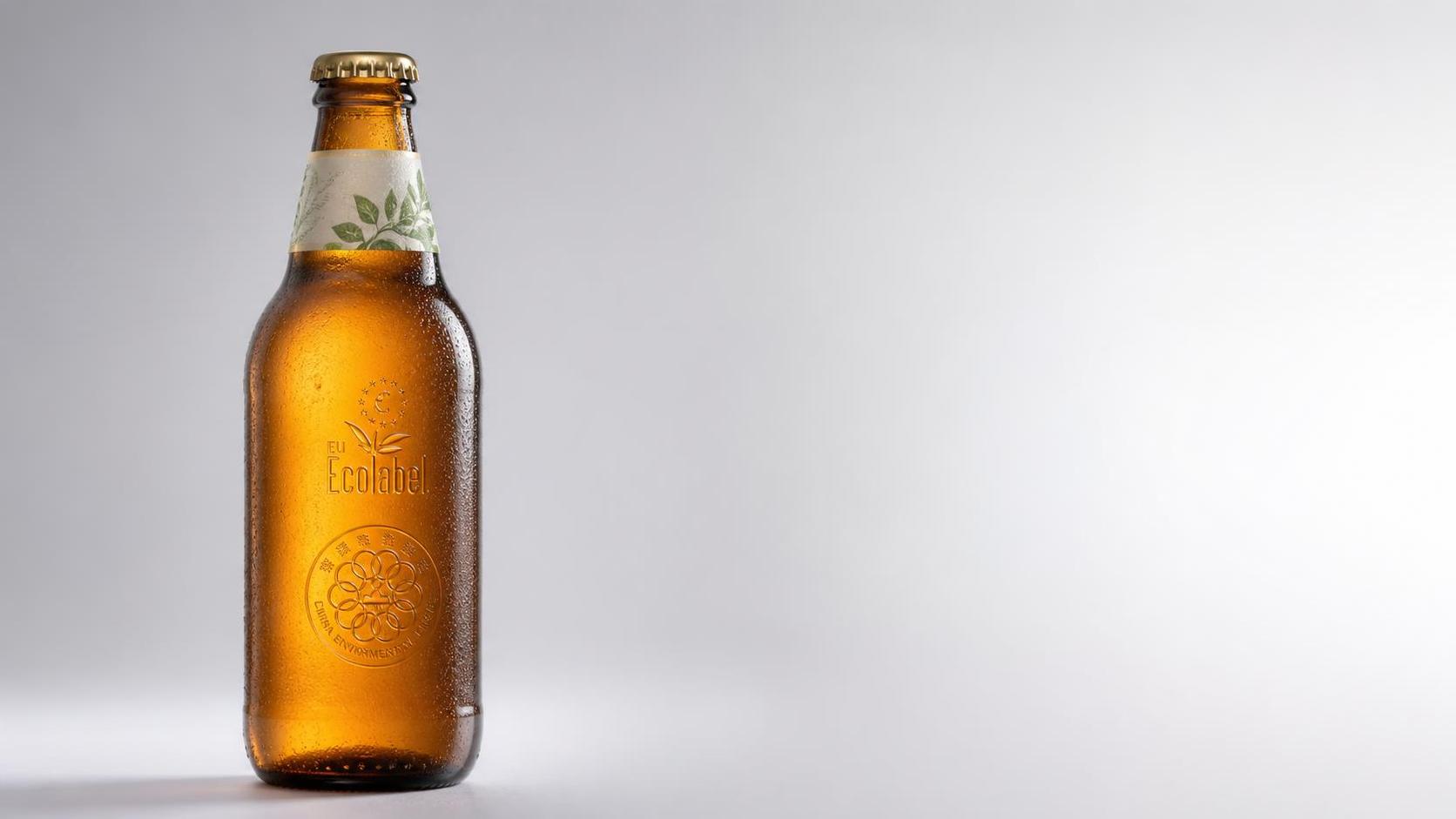
When sourcing glass bottle beer packaging from Chinese manufacturers, procurement and sustainability professionals often face a quiet but persistent tension: the desire for cost-effective, high-volume production—and the non-negotiable need for verifiable environmental credibility. It’s not just about checking a box on an RFP. It’s about knowing whether that elegant amber bottle holding your craft lager carries more than just liquid—it carries documented responsibility.
That question—“Does glass bottle beer packaging from Chinese factories include ECO-certified labeling options?”—isn’t rhetorical. It’s operational. For global distributors stocking shelves in Berlin supermarkets, for boutique bars in Tokyo curating low-impact menus, or for hospitality groups rolling out sustainable procurement policies across ASEAN markets, the answer shapes compliance timelines, brand positioning, and even shelf eligibility.
The short answer is: yes—but with important distinctions. Not all Chinese glass packaging suppliers offer ECO-labeling readiness, and even fewer integrate it meaningfully into the OEM/ODM workflow. What separates a compliant option from a truly collaborative one lies in how certification is embedded—not bolted on—as part of the packaging development cycle.
Take Jinpai Beer, for example. As a certified OEM/ODM partner serving international craft brands and retail chains, we don’t treat eco-labeling as a post-production add-on. Instead, our glass bottle beer packaging process begins with material traceability: sourcing cullet (recycled glass) from audited domestic suppliers meeting ISO 14001-aligned collection standards, verifying furnace energy sources (natural gas vs. coal), and mapping every kilometer of transport logistics for carbon intensity assessment. This groundwork isn’t for internal reporting alone—it’s what makes EU Ecolabel Category 3 (Beverage Packaging) or China Environmental Labeling Certification (Type II, “Green Label”) technically feasible—not aspirational.
Crucially, ECO-certified labeling isn’t just about the bottle itself. It’s about the full system: label substrates, adhesives, ink formulations, and even shrink-sleeve resins must meet volatile organic compound (VOC) thresholds and heavy-metal restrictions. Many overseas buyers assume “glass = automatically green.” In practice, a beautifully recycled bottle wrapped in PVC-based sleeve film or printed with solvent-based inks can disqualify an entire batch from EU Ecolabel consideration—even if the glass content is 92% post-consumer recycled. At Jinpai, our packaging engineers co-develop with clients from day one, selecting water-based flexo inks approved under the EU Ecolabel’s Annex III, or FSC-certified paper labels with plant-based adhesives—ensuring each component contributes to, rather than undermines, the final certification dossier.
This level of integration matters because certification bodies don’t accept supplier self-declarations at face value. They require third-party verification of upstream inputs, factory audits, batch-specific test reports (e.g., EN 13432 for compostable elements), and ongoing surveillance. Jinpai maintains active partnerships with CNAS-accredited labs in Guangdong and Shanghai—facilitating rapid, localized testing without shipping samples overseas for weeks. When a European distributor needed EU Ecolabel documentation for a limited-edition ginger-kombucha beer launch, our team completed material declarations, ink migration tests, and lifecycle documentation within 11 working days—not months.
But here’s what many procurement officers overlook: ECO-labeling readiness doesn’t mean every SKU must carry the logo. It means the infrastructure exists to produce it—on demand, at scale, and without redesign delays. That flexibility is critical when managing multi-market portfolios. A single base bottle mold might serve three distinct labeling paths: bare glass with embossed branding (for US natural grocers requiring minimal packaging), EU Ecolabel-compliant sleeving (for German REWE distribution), and China Green Label–certified paper wrap (for JD.com premium listings). The physical vessel stays consistent; only the certified finishing layer changes—reducing tooling costs and inventory complexity.
Still, expectations need grounding. While Jinpai supports both EU Ecolabel and China Environmental Labeling Certification, we’re transparent about scope limitations. For instance, the EU Ecolabel for beverage packaging currently excludes aluminum crown caps unless they meet strict recyclability and separation criteria—a nuance that affects closure selection. Similarly, “bio-based” PET sleeves may sound sustainable but often fail EU Ecolabel’s biodegradability requirements in real landfill conditions. We flag these early—not to complicate decisions, but to prevent costly rework mid-project.
What does this mean for your evaluation? Start by asking suppliers not just *if* they offer ECO-labeling, but *how* they verify it. Request copies of their latest audit reports—not summaries, but actual certificates with valid scope statements. Check whether their certifying body appears on the EU Commission’s NANDO database or China’s CCEL official registry. And most importantly: ask to see a completed certification dossier for a past client—not as proof of capability, but as insight into their documentation discipline. A messy, inconsistent dossier often signals deeper gaps in traceability systems.
We’ve seen buyers delay decisions waiting for “perfect” certification—only to realize later that regulatory landscapes evolve faster than any single label. The EU is revising its Ecolabel criteria for packaging in 2025, tightening recycled content minimums and introducing mandatory reuse metrics. China’s Green Label program now includes new thresholds for embodied carbon in glass manufacturing. Rather than chasing static badges, forward-looking partners build adaptable systems: modular labeling workflows, dual-certified material libraries, and real-time access to lab test archives. That’s the kind of readiness Jinpai embeds—not as a feature, but as foundational architecture.
For restaurants choosing house beers, for supermarket private-label teams balancing margin and mission, for distributors scaling across APAC and EMEA—glass bottle beer packaging is rarely just a container. It’s a silent ambassador. It communicates values before the first sip. And when those values are backed by verifiable, third-party-validated choices—not marketing claims—the bottle doesn’t just hold beer. It holds trust.
If you're evaluating supply partners for a new craft line, a regional expansion, or a sustainability roadmap refresh, consider this: the strongest ECO-labeling option isn’t always the one with the shiniest logo on the spec sheet. It’s the one where every decision—from cullet sourcing to ink viscosity—is made with certification in mind, long before the first bottle spins off the line. That’s not compliance. That’s craftsmanship—with conscience built in.
And yes—it’s available from Chinese factories. Just not all of them. The difference is visible in the details you choose to inspect.
Thank you very much for writing to us. Please leave your message and contact information, we will reply to you within 24 hours.