



Launching a craft beer brand isn’t just about brewing something delicious—it’s about delivering that flavor, aroma, and mouthfeel exactly as intended, weeks or even months after production. For brand startups, the moment your custom beer leaves the brewery is where the real test begins: how well does it hold up on a shelf, in a cooler, or stacked behind a bar? Shelf-life stability isn’t a technical footnote—it’s the silent promise you make to every customer who cracks open your can or pours your brew.
At Jinpai Beer, we’ve guided dozens of startup brands through this critical decision—not as packaging vendors, but as partners who understand how oxygen ingress, UV exposure, temperature fluctuations, and even carbonation retention shape perception, loyalty, and repeat purchase. When you’re building identity from scratch—whether it’s a crisp sugar-free lager for health-conscious urbanites, a hazy German wheat with delicate esters, or a vibrant fruit-infused sour—the right vessel doesn’t just protect; it *preserves intention*.
So what formats actually work—and why do some startups regret their choice six months in?
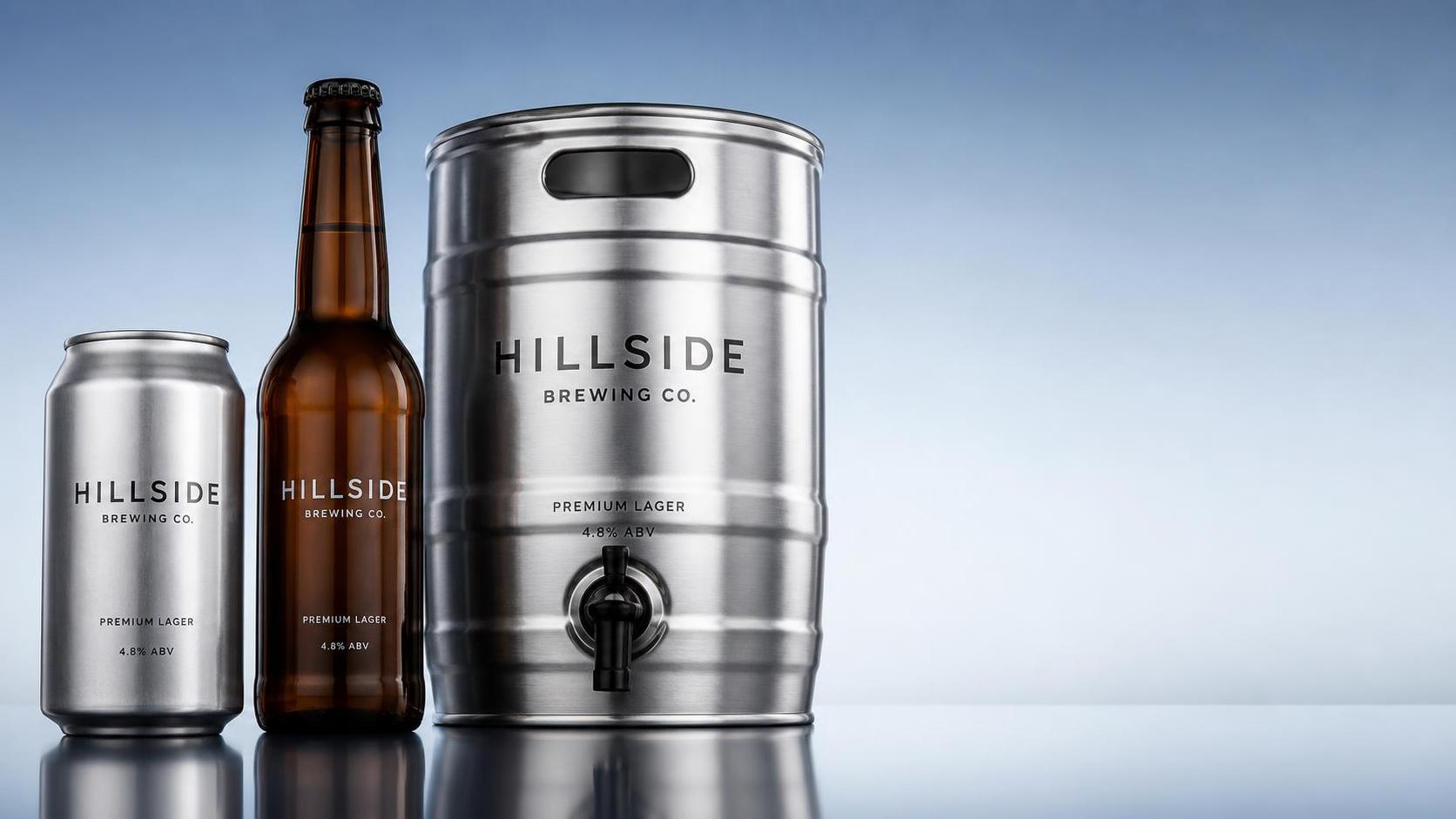
Aluminum Cans: The Unseen Guardian
Let’s start with the most common—and often most misunderstood—option. Aluminum cans aren’t just lightweight or recyclable (though they are). Their real strength lies in near-total light and oxygen barrier performance. Unlike glass, aluminum offers no UV transmission—critical for hop-forward beers, fruit-infused variants, or any style where delicate aromatics (think citrus zest, floral notes, or tropical esters) define the experience. Even a few minutes of direct sunlight can trigger “skunking” in unprotected beer—especially those brewed with noble or modern dual-purpose hops.
But not all cans are equal. A standard two-piece draw-and-iron (D&I) can with an internal epoxy coating works well for most lagers and low-calorie styles. For more sensitive profiles—like unfiltered wheat beers or barrel-aged sours—we recommend seamless three-piece cans with food-grade polymer linings engineered for higher pH tolerance and reduced metal interaction. At Jinpai, we pre-test lining compatibility with each custom formulation, especially for functional beers containing botanicals, adaptogens, or added vitamins—because reactive compounds don’t just affect taste; they can subtly shift color, clarity, or foam stability over time.
Glass Bottles: Tradition With Trade-Offs
Brown glass remains the gold standard for oxygen barrier among bottles—blocking ~90% of UV-A and UV-B rays while allowing only minimal O₂ permeation per month (typically 0.01–0.03 cc O₂/L/month under ideal sealing). That makes it ideal for classic lagers, amber ales, or malt-forward stouts meant to age gently. But green or clear glass? They block less than 20% of harmful wavelengths—and unless paired with rigorous cold-chain logistics and dark retail shelving, they’re a risk for anything beyond short-term distribution.
More importantly: crown cap integrity matters more than aesthetics. A poorly seated cap or inconsistent liner thickness can introduce micro-oxygenation during storage—enough to dull hop aroma within four weeks, even in brown glass. We advise startups to request oxygen ingress testing reports from their bottler—not just “pass/fail,” but actual µg/L O₂ measurements at 7, 30, and 90 days post-filling. And if your beer is low in antioxidants (e.g., sugar-free, low-IBU lagers), that data isn’t optional—it’s predictive.
Kegs: When Shelf Life Meets Serving Reality
Kegs aren’t typically thought of as “shelf-life packaging”—but for startups supplying bars, taprooms, or pop-up events, they’re often the first touchpoint with consumers. Here, stability hinges less on material and more on *system integrity*. A standard stainless-steel keg with proper CO₂ purging and consistent pressure maintenance preserves freshness far longer than any bottle or can—but only if handled correctly downstream.
We’ve seen startups lose consistency not because of their beer, but because partner venues reused old lines, neglected line cleaning schedules, or stored kegs upright in warm backrooms. That’s why Jinpai includes basic draft system guidance with every keg order—not as boilerplate, but tailored to your beer’s carbonation volume, serving temperature range, and expected dwell time (e.g., a fruit sour served at 4°C will degrade faster in a warm cellar than a robust porter). It’s not about controlling the venue—it’s about designing for real-world conditions.
The Hidden Variable: Fill Temperature & Post-Fill Handling
No format compensates for poor fill practices. A can filled at 12°C versus 4°C carries different dissolved oxygen loads—even with identical equipment. Likewise, rapid cooling post-filling can cause condensation inside sealed containers, accelerating oxidation at microscopic interfaces. At Jinpai, our fill lines are calibrated not just for volume accuracy, but for thermal equilibrium matching each beer’s saturation point. For example, our sugar-free low-calorie beers—naturally lower in protective polyphenols—are filled under nitrogen sparge at sub-6°C to minimize headspace O₂ before sealing.
That attention extends to labeling and secondary packaging. UV-reactive inks, non-barrier shrink sleeves, or cardboard carriers with high lignin content can leach compounds into adjacent cans under heat and humidity—something we’ve observed in warehouse-stored summer shipments. Our startup clients receive material compatibility notes alongside their spec sheets—not as fine print, but as part of the launch checklist.
Choosing Beyond the Spec Sheet
When evaluating options, ask yourself not “What’s cheapest?” but “Where does my beer spend its first 30 days?” If it’s sitting in a sunlit boutique fridge with mixed SKUs, cans win. If it’s destined for specialty retailers with climate-controlled backrooms and strict rotation policies, brown glass may align better with your brand’s tactile language. If your go-to-market is hyper-local tap takeovers and neighborhood festivals, kegs—paired with branded collar sleeves and simple handling protocols—offer both presence and practicality.
There’s no universal “best.” There’s only what best serves *your* beer, *your* channel, and *your* customers’ first impression—repeated, reliably, across batches and seasons.
Custom beer for brand startups isn’t defined by how it tastes on brew day. It’s defined by how faithfully it arrives—bright, balanced, and unmistakably yours—on day 45, day 90, or even day 120. That fidelity starts long before the label is printed. It starts with knowing what goes between your liquid and the world—and choosing it with quiet confidence, not compromise.
At Jinpai Beer, we don’t preset packaging. We co-design it—beer by beer, batch by batch—with the science, sensitivity, and scalability your startup needs to grow without sacrificing what makes your brew worth remembering.
Thank you very much for writing to us. Please leave your message and contact information, we will reply to you within 24 hours.