



Many technical evaluators face a recurring challenge when vetting breweries for lager production partnerships: distinguishing between facilities that merely label their output as “strong lager” and those that consistently deliver beers meeting the functional, sensory, and microbiological requirements of a true strong lager beer factory. This isn’t about marketing language—it’s about whether the facility can reliably produce lagers in the 5.0–6.5% ABV range without sacrificing clarity, stability, or balance. Misjudging this distinction leads to real consequences: delayed product launches due to haze formation in cold storage, inconsistent attenuation across batches, or off-flavor development during extended distribution—especially under variable ambient conditions.
The problem often surfaces late in procurement cycles. A lab report may show acceptable alcohol content and original gravity, but fails to capture how the yeast behaves over 28–35 days at near-freezing temperatures—or whether the filtration system removes not just yeast cells, but also protein-tannin complexes prone to reaggregating post-bottling. Evaluators relying solely on capacity figures or generic ISO certifications find themselves revisiting specifications after shelf-life testing reveals premature turbidity or diacetyl resurgence. It’s not that the brewery lacks scale; it’s that fermentation control, thermal management, and post-fermentation stabilization aren’t engineered in concert.
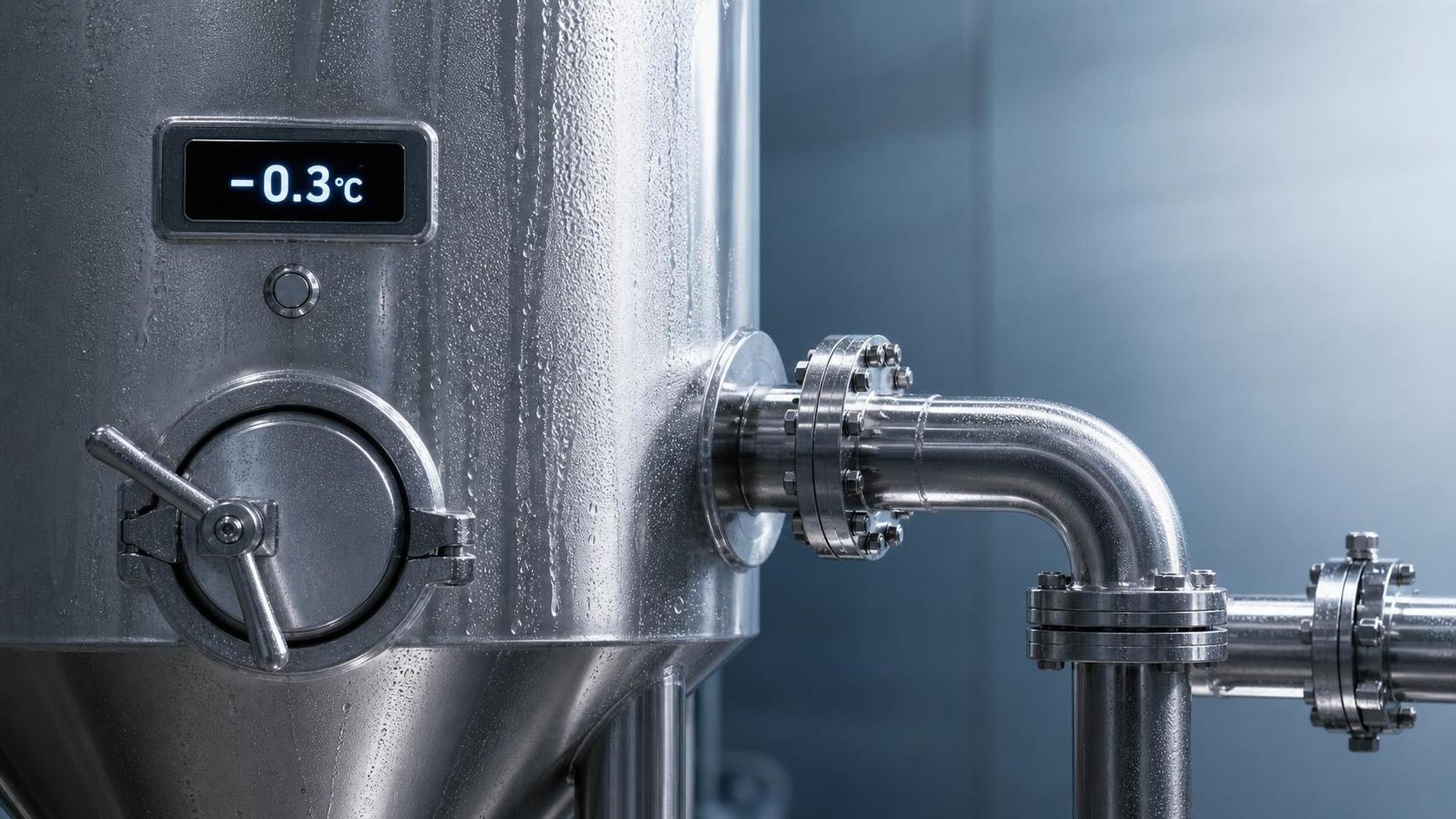
So what actually defines a strong lager beer factory—not in brochure terms, but in measurable, repeatable capability? First, it starts with strain-specific fermentation discipline. Strong lagers demand Saccharomyces pastorianus strains capable of sustained activity below 10°C while maintaining ethanol tolerance above 6.8% ABV. That requires more than cold rooms: it demands jacketed conical tanks with ±0.3°C glycol control during primary and secondary phases, plus precise oxygenation protocols calibrated per wort gravity—not just fixed volumes. Facilities that treat all lagers the same, regardless of target ABV, rarely achieve clean attenuation beyond 6.2%. They may hit alcohol targets, but residual dextrins remain, contributing to body imbalance and instability.
Second, clarity isn’t achieved only at filtration—it’s built in stages. A robust strong lager beer factory executes three distinct clarification phases: (1) controlled cold crashing at −1.5°C for ≥72 hours post-fermentation to precipitate proteins and polyphenols; (2) isothermal diacetyl rest at 14–16°C for 24–36 hours, verified via GC-MS spot checks—not just time-based assumptions; and (3) crossflow filtration with pore-size validation (0.45 µm absolute), followed by sterile membrane filtration only if terminal pasteurization is excluded. Skipping any phase increases risk of chill haze or microbial regrowth during long-haul shipping.
Third, alcohol tolerance standards must be validated—not assumed. ABV alone doesn’t define strength in lager context. A 6.3% ABV beer brewed with excessive adjuncts may ferment cleanly but lack mouthfeel cohesion; one brewed with 100% Pilsner malt and higher mash temperatures may stall at 5.8% despite identical yeast pitch rates. True tolerance reflects the interplay of osmotic pressure, nutrient availability, and ethanol toxicity thresholds—all monitored via real-time dissolved oxygen, pH drift, and specific gravity slope analysis—not just final hydrometer readings. Facilities that log only start/final gravity miss critical inflection points where yeast viability drops below 75%, increasing ester and sulfur compound formation.
This is where process transparency matters—not as a sales point, but as an evaluation lever. When reviewing a supplier, request access to batch-level fermentation logs showing temperature ramping profiles, dissolved CO₂ tracking, and gravity drop curves over 96-hour intervals—not summarized weekly averages. Ask whether their cold lagering protocol mandates minimum hold times at ≤0.5°C, and whether they conduct forced-age tests (30 days at 30°C) on finished beer to assess colloidal stability before release. These aren’t theoretical benchmarks; they’re observable, recordable, and auditable behaviors.
Jinpai Beer’s production architecture supports this level of scrutiny. Its R&D-driven recipe engineering begins with malt lot screening—measuring free amino nitrogen (FAN) and soluble nitrogen ratio—not just extract yield. Fermentation lines operate under ISO 22000-compliant environmental controls, with independent glycol circuits per tank bank to prevent thermal cross-contamination. For OEM/ODM partners, modular production blocks allow dedicated runs for high-ABV lagers without shared yeast propagation systems—a safeguard against strain drift. Crucially, stability data isn’t generated post-hoc: every new strong lager formulation undergoes 12-week real-time storage trials at three temperature bands (4°C, 20°C, 30°C), with turbidity, diacetyl, and iso-alpha acid degradation measured biweekly using standardized spectrophotometric and HPLC methods.
That doesn’t mean every partner needs full access to raw lab files. But it does mean technical evaluators should prioritize facilities where such data exists in structured, timestamped formats—and where deviations trigger documented root-cause investigations, not batch re-labeling. If your current supplier cannot provide traceable evidence of consistent diacetyl reduction below 0.1 ppm after lagering, or cannot demonstrate cold crash efficacy via particle count analysis pre-filtration, then scalability won’t compensate for latent instability.
One practical step: during audit preparation, ask for a side-by-side comparison of two consecutive batches—one hitting 5.9% ABV, another 6.4%—with identical malt bill and hopping schedule. Compare their terminal gravity, apparent attenuation, and final pH. A strong lager beer factory will show tight variance (<0.002 SG units) across both, indicating stable yeast performance. Wider spreads suggest either inconsistent pitching health, uncontrolled fermentation temperatures, or inadequate wort oxygenation—all correctable, but only if measured.
Finally, avoid conflating “strong” with “high-gravity.” True strength in lager lies in balance: sufficient alcohol to support body without solvent notes, enough residual dextrins to buffer bitterness without cloying sweetness, and clarity maintained through thermal stress—not just refrigerated display. Facilities that optimize for speed over symmetry often sacrifice the very qualities that define commercial lager durability. What separates a capable producer from a reliable one isn’t volume—it’s the rigor applied to each degree of temperature, each ppm of oxygen, each hour of cold contact time. When evaluating for global distribution, those details don’t just matter—they determine whether the beer arrives as intended, or as a compromise.
Thank you very much for writing to us. Please leave your message and contact information, we will reply to you within 24 hours.