



Why a Checklist Is Non-Negotiable Before Finalizing Any Craft Beer Contract Brewing Agreement
Contract brewing offers speed, scalability, and capital efficiency—but only when grounded in rigorous due diligence. Over 68% of early-stage craft brands that skip structured pre-signing evaluation face at least one major disruption within 12 months: batch inconsistencies, delayed launches, IP disputes, or unmet compliance requirements for target markets. Unlike commodity beverage manufacturing, craft beer demands precision across fermentation profiles, raw material traceability, sensory stability, and regulatory alignment—especially for specialty formats like sugar-free low-calorie, fruit-infused, or functional beers. Without a disciplined checklist, assumptions replace verification, and brand equity becomes collateral.
The 7-Point Pre-Signing Checklist Every Brand Must Apply
- Verify production capacity against your launch timeline—and peak-season ramp-up. Confirm minimum batch sizes, scheduling lead times, and line availability for seasonal or limited releases. A 30-barrel system may not support staggered 500-L batches without yield loss or cross-contamination risk.
- Require full ingredient disclosure with lot-level traceability—not just “malt, hops, yeast.” Demand certificates of analysis (COA) for adjuncts like cold-pressed fruit purees, natural flavorings, or functional botanicals. Traceability is mandatory for EU food labeling, FDA FSMA, and China’s GB 4927–2023 standards.
- Review the agreement’s quality control clause for enforceable, beer-specific metrics. Acceptance criteria must include turbidity (NTU), dissolved oxygen (ppb), alcohol by volume (±0.2%), IBU variance (±3), and microbiological limits—not just “to spec” or “as approved.”
- Secure explicit, irrevocable ownership of all formulation IP—including yeast strain usage rights, process notes, and sensory benchmarks. Avoid “work-for-hire” language that transfers rights to the brewer unless compensated separately and documented in an addendum.
- Confirm packaging compatibility and shelf-life validation under real-world conditions. Test cans/bottles for light-strike sensitivity, crown corrosion with acidic fruit beers, and CO₂ retention in low-calorie variants over 6+ months at 30°C.
- Validate export readiness: label compliance, bilingual documentation, and logistics integration. Ensure the contract brewer maintains up-to-date registrations (e.g., FDA FCE, UK Responsible Person, ANVISA import license) and provides compliant artwork files—not just templates.
- Define termination triggers with clear transition protocols. Include clauses for formula handover, remaining inventory disposition, and data portability (QC logs, COAs, sensory panels) if the partnership ends—without penalty or delay.
Scenario-Based Considerations You Can’t Afford to Skip
For brands launching sugar-free, low-calorie craft beer: confirm the brewer uses enzymatic starch hydrolysis (not artificial sweeteners post-fermentation) and validates residual fermentables via HPLC—not refractometry alone. Residual dextrose or maltose can trigger false “low-carb” claims and regulatory pushback in Australia (FSANZ Standard 2.7.1) or Canada (CFIA Nutrition Labelling).
For fruit-flavored or hazy IPA programs: require proof of cold-side fruit addition protocols (e.g., sterile filtration of purees, temperature-controlled tank purging) and third-party mold/yeast testing pre-blend. Uncontrolled wild microbes from raw fruit can spoil entire batches and invalidate shelf-life claims.
For functional specialty beers (e.g., adaptogenic, vitamin-fortified): verify GMP-certified handling of active ingredients, stability testing for nutrient degradation (e.g., B-vitamins under UV exposure), and regulatory pre-approval pathways in target jurisdictions—not just “GRAS” status.
Common Oversights That Trigger Real-World Failure
Assuming “certified organic” on the contract brewer’s facility certificate covers your specific recipe—when organic certification applies per batch, not per site. Ingredient sourcing, processing aids, and even cleaning chemicals must meet NOP or EU Organic Regulation (EC) No 834/2007 criteria.
Overlooking water chemistry documentation. Calcium, sulfate, and chloride ratios directly impact hop expression and mouthfeel—yet fewer than 40% of contract agreements specify acceptable ranges or require pre-brew water reports.
Treating sensory approval as subjective. Without archived reference samples, calibrated taster panels, and defined deviation thresholds (e.g., “no detectable diacetyl above 0.1 ppm”), approval becomes arbitrary—and disputes escalate post-launch.
Actionable Next Steps—Before You Sign
Request a pre-agreement technical audit—Jinpai Beer offers a no-cost 2-hour virtual review covering your formulation, target market specs, and production workflow. Ask for live access to their QC dashboard showing real-time DO, pH, and gravity tracking per batch.
Run a pilot batch under full contractual terms—even if scaled down. Pay for full COAs, shelf-life testing, and label compliance review. Treat it as a stress test, not a formality.
Assign one internal stakeholder to own the checklist—not legal counsel alone. Include your head brewer (for process fidelity), QA lead (for testing rigor), and supply chain manager (for logistics alignment). Cross-functional sign-off prevents blind spots.
Final Word: Clarity Now Prevents Costly Rework Later
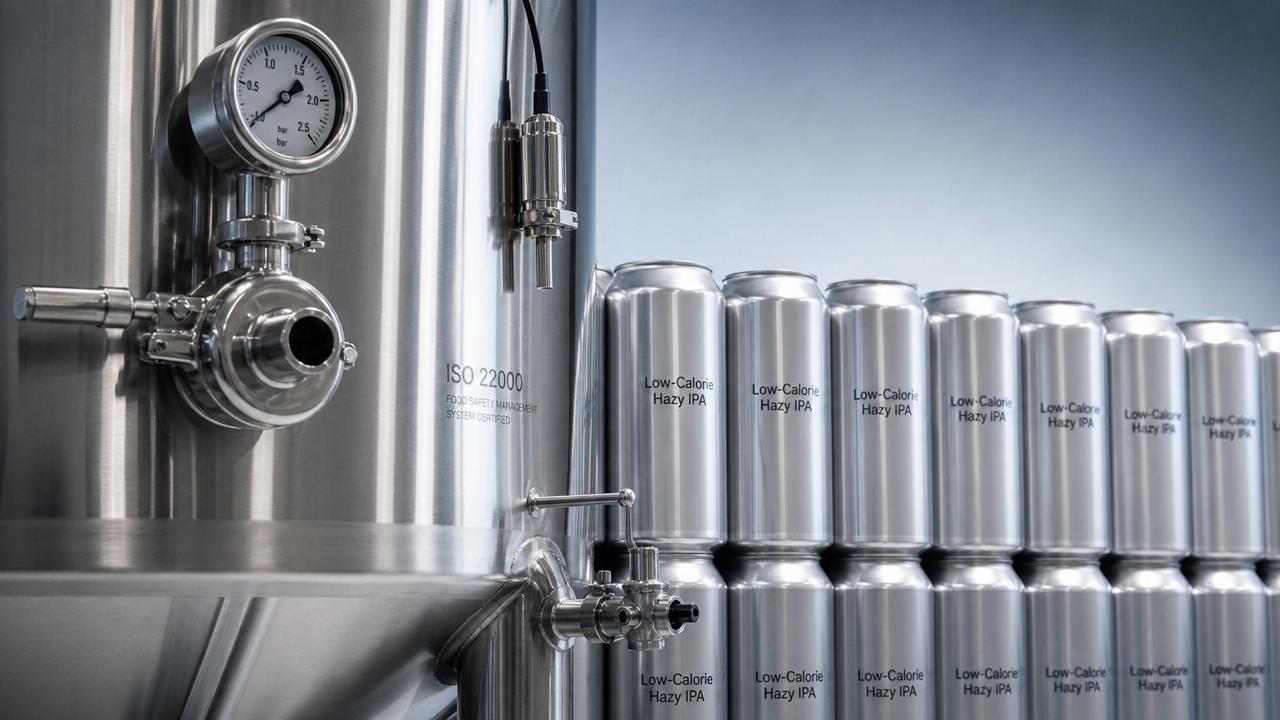
A craft beer contract brewing agreement is not a service contract—it’s a co-creation covenant. Jinpai Beer supports this reality through ISO 22000-certified production, global label compliance frameworks, and dedicated OEM/ODM technical teams fluent in lager, German wheat, low-calorie, fruit-infused, and functional specialty beer development. But alignment starts before ink dries. Use this checklist not as a hurdle—but as your foundation for consistency, compliance, and confident growth. Your brand’s taste, integrity, and scalability depend on what you verify—not what you assume.
Ready to initiate your pre-signing technical review? Contact Jinpai Beer’s OEM/ODM team with your product brief and target markets—we respond within 24 business hours with actionable next steps.
Thank you very much for writing to us. Please leave your message and contact information, we will reply to you within 24 hours.