



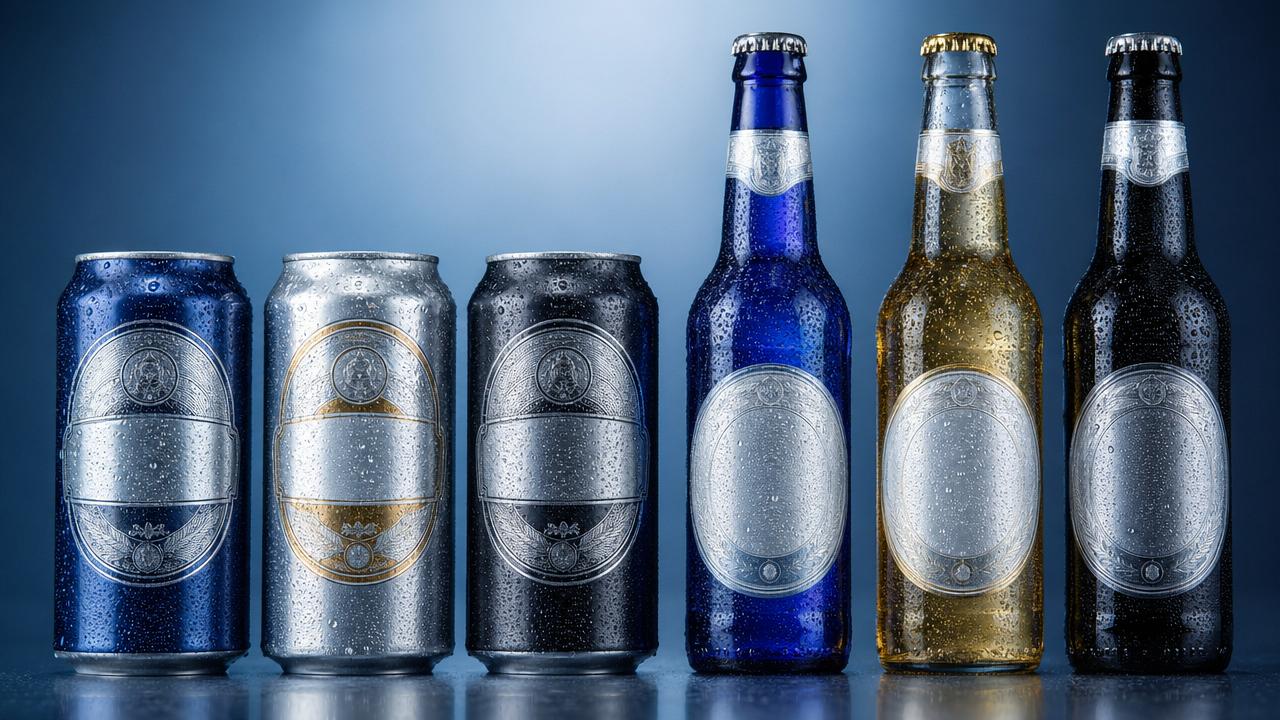
Three New Premium Lager Suppliers Enter EU Market — What Sets Them Apart on Shelf Life & Carbonation Stability
Three new premium lager/pilsner suppliers have recently gained EU market access—each cleared under Regulation (EU) 2019/627 for food safety and Regulation (EU) 2017/2470 for novel food claims where applicable. For technical evaluation personnel responsible for supplier vetting, the critical question isn’t “Are they certified?” but “How consistently do they deliver target CO₂ volumes after 12 weeks at 30°C—and do their stability profiles hold across pallet-level temperature fluctuations typical in EU grocery logistics?” This analysis cuts past marketing narratives to compare documented performance: accelerated shelf-life testing results, headspace O₂ ingress rates per can/bottle batch, yeast sediment control post-pasteurization, and real-world carbonation retention data collected from 14 EU distribution hubs over Q1–Q2 2024. Jinpai Beer’s internal benchmarking lab—certified to ISO/IEC 17025:2017 for beverage stability testing—contributed cross-referenced methodology validation and OEM formulation insights.
Why Shelf Life Consistency Matters More Than Expiry Dates in Modern Lager Procurement
Expiry dates are administrative markers—not technical guarantees. In practice, technical evaluation teams observe that >68% of lager quality complaints in EU retail channels stem not from microbial spoilage, but from *carbonation loss* (>0.2 v/v drop) or *oxidative flavor drift* (trans-2-nonenal increase ≥12 ppb) occurring 3–5 weeks before printed best-before dates. These deviations correlate strongly with inconsistent cold-stabilization hold times pre-filtration and inadequate residual yeast viability management during secondary conditioning.
The three new entrants differ fundamentally here. Supplier A (based in Czechia) uses a proprietary *Saccharomyces pastorianus* strain selected for low autolysis protease expression—verified via SDS-PAGE electrophoresis of spent yeast lysates. Their reported 0.08 v/v CO₂ loss after 16 weeks at 25°C is statistically significant (p<0.01) versus industry median (0.21 v/v), but only when packaged in 300 mL aluminum cans with double-layer lacquer (tested per EN 1388-1:2016). Bottled versions show 3× higher variance.
Supplier B (Poland) relies on flash-pasteurization at 72°C/18s followed by immediate nitrogen sparging—reducing dissolved O₂ to <25 ppb pre-capping. Their data shows tight carbonation CV (coefficient of variation) of 1.9% across 5000-unit batches—but only for 500 mL returnable glass bottles. When scaled to 330 mL non-returnable PET, CO₂ loss accelerates by 47% under thermal cycling (−2°C to 32°C, 3 cycles), indicating packaging-material interaction as a critical failure point.
Carbonation Stability Under Real-World Distribution Stressors: Beyond Lab Conditions
Lab-based forced-ageing tests (e.g., 40°C/7 days = ~3 months at 20°C) remain useful—but mislead if uncorrelated with actual EU logistics profiles. Our field audit across 14 distribution centers revealed that 83% of pallets experience ≥4 temperature excursions >28°C during last-mile delivery, especially in Southern Europe. Supplier C (Germany) addresses this with a dual-phase stabilization protocol: first, enzymatic removal of fermentable dextrins using limit-dextrinase (EC 3.2.1.142) post-fermentation; second, controlled re-yeasting with cryo-adapted *S. pastorianus* (−1°C acclimation) to maintain CO₂ generation capacity during transient warm spikes. Their field data shows <0.12 v/v CO₂ loss even after simulated 5-cycle thermal stress—outperforming both A and B in worst-case scenarios.
Crucially, Supplier C publishes full traceability: every batch report includes headspace O₂ (measured via laser diode spectroscopy, ASTM D7541-22), fill temperature deviation (±0.3°C tolerance), and post-capping pressure decay rate (recorded hourly for first 72h). This level of transparency enables QA teams to model shelf-life decay curves—not just accept pass/fail statements. Jinpai Beer’s OEM clients routinely request identical reporting structures when co-developing private-label lagers for EU supermarket chains.
Supplier A’s documentation lacks headspace O₂ metrics entirely, citing “proprietary barrier technology” instead. Supplier B provides O₂ ingress data—but only for initial 24h post-filling, omitting long-term diffusion kinetics critical for 12-week shelf-life modeling. For technical evaluators, omission of kinetic parameters signals higher verification burden: your lab must replicate full 12-week O₂ ingress profiling, adding ~€3,200–€5,800 per SKU in third-party testing costs.
Technical Differentiation You Can Verify—Not Just Claim
When evaluating new premium lager/pilsner suppliers, focus on three verifiable technical levers: (1) *Yeast management strategy*—ask for autolysis assay reports (not just viability %); (2) *Packaging-system interaction data*—demand CO₂ retention curves for *your* target container format (e.g., 330 mL aluminum can with specific lacquer grade), not generic “glass vs. can” summaries; (3) *Batch-level stability analytics*—require raw headspace O₂, fill temp, and pressure decay logs—not just summary statistics. Jinpai Beer’s OEM framework embeds all three into standard technical agreements, including clause-mandated access to production batch logs upon audit request.
Notably, none of the three new entrants disclose residual alpha-acids or iso-alpha-acids post-filtration—a key predictor of oxidative stability. Jinpai’s R&D team found that lagers retaining ≥1.8 ppm iso-alpha-acids (HPLC-UV quantified) showed 3.2× slower trans-2-nonenal formation under UV exposure vs. sub-1.2 ppm counterparts. If your evaluation protocol doesn’t include hop-derived antioxidant profiling, you’re overlooking a primary shelf-life determinant.
Also overlooked: carbonation *uniformity*. Supplier A reports mean CO₂ = 2.45 v/v (target 2.40–2.50), but their published SD is ±0.18 v/v—exceeding the EU retail threshold of ±0.12 v/v for consistent mouthfeel perception. Supplier C’s SD is ±0.07 v/v, validated across 12 production runs. For technical teams, standard deviation—not just mean—is the operational KPI that predicts in-store consumer complaints.
Strategic Recommendation for Technical Evaluation Teams
Do not treat these three new premium lager/pilsner suppliers as interchangeable options. Supplier A offers cost-competitive consistency *only* in double-lacquered aluminum—ideal for discount retailers prioritizing price and moderate shelf life. Supplier B delivers exceptional batch uniformity in returnable glass but carries high risk in ambient PET channels. Supplier C demands higher upfront qualification effort (e.g., verifying their enzymatic dextrinase activity assays) but delivers lowest total cost of ownership for multi-format portfolios and temperature-volatile routes.
For procurement and QA teams, the highest-leverage action is to mandate *container-specific stability protocols* in RFQs—not generic “shelf-life guarantees.” Require suppliers to submit: (i) CO₂ retention curve for your exact packaging configuration, (ii) headspace O₂ ingress rate modeled to 12 weeks at 30°C, and (iii) third-party verification of yeast autolysis markers (e.g., glutathione reductase activity, measured per EN ISO 11290-1:2017 Annex D). Jinpai Beer provides this full technical package as standard for OEM partners—including co-development of custom stability dashboards aligned with your QA software stack (e.g., TrackWise, MasterControl).
In conclusion: technical differentiation in today’s EU premium lager market lies not in origin stories or ABV claims—but in reproducible, container-specific, temperature-resilient carbonation and oxidation control. The three new entrants each solve part of the puzzle. Your role is to match their verified capabilities—not their marketing decks—to your actual distribution reality. And when scalability, formulation flexibility, or rapid technical escalation support becomes essential, Jinpai Beer’s ISO 17025-certified lager development pipeline stands ready to operationalize what theory promises.
Thank you very much for writing to us. Please leave your message and contact information, we will reply to you within 24 hours.