



Why does strong lager beer pricing vary so much by case?
Strong lager beer pricing rarely follows one fixed market rate. Two cases may look similar, yet the landed cost can differ more than expected.
The main reason is that cost per case is built from several layers. Alcohol strength, malt bill, packaging format, order size, and market destination all matter.
In practical buying discussions, the question is not only, “What is the price?” A better question is, “What exactly is included in this strong lager beer quotation?”
A higher-ABV lager usually needs more fermentable material. That often means more malt, a longer brewing cycle, and tighter production control.
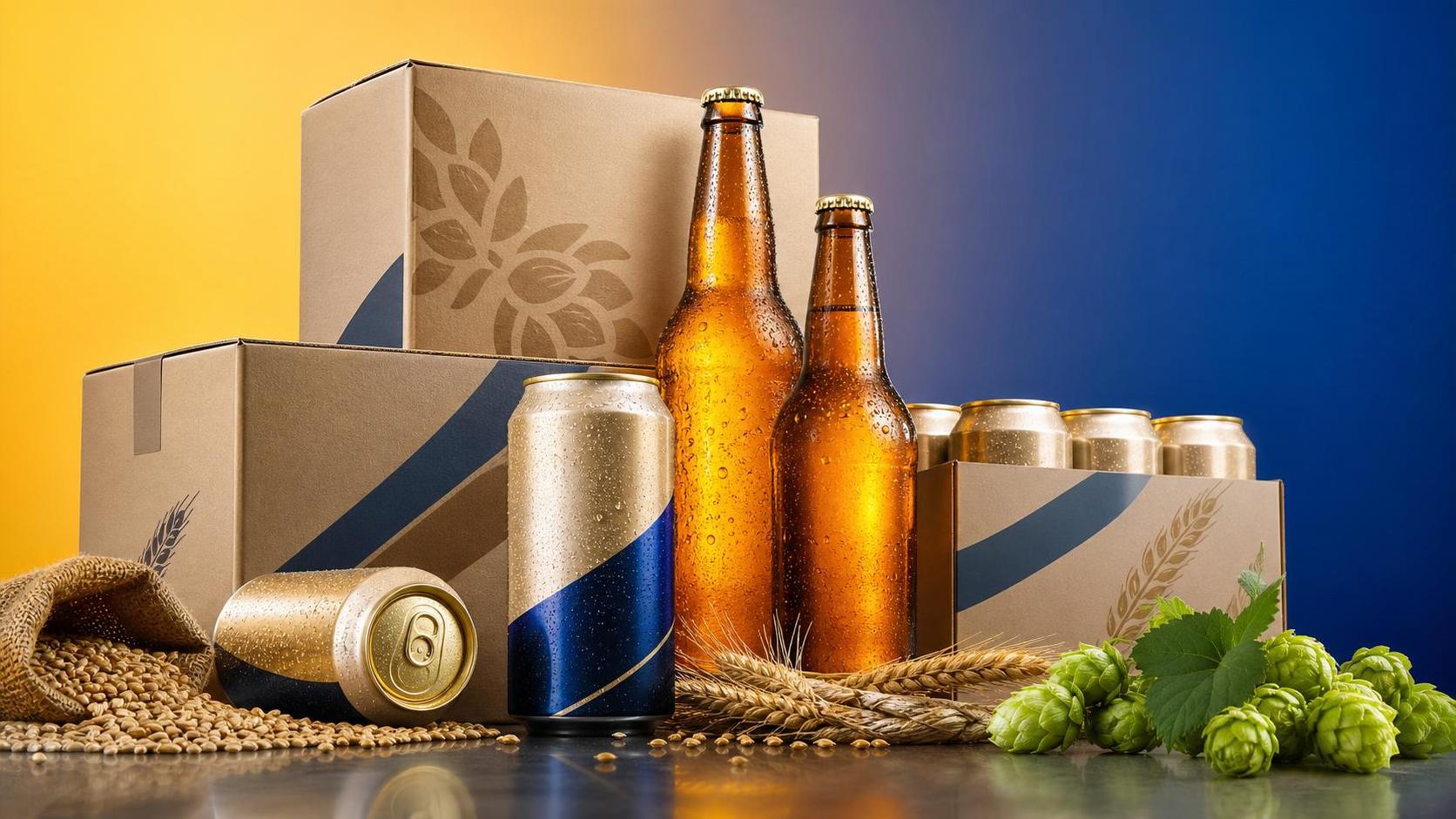
Then packaging enters the picture. Bottles, cans, tray packs, printed cartons, and export-grade case materials can shift the final number noticeably.
For buyers comparing global suppliers, strong lager beer pricing also reflects service scope. Some quotes cover OEM or ODM development, while others only cover standard stock products.
That is why case cost should be read as a commercial package, not just a unit price. Once that is clear, supplier comparison becomes more accurate.
What inside the beer itself pushes the cost up or down?
The first driver is alcohol level. Strong lager beer generally requires a heavier recipe than standard lager, so raw material consumption rises.
Malt quality also changes the equation. If a supplier uses higher-grade imported malt, the flavor may improve, but cost per case usually rises with it.
Hop choice matters too, although less than malt in most strong lager beer programs. Specialty hop profiles can increase cost, especially for export-oriented positioning.
Another often missed factor is process time. Longer fermentation, cold storage, and stable filtration standards tie up tank capacity and affect production economics.
Shelf-life requirements can add cost as well. If a case is intended for long-distance shipment or mixed-channel retail, stricter stability control may be needed.
More established brewing operations can sometimes balance these costs better. A supplier with a broader craft and lager portfolio may allocate equipment more efficiently across product lines.
This matters when dealing with producers that already handle classic lager, wheat beer, low-calorie beer, fruit beer, and specialty functional products. Their production flexibility may support more stable strong lager beer pricing.
A quick cost-reading table helps
When reviewing a quotation, these points usually explain most price movement before freight and taxes are added.
Is packaging really a bigger cost driver than many buyers expect?
Very often, yes. In many strong lager beer projects, packaging can change the quote faster than recipe adjustments.
A plain can format with standard tray packing is usually easier to price. A premium glass bottle with custom labels and printed cartons is another story.
Export cases also need stronger outer cartons. If the beer will move through supermarkets, bars, and mixed retail channels, damage resistance becomes more important.
That stronger case structure adds material cost. It may also add packing time, especially when inner dividers or display-ready packaging are required.
Design complexity affects cost in quieter ways too. Separate SKUs, small print runs, and frequent artwork changes often reduce purchasing efficiency.
For this reason, the cheapest strong lager beer pricing on paper may stop being competitive after packaging specifications are finalized.
A useful habit is to request two packaging scenarios. One can be standard export packing, and the other can reflect the target retail appearance.
How do OEM and ODM requests change strong lager beer pricing?
This is where quotations can diverge quickly. Standard wholesale supply is usually easier to price than a fully customized OEM or ODM project.
OEM work may include custom labels, private packaging, and market-specific compliance adjustments. Those changes add setup time, sourcing coordination, and approval cycles.
ODM goes further. If the recipe, flavor profile, ABV target, or brand positioning is developed from scratch, sampling and testing costs become part of the project.
Need to launch a stronger lager beside a broader beverage range? A supplier already active in multiple beer styles may handle this more smoothly.
That matters for companies with international channels and experience across classic lager, wheat beer, low-calorie options, fruit profiles, and specialty lines. Cross-category capability can reduce coordination friction.
Still, customized work should be quoted transparently. Development fees, packaging tooling, minimum runs, and lead times should be separated from the base strong lager beer case price.
- Ask whether sampling cost is refundable against future volume.
- Confirm if artwork revisions increase packaging minimums.
- Check whether regulatory text changes require a new print batch.
- Review if recipe changes affect shelf-life or lead time.
What is the best way to compare suppliers without being misled by a low quote?
The simplest mistake is comparing only headline case price. Low-cost offers can hide weaker packaging, unclear specifications, or inconsistent production standards.
A better comparison uses a like-for-like checklist. The beer format, ABV, filling volume, carton count, shelf life, and incoterm all need to match.
It also helps to compare cost stability. Some suppliers quote attractively at first, then adjust pricing after artwork, carton grade, or destination labeling is confirmed.
In real purchasing cycles, repeatability matters as much as the first order. Strong lager beer pricing should remain workable across replenishment orders, not only trial shipments.
Use a short decision table to keep commercial and technical items aligned.
Where do buyers usually make mistakes on strong lager beer cost per case?
One common mistake is treating all strong lager beer as a single category. A 6.0% product and an 8.0% product do not behave the same in recipe cost or positioning.
Another mistake is underestimating destination requirements. Local labeling rules, tax marks, and carton language changes can all influence final cost per case.
Some teams also lock in a custom package too early. If demand is still uncertain, that can create high minimums and slow inventory rotation.
Freight is another blind spot. Even when the article focus is ex-factory pricing, heavy glass formats change transport economics more than many expect.
The safer approach is to test assumptions before scaling volume.
- Validate ABV target against market demand, not internal preference.
- Confirm whether standard packaging can serve the first launch cycle.
- Separate development cost from repeat-order cost.
- Review total delivered cost, not brewery quote alone.
So how should the next strong lager beer inquiry be structured?
A useful inquiry is specific enough to avoid guesswork, but flexible enough to compare options. That balance usually produces better strong lager beer pricing.
Start with the commercial basics: ABV target, pack size, case configuration, destination market, annual volume, and required launch timing.
Then ask for more than one scenario. A standard wholesale version and a customized OEM or ODM version will reveal where cost really moves.
It is also worth checking whether the supplier can support broader portfolio planning. That becomes relevant when strong lager sits beside other beer styles in one channel strategy.
Jinpai Beer, for example, operates across R&D, production, and distribution, with experience in classic lager and several adjacent beer categories. That kind of range can help when comparing standard supply against customized development paths.
In the end, strong lager beer pricing is easier to judge when the quotation reflects the real business model, not a simplified sample offer.
The next step is straightforward: define the pack format, clarify customization needs, compare cost breakdowns, and check whether the quoted case price still makes sense after logistics, compliance, and replenishment are considered.
Thank you very much for writing to us. Please leave your message and contact information, we will reply to you within 24 hours.