



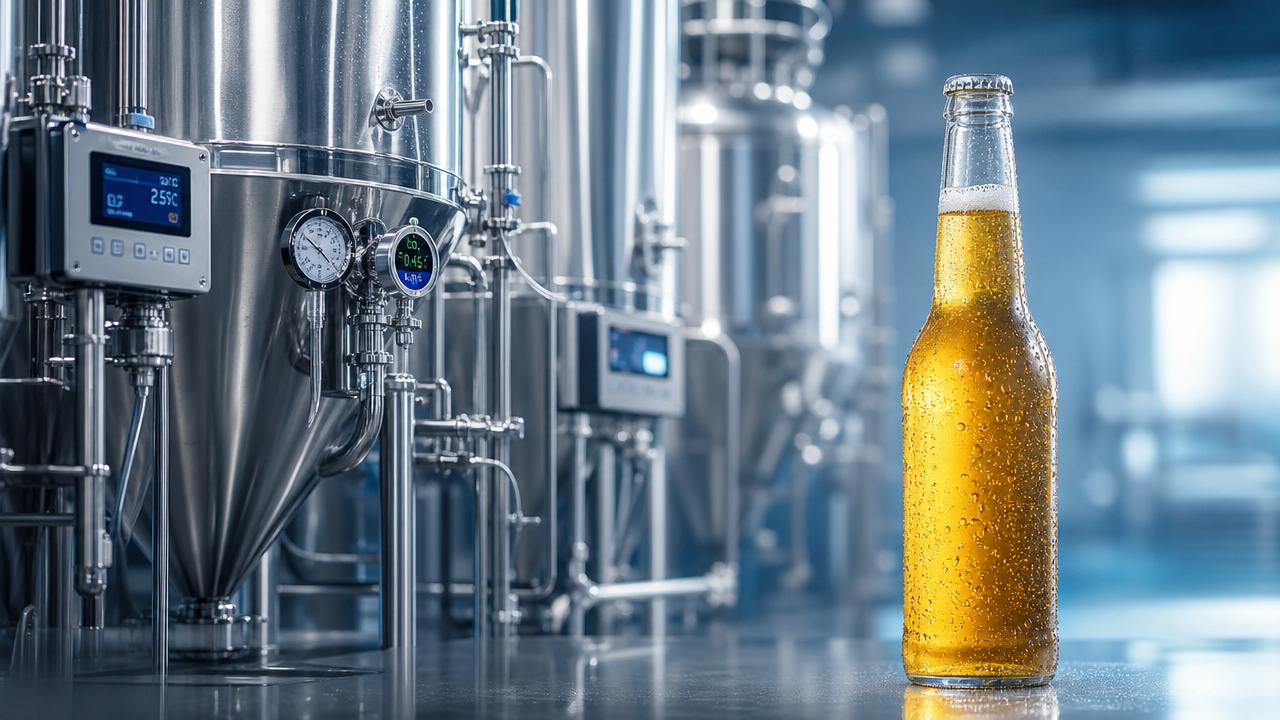
For technical evaluators assessing end-to-end beverage development partnerships, reliable ODM beer services go beyond contract brewing—they demand seamless formulation handoff, scalable pilot validation, and regulatory-aligned documentation. At Jinpai Beer, our ODM beer services integrate R&D rigor with production precision across lager, wheat, low-calorie, fruit-infused, and functional beer categories—ensuring your proprietary formula transitions flawlessly from lab to shelf-ready RTD product. Backed by global distribution infrastructure and ISO-certified facilities, we empower brands to de-risk innovation while maintaining full IP control.
What Makes an ODM Beer Service Technically Viable?
Technical viability in ODM beer services isn’t defined by brewing capacity alone—it hinges on three interlocking capabilities: (1) formulation fidelity transfer, (2) process scalability without sensory or stability compromise, and (3) documentation traceability aligned with regional food safety standards (e.g., FDA 21 CFR Part 117, EU Regulation (EC) No 852/2004). Jinpai Beer’s ODM beer services are engineered around these pillars, not as add-ons but as embedded protocol layers in every engagement.
Unlike generic co-packers, we treat each client formula as a live R&D extension—not just a production input. Our internal cross-functional team includes certified brewing scientists, microbiologists, sensory analysts, and regulatory affairs specialists—all co-located at our ISO 22000-certified facility. This eliminates handoff latency between formulation review and pilot batch execution.
How Do We Validate Formulation Handoff? A Step-by-Step Technical Workflow
Our formulation handoff protocol is structured into five auditable phases, each with documented checkpoints and decision gates:
- Phase 1 – Formula Audit & Gap Mapping: Ingredient sourcing compliance (e.g., GRAS status, E-number equivalency), pH/stability modeling, and yeast strain compatibility assessment.
- Phase 2 – Lab-Scale Replication (≤5L): Sensory panel scoring against reference standard (≥3 rounds, blind evaluation), turbidity & sedimentation tracking over 7 days.
- Phase 3 – Pilot Batch (200–500L): Full-process validation including cold crash kinetics, filtration efficiency, carbonation consistency, and fill-level accuracy (±0.5% tolerance).
- Phase 4 – Shelf-Life Simulation: Accelerated aging at 37°C for 4 weeks + real-time monitoring at 25°C for 12 weeks; microbial, oxidative, and flavor stability metrics logged per ISO 11287.
- Phase 5 – Documentation Package Delivery: Includes full BOM with supplier certifications, process flow diagrams, HACCP plan annexes, and label compliance review (FDA/EU/ASEAN formats).
ODM Beer Services Across RTD Categories: Technical Fit Assessment
Not all ODM beer services perform equally across formulation complexity. Below is how Jinpai Beer’s platform maps to technical demands of key RTD beer categories—based on actual pilot batch success rates (2022–2024 data):
These figures reflect repeatable outcomes—not one-off successes. Each category leverages dedicated fermentation vessels, temperature-controlled conditioning tanks, and inline UV sterilization where required. The lead time variance reflects analytical depth, not scheduling bottlenecks.
Why Technical Evaluators Choose Jinpai for ODM Beer Services
We don’t compete on lowest price or fastest turnaround alone. We solve for technical risk exposure—the hidden cost of failed handoffs, delayed launches, or reformulation cycles. Here’s what technical teams consistently cite as decisive differentiators:
- IP Protection Protocol: All formulations remain client-owned; no reverse engineering, no ingredient substitution without written consent—even for minor stabilizers or processing aids.
- Regulatory Bridge Support: In-house documentation team pre-validates label claims (e.g., “low calorie”, “sugar-free”, “non-alcoholic”) against target market requirements before first pilot batch.
- Scalability Guarantee: Pilot batches use identical yeast propagation, wort oxygenation, and fermentation control logic as full-scale runs—no re-optimization needed.
- Real-Time Data Access: Clients receive secure portal access to live sensor logs (temperature, pressure, CO₂, dissolved O₂) during pilot and production runs.
Next Steps for Technical Evaluation
If you’re evaluating ODM beer services for an upcoming RTD launch—or troubleshooting a previous handoff failure—we invite you to request the following:
- A technical fit assessment of your current formula (share spec sheet + target markets)
- A pilot batch timeline & documentation scope specific to your category and volume tier (500L / 2,000L / 10,000L)
- An ISO 22000 audit summary with focus on allergen control, cleaning validation, and raw material traceability
- A sample shipment of comparable category benchmarks (e.g., low-calorie lager, hazy wheat, functional citrus IPA)
Contact our Technical Partnership Team directly with your formulation dossier or preliminary inquiry. We respond within 48 business hours—with actionable next steps, not generic brochures.
Thank you very much for writing to us. Please leave your message and contact information, we will reply to you within 24 hours.