



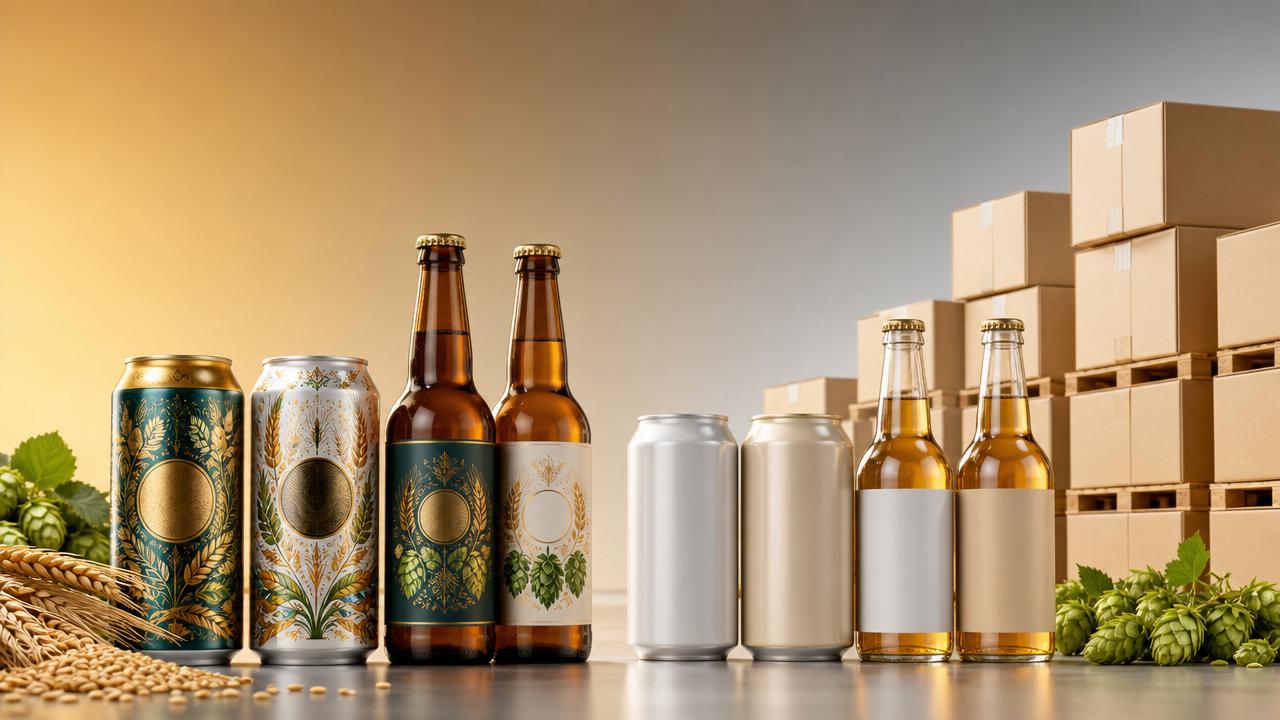
For procurement teams planning a 2026 beverage launch, one question matters most: Malt beverage OEM vs private label which is better? The answer often comes down to startup cost, speed to market and customization needs. From formula development to packaging flexibility, understanding these two models can help buyers reduce risk, control budgets and choose the most efficient path for launching competitive malt beverage products.
In the malt beverage sector, the wrong sourcing model can add 8–16 weeks to launch timing, increase packaging waste, or lock buyers into a formula that does not fit local retail demand. For importers, distributors, supermarkets, restaurant groups, and bar supply chains, the decision is not simply about unit price. It is about total launch cost, MOQ, compliance workload, and the ability to scale from a trial order to repeat volume.
For buyers evaluating craft beer, classic lager, German wheat, sugar-free low-calorie beer, fruit-flavored beer, or functional specialty beers, both OEM and private label can be effective. The better option depends on how much control you need over recipe, branding, shelf positioning, and first-batch capital. This article breaks down the cost logic behind each model and shows how procurement teams can choose the best route for a 2026 launch.
Understanding OEM and Private Label in Malt Beverages
Before comparing budgets, buyers need a clear definition. In malt beverages, OEM usually means a manufacturer produces according to the buyer’s requested formula, alcohol profile, taste direction, packaging format, or technical specifications. Private label usually means the factory offers an existing or slightly adjusted product that the buyer sells under its own brand.
That distinction matters because development cost, approval time, and production setup differ at every step. A fully customized OEM project may involve 3–5 stages, including sample adjustment, packaging confirmation, pilot production, and final batch scheduling. A private label project often reduces this to 2–3 stages when the formula and base supply chain are already in place.
What OEM usually includes
- Formula development or recipe adjustment
- Alcohol, bitterness, sweetness, or calorie target tuning
- Custom can, bottle, tray, or carton specifications
- Label language adaptation for local market rules
- Sampling, approval, and production planning
What private label usually includes
- Selection from existing malt beverage formulas
- Brand artwork replacement on standard packaging formats
- Lower setup complexity and fewer technical revisions
- Faster purchase cycle for test-market entry
- More predictable cost per batch
For procurement teams asking “Malt beverage OEM vs private label which is better?”, the first answer is simple: private label often lowers early launch cost, while OEM usually delivers stronger differentiation if projected annual volume justifies development expense.
Which Model Usually Cuts Launch Costs in 2026?
In most beverage launch scenarios, private label cuts upfront cost more effectively than OEM. The reason is straightforward. Existing formulas, production parameters, and packaging lines reduce trial expense, shorten approval cycles, and limit material waste. For a first order, that can mean noticeably lower cash pressure.
However, launch cost is not the same as long-term cost. A lower first-batch entry point may come with fewer options for flavor differentiation, calorie claims, or local consumer targeting. If a buyer intends to build a premium shelf identity in 12–24 months, OEM may become more economical over time by improving repeat sales and reducing direct product overlap with competitors.
Cost comparison at the startup stage
The table below shows typical procurement-side differences between OEM and private label for malt beverage launches. These are common industry ranges rather than fixed market prices, but they reflect how buyers usually assess startup cost exposure.
The key takeaway is that private label usually wins on first-launch affordability. If your target is to enter retail, bar, or e-commerce channels within 30–60 days, private label often minimizes cash tied up in R&D, compliance checks, and packaging revisions.
When OEM can still be the lower-cost decision
OEM may look more expensive at the beginning, but it can reduce downstream cost in three situations. First, you need a specific formula such as sugar-free low-calorie beer or fruit-flavored beer tuned for local taste. Second, your market is crowded and generic private label products are hard to differentiate. Third, your annual demand forecast is strong enough to spread development cost across multiple production cycles.
For example, if a buyer plans 4–6 repeat orders per year, custom recipe cost becomes less significant per unit. In that case, improved margin positioning or stronger shelf identity may offset the higher first-batch setup cost.
How Procurement Teams Should Compare Total Cost, Not Just Unit Price
A common buying mistake is to compare only ex-factory price per can or bottle. In malt beverage sourcing, the more useful calculation is total landed launch cost. This includes formula work, packaging adaptation, inventory risk, approval lead time, freight coordination, and the cost of market delay.
If one model saves $0.03 per unit but delays your launch by 6 weeks, the cheaper quotation may not be cheaper in practice. Seasonal sales windows matter in beer and malt beverages, especially before holidays, summer peaks, promotional festivals, and new retail listing periods.
Four cost layers buyers should calculate
- Upfront development cost: samples, artwork edits, formula changes, test batches
- Production cost: liquid, packaging materials, line changeover, carton configuration
- Logistics cost: pallet efficiency, container loading, breakage control, labeling compliance
- Commercial cost: speed to market, product uniqueness, relaunch risk, slow-moving stock
Typical risk difference
Private label reduces technical risk because the product has already been produced in stable conditions. OEM reduces brand substitution risk because your offer can be more exclusive. Buyers should decide which risk has a bigger financial impact in their own channel strategy.
The following table helps procurement teams compare decision factors beyond simple price. It is especially useful for buyers sourcing craft beer, lager, wheat beer, or specialty malt beverages for multi-channel distribution.
For buyers still asking “Malt beverage OEM vs private label which is better?”, this comparison shows there is no universal answer. Private label is often the lower-cost launch model. OEM is often the stronger commercial model when brand control and long-term repeat orders are more important than immediate entry cost.
Best Use Cases by Channel, Product Type, and Buying Objective
Different routes to market require different sourcing logic. A supermarket buyer managing shelf turnover may prioritize stable taste, compliant labeling, and predictable replenishment. A distributor supplying bars may need a more distinctive flavor profile. An e-commerce operator may focus on packaging appearance and smaller trial runs.
Private label is often best for these scenarios
- New market testing with 1–2 initial SKUs
- Budget-controlled launch with limited development funds
- Retail or online channels that need speed more than exclusivity
- Buyers using standard can or bottle formats to simplify logistics
OEM is often best for these scenarios
- Premium positioning in crowded beverage shelves
- Special demand such as low-calorie, fruit-flavored, or functional malt beverages
- Restaurant chains or bar groups seeking house-branded differentiation
- Distributors planning long-term portfolio building across 3 or more markets
Product category matters
Classic lager and standard wheat beer are often easier to launch through private label because flavor expectations are familiar and standardization is acceptable. Functional specialty beers, sugar-free low-calorie beer, and some fruit-forward concepts are more likely to benefit from OEM because taste balance and claim positioning can influence repeat purchase strongly.
Practical Supplier Checklist for 2026 Beverage Buyers
Whether you choose OEM or private label, supplier selection remains the biggest control point. A capable malt beverage manufacturer should support not only production, but also sample communication, packaging coordination, and realistic lead-time planning. Buyers should evaluate at least 6 checkpoints before confirming a project.
Six checks before placing a launch order
- Confirm available product range, including lager, wheat, fruit, low-calorie, and specialty options
- Ask about MOQ by SKU, packaging type, and print method
- Review sample cycle, usually 7–21 days depending on customization level
- Check label adaptation support for language and regulatory needs
- Clarify lead time for first order and repeat order separately
- Confirm whether the supplier can support both OEM/ODM and wholesale supply if your strategy evolves
Why flexibility matters in 2026
Consumer demand in the beverage sector is shifting faster than before. Buyers increasingly want 2 things at the same time: faster launch and better differentiation. That is why manufacturers with a broad product range and customization capability are easier to work with. They allow procurement teams to start with private label for speed, then move into OEM once volume and local market feedback are clearer.
For example, a buyer may begin with standard lager or German wheat under private label, then expand into sugar-free low-calorie beer or fruit-flavored beer under OEM in the next season. This staged strategy can reduce first-year risk while building a more distinctive portfolio over time.
Final Decision: Malt Beverage OEM vs Private Label Which Is Better?
If your main goal is to cut launch costs in 2026, private label is usually the more efficient choice. It reduces development steps, shortens lead time, and lowers first-order pressure. For buyers entering a new market, testing 1–3 SKUs, or moving quickly into retail and online channels, that advantage is significant.
If your priority is product distinction, formula control, and long-term brand value, OEM can be the better investment despite higher startup cost. It is especially useful when your product plan includes customized craft beer, low-calorie concepts, fruit-flavored lines, or functional specialty malt beverages designed for a specific customer segment.
Jinpai Beer supports R&D, production, and global distribution across a wide malt beverage portfolio, including classic lager, German wheat, sugar-free low-calorie beer, fruit-flavored beer, and functional specialty beers. With OEM/ODM services, wholesale supply, and customized solutions for restaurants, supermarkets, bars, and retail channels, procurement teams can choose a launch model that matches budget, timing, and brand strategy.
If you are planning a 2026 beverage launch and need help comparing OEM against private label, contact us to discuss your target market, packaging needs, expected volume, and product direction. Get a customized sourcing solution and explore the most practical path for your next malt beverage project.
Thank you very much for writing to us. Please leave your message and contact information, we will reply to you within 24 hours.