



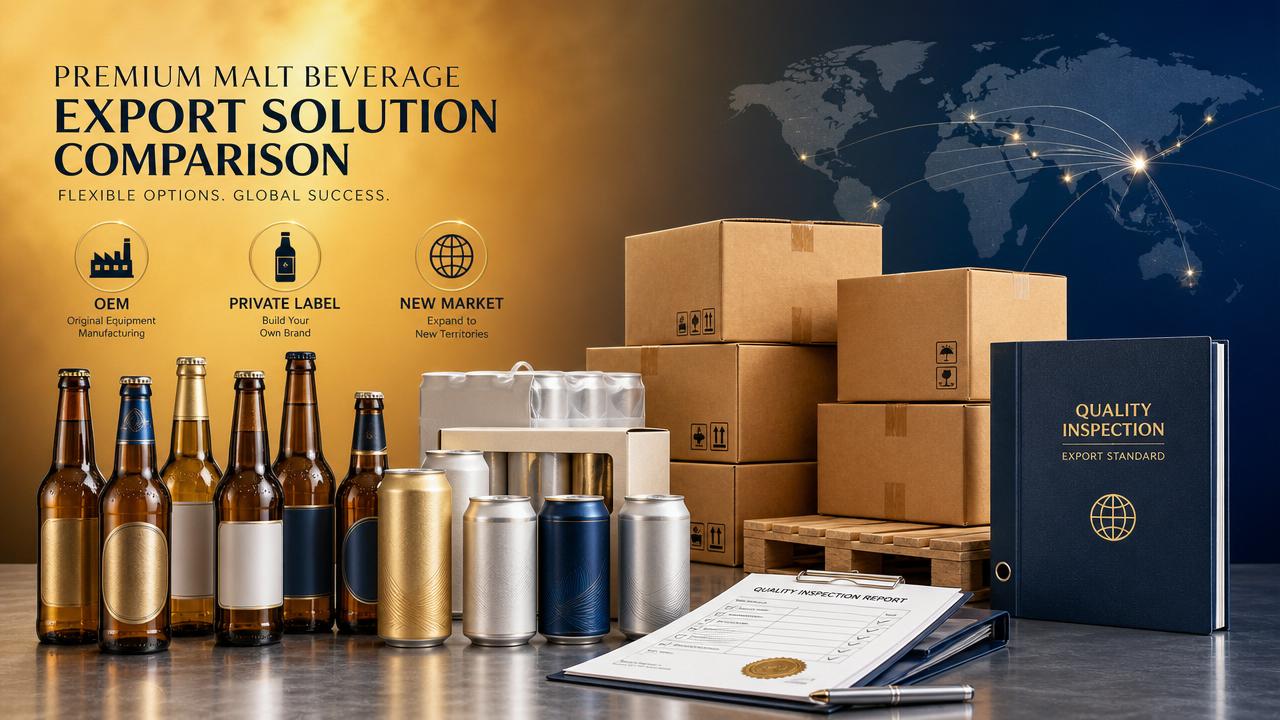
Entering a new market with the right product strategy can determine how fast your beverage business grows. Malt beverage OEM vs private label which is better? For distributors, agents and brand owners, the answer depends on budget, speed, customization needs and channel positioning. This guide helps you compare both models clearly, so you can choose the most practical path for launching craft and specialty malt beverages in competitive global markets.
What does malt beverage OEM vs private label really mean for distributors?
When buyers ask, “Malt beverage OEM vs private label which is better?”, they are usually trying to solve a market-entry problem, not a theory question. The real issue is how to launch products with the right margin, acceptable risk and fast enough delivery.
In the beverage industry, OEM usually means a manufacturer produces a product according to the buyer’s requested formula, specification, packaging concept or brand direction. Private label usually means the manufacturer offers existing mature products that can be sold under the buyer’s own brand with lighter customization.
For importers, wholesalers and regional agents, the difference affects more than taste. It changes your minimum order quantity, development time, packaging flexibility, compliance work and inventory pressure. That is why the OEM versus private label decision should be tied to your sales channel and launch plan.
- OEM is often chosen when you need stronger differentiation, special flavor positioning, custom alcohol levels, sugar-free concepts or functional beer features suited to your target market.
- Private label is often chosen when you need speed, lower development complexity and reliable products already tested in practical production conditions.
- Some distributors combine both models: private label for rapid entry and OEM for later expansion after sales data confirms demand.
Why this decision matters more in new markets
New-market distribution is rarely simple. Consumer preferences may differ by retail channel, import rules may shape packaging choices, and the same product may perform differently in bars, supermarkets and e-commerce. Choosing the wrong supply model can delay launch or create stock that moves too slowly.
For malt beverages, this is especially important because flavor style, carbonation, packaging format and shelf presentation directly affect trial purchase and repeat orders. A product that works in one country may need adjustments in another.
Malt beverage OEM vs private label which is better? A practical side-by-side comparison
The table below helps answer the core question, “Malt beverage OEM vs private label which is better?” by showing how each model performs across the buying factors that matter most to distributors, agents and beverage importers.
In short, private label is often better for speed and lower complexity, while OEM is often better for differentiation and long-term brand building. The right answer depends on your market entry stage, cash flow and channel requirements.
How channel strategy changes the answer
If you supply supermarkets, convenience stores or online marketplaces, private label may help you move quickly with classic lager, German wheat or fruit-flavored beer styles that consumers already understand. Fast trial and repeat purchase matter more than complex customization in many of these channels.
If you focus on premium bars, trendy restaurants or specialty retailers, OEM may offer stronger value. A sugar-free low-calorie beer, tailored fruit-forward profile or functional specialty beer concept can help your brand stand out where menu differentiation matters.
Which model fits your budget, timeline and order plan?
Distributors entering a new territory usually face three pressures at once: limited budget, uncertain forecast and demanding launch deadlines. That is why the OEM versus private label question should be evaluated through a sourcing and rollout lens, not only branding preference.
The following table gives a simple selection framework for beverage buyers comparing project conditions before placing an order.
Many successful importers do not treat the decision as either-or forever. They start with a practical mix. For example, a distributor may launch a private label lager for mass retail, then add an OEM fruit-flavored or functional specialty product for premium outlets after building local brand awareness.
A simple procurement checklist
- Define your primary channel first. A product for bars should not be sourced the same way as a product for supermarkets.
- Estimate realistic first-order volume. This directly affects whether OEM economics are viable.
- Clarify whether your advantage is speed or uniqueness. Trying to maximize both at once can create delays.
- Check packaging adaptation needs such as can, bottle, multipack or retail shelf format.
- Confirm import documentation and labeling requirements early to avoid rework before shipment.
What product categories are easier to launch through OEM or private label?
Not every malt beverage category behaves the same in sourcing. Some are ideal for rapid private label rollout. Others benefit more from OEM because consumer expectations are more specific or the positioning needs clearer separation.
Categories well suited to private label
- Classic lager for broad retail distribution, where consistency and accessible taste are key.
- German wheat style for markets with steady demand for familiar imported beer profiles.
- Entry-level fruit-flavored beer where branding and packaging often drive first purchase.
These segments are often easier to commercialize quickly because consumers already recognize the style. A distributor can focus on price architecture, branding and shelf access instead of extended formulation work.
Categories that often benefit from OEM
- Sugar-free low-calorie beer aimed at health-conscious buyers who read labels carefully.
- Functional specialty beers where concept differentiation is part of the sales story.
- Fruit-flavored variants designed for local taste preferences or event-based seasonal launches.
These products often require more attention to sweetness level, aftertaste, aroma balance, drinking occasion and target demographic. OEM gives you more room to align the liquid and the concept with your market positioning.
What should distributors evaluate beyond price?
Price matters, but in malt beverage sourcing it should never be the only decision point. A cheaper offer can become more expensive if it creates slow turnover, repackaging issues, repeat quality concerns or label non-compliance in the destination market.
When comparing OEM and private label proposals, distributors should review technical and operational fit in parallel with cost.
- Flavor consistency across batches, especially for repeat retail supply.
- Packaging compatibility with your channel, such as single-serve cans for convenience retail or glass bottles for restaurants.
- Shelf-life planning relative to sea shipment, customs clearance and warehouse turnover time.
- Label content and destination-market compliance, including ingredient declaration and alcohol-related rules where applicable.
- Supplier responsiveness during sample revision, artwork confirmation and production scheduling.
Compliance and documentation to discuss early
In cross-border beverage trade, documentation timing can affect the whole project. Buyers should ask early about product specifications, labeling support, shelf-life details, packing list accuracy and routine export documentation. If the target market has specific food-contact or labeling rules, those checks should happen before final artwork approval.
This is one reason an experienced manufacturer is valuable. A supplier that regularly works with global online and offline channels can help reduce avoidable mistakes in format, sequencing and communication.
How can Jinpai Beer support both OEM and private label growth?
For buyers comparing malt beverage OEM vs private label which is better, supplier capability is often the deciding factor. A manufacturer must be able to support both stable production and market-oriented flexibility. Jinpai Beer operates across R&D, production and distribution of craft beer, giving partners practical support from concept to shipment.
Its product range covers classic lager, German wheat, sugar-free low-calorie beer, fruit-flavored beer and functional specialty beers. This breadth is useful for distributors because it supports both fast-entry private label programs and more customized OEM projects without forcing buyers to change suppliers as their portfolio evolves.
Where this creates value for agents and importers
- If you need quick market testing, mature product lines can shorten decision time and simplify launch planning.
- If you need product differentiation, OEM and ODM support can help you build more targeted craft and specialty beverage offerings.
- If you serve multiple channels, a wider SKU base makes it easier to match products with restaurants, supermarkets, bars and retail platforms.
- If you need long-term cooperation, wholesale supply and customized solutions can support staged expansion rather than one-time purchases only.
This matters because distributors rarely stay in one phase. They may begin with a low-risk private label launch, then expand into a more tailored product line once the market response becomes clearer. A partner able to support both stages can reduce transition cost and communication loss.
Common mistakes when choosing between OEM and private label
When asking “Malt beverage OEM vs private label which is better?”, buyers sometimes focus too much on concept and too little on execution. The result is not always a bad product. More often, it is a poor fit between product model and market reality.
Mistakes that slow market entry
- Choosing OEM for a first small trial without enough volume to absorb development and packaging complexity.
- Choosing private label for a premium niche where stronger recipe differentiation is necessary to justify price.
- Ignoring local taste trends and importing a standard profile that does not match target consumers.
- Approving labels too late, which can delay shipment and create extra revision work.
- Underestimating the importance of packaging format for different sales channels.
A disciplined sourcing process helps prevent these issues. Start with channel logic, then narrow product style, then confirm the supply model. Many procurement errors happen when this order is reversed.
FAQ: Malt beverage OEM vs private label which is better?
Is private label always the cheaper option?
Not always in total business terms. Private label often reduces early development cost and speeds launch, but OEM may create better long-term margin protection if your market values uniqueness. The lower-cost option on paper is not always the more profitable option after channel competition starts.
Is OEM only suitable for large buyers?
Large buyers often benefit more easily from OEM, but smaller distributors can also use it strategically. The key is to apply OEM where product uniqueness supports a real channel advantage, such as health-oriented beer, premium restaurant placement or market-specific flavor concepts.
Which option is better for supermarkets and retail chains?
In many cases, private label is the faster route for supermarkets because established styles and efficient replenishment are important. However, if the retailer wants an exclusive concept or a differentiated healthier beer segment, OEM can still be the better answer.
How should I test a new market without taking too much risk?
A common approach is to begin with one or two private label SKUs in proven categories, track sales by channel, then introduce OEM products after you understand demand patterns. This phased method gives better data for future customization and helps protect cash flow.
What should I prepare before asking for a quotation?
Prepare your target market, sales channel, preferred beer style, packaging format, estimated order volume and any labeling or certification expectations. If you are evaluating malt beverage OEM vs private label which is better, these details allow the supplier to recommend a more realistic route and timeline.
Why choose us for new-market malt beverage projects?
If you are still deciding, “Malt beverage OEM vs private label which is better?”, the best next step is to review your market plan with a manufacturer that understands both beverage production and channel demand. Jinpai Beer can support product selection, OEM or ODM customization, wholesale supply and multi-channel beverage planning for importers, distributors and agents.
You can discuss practical project details such as suitable beer styles for your market, packaging options, estimated delivery cycle, sample support, private label feasibility, OEM customization direction, documentation preparation and quotation structure based on your order plan.
For buyers targeting restaurants, supermarkets, bars or mixed retail channels, a clear consultation at the start can save weeks of back-and-forth later. If you want to compare launch paths, confirm product positioning or request samples for classic lager, German wheat, sugar-free low-calorie beer, fruit-flavored beer or functional specialty beers, now is the right time to start the conversation.
Thank you very much for writing to us. Please leave your message and contact information, we will reply to you within 24 hours.