



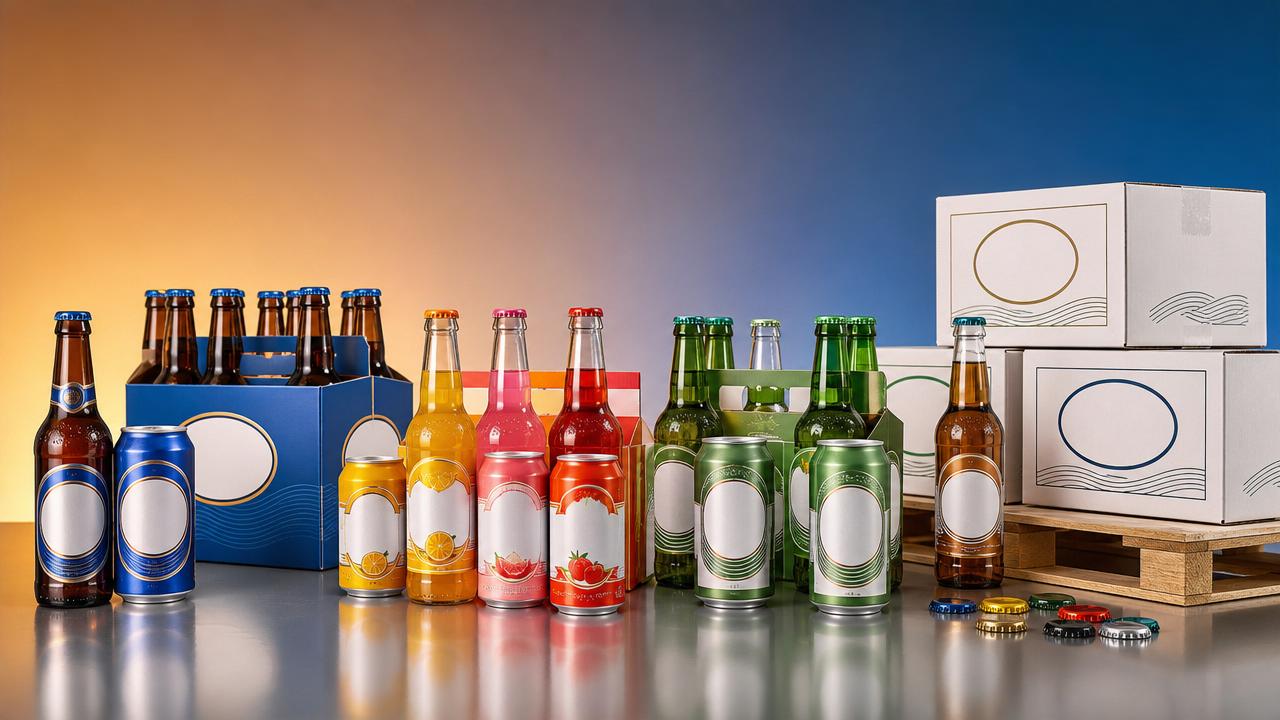
Malt beverage OEM vs private label which is better in real market expansion?
When a beverage business plans to expand, the first decision is rarely about flavor alone.
A more practical question appears earlier: Malt beverage OEM vs private label which is better for margin, speed, and long-term control?
The answer changes with channel strategy, product complexity, and how much brand ownership matters in each market.
In beverage distribution, a supermarket launch behaves differently from a bar-exclusive craft line or a functional low-calorie series.
That is why Malt beverage OEM vs private label which is better cannot be judged only by unit price.
It depends on margin layers, recipe flexibility, packaging identity, and how quickly supply can adapt when demand shifts.
For businesses working across classic lager, wheat beer, sugar-free options, fruit flavors, and specialty functional beers, model choice affects more than production.
It shapes positioning, reorder efficiency, and how easily a product fits restaurants, supermarkets, bars, and online sales.
Why the same question leads to different answers across channels
In actual use, OEM and private label solve different business problems.
OEM usually fits businesses that want recipe influence, format adjustments, or differentiated positioning beyond a standard catalog product.
Private label often works better when speed matters, retail buyers expect clear shelf branding, and launch risk needs to stay controlled.
The confusion starts when both are treated as identical outsourcing methods.
They are not identical in cost structure or in how margin is protected over time.
A fruit-flavored malt beverage for online promotion may need rapid seasonal refreshes.
A German wheat beer for restaurant supply may need taste consistency and keg or bottle matching.
A sugar-free low-calorie line for modern retail may need compliance-ready claims, stable packaging, and repeatable lead times.
So when asking Malt beverage OEM vs private label which is better, channel fit matters as much as production cost.
A quick comparison before going deeper
This is the starting point, not the final answer.
When shelf competition is intense, private label often moves faster
Retail shelves reward speed, packaging clarity, and predictable replenishment.
In that setting, private label can be the better fit because launch timing directly affects listing opportunities.
For standard lager or easy-drinking wheat beer, consumers often compare visual appeal and price before deeper brand storytelling.
That makes a ready formula with customized branding commercially useful.
The margin trade-off is subtle.
Per-unit margin may look lower than a differentiated OEM product, but total margin can improve through faster sales rotation and lower development risk.
This is especially true when one label serves supermarkets, convenience retail, and online bundles at the same time.
A practical example is a branded classic lager line built on stable, market-tested production.
If packaging, carton sizing, and compliance labeling are handled efficiently, private label reduces time lost between concept and shelf placement.
In this scenario, Malt beverage OEM vs private label which is better usually tilts toward private label.
When differentiation drives the sale, OEM can protect margin better
Some channels do not compete mainly on low entry price.
Bars, themed restaurants, regional craft programs, and specialty retail often need a stronger product story.
That is where OEM becomes more valuable.
A German wheat recipe with a specific mouthfeel, a fruit beer tailored to local taste, or a functional specialty beer with a distinct claim can justify better pricing.
The higher upfront work is not just technical cost.
It is also an investment in margin defense.
Once the flavor profile, packaging tone, and brand narrative align, direct price comparison becomes harder for competitors.
This matters in markets where standard malt beverages are already crowded.
A business selling through bars or premium grocers often benefits more from uniqueness than from raw launch speed.
So if the question is Malt beverage OEM vs private label which is better for premium positioning, OEM often wins.
Signals that OEM is worth the extra effort
- The market rewards flavor distinction, not just low price.
- Packaging needs to support a curated brand story.
- The channel allows premium pricing or limited editions.
- The product mix includes low-calorie, fruit, or functional concepts.
- Long-term brand ownership matters more than short-term rollout speed.
The margin question changes again in multi-channel beverage programs
Many beverage businesses no longer sell through one channel only.
A malt beverage may appear in bars, supermarkets, online shops, and regional distributors at the same time.
In these cases, the better model may not be exclusively OEM or exclusively private label.
A mixed strategy often performs better.
Standard lager or wheat products can use private label for volume channels.
More distinctive fruit-flavored or specialty functional lines can use OEM for selective channels with higher perceived value.
This structure balances cash flow and brand growth.
It also reduces dependence on one consumer segment.
For companies with broad production capabilities, including OEM, ODM, wholesale supply, and customization, this hybrid approach is realistic.
It supports different channel expectations without forcing every product into the same margin logic.
Different scenarios create different decision points
A simple comparison table helps clarify why one answer does not fit every beverage launch.
Where businesses often misjudge Malt beverage OEM vs private label which is better
One common mistake is focusing only on ex-factory price.
That ignores design revisions, approval time, minimum order pressure, inventory aging, and slow-moving variants.
Another mistake is assuming all channels value originality equally.
They do not.
A supermarket may reward packaging efficiency and dependable restocking.
A craft-focused venue may care more about recipe distinction and local taste fit.
A third blind spot is underestimating formulation complexity.
Low-calorie, sugar-free, and functional specialty beers may need tighter process control than a standard lager line.
In those cases, a basic private label decision may not deliver the same consistency or positioning value.
So, Malt beverage OEM vs private label which is better becomes a question of operational fit, not theory.
How to decide with fewer surprises before launch
A practical decision process usually starts with four checks.
- Map the main channel first, not the product idea first.
- Estimate margin after packaging, promotions, and slow stock risk.
- Separate standard products from premium or specialized variants.
- Confirm lead time flexibility for repeat orders and seasonal changes.
If the product is a broad-volume lager or wheat beer, private label often offers cleaner execution.
If the product must stand out through formula, flavor profile, or specialized benefits, OEM usually justifies itself.
And if the portfolio spans mainstream and niche demand, splitting the strategy often protects both volume and margin.
A better answer comes from matching the model to the selling environment
Malt beverage OEM vs private label which is better is not a fixed ranking.
It depends on where the beverage will sell, how fast it must launch, and whether the product wins through efficiency or distinction.
Private label usually fits fast-moving retail programs and lower development risk.
OEM usually fits premium positioning, specialized recipes, and stronger brand control.
In real beverage growth plans, the smartest next step is to compare channel conditions, target margin, formulation needs, and reorder flexibility side by side.
Once those factors are clear, the better model is usually much easier to identify.
Thank you very much for writing to us. Please leave your message and contact information, we will reply to you within 24 hours.