



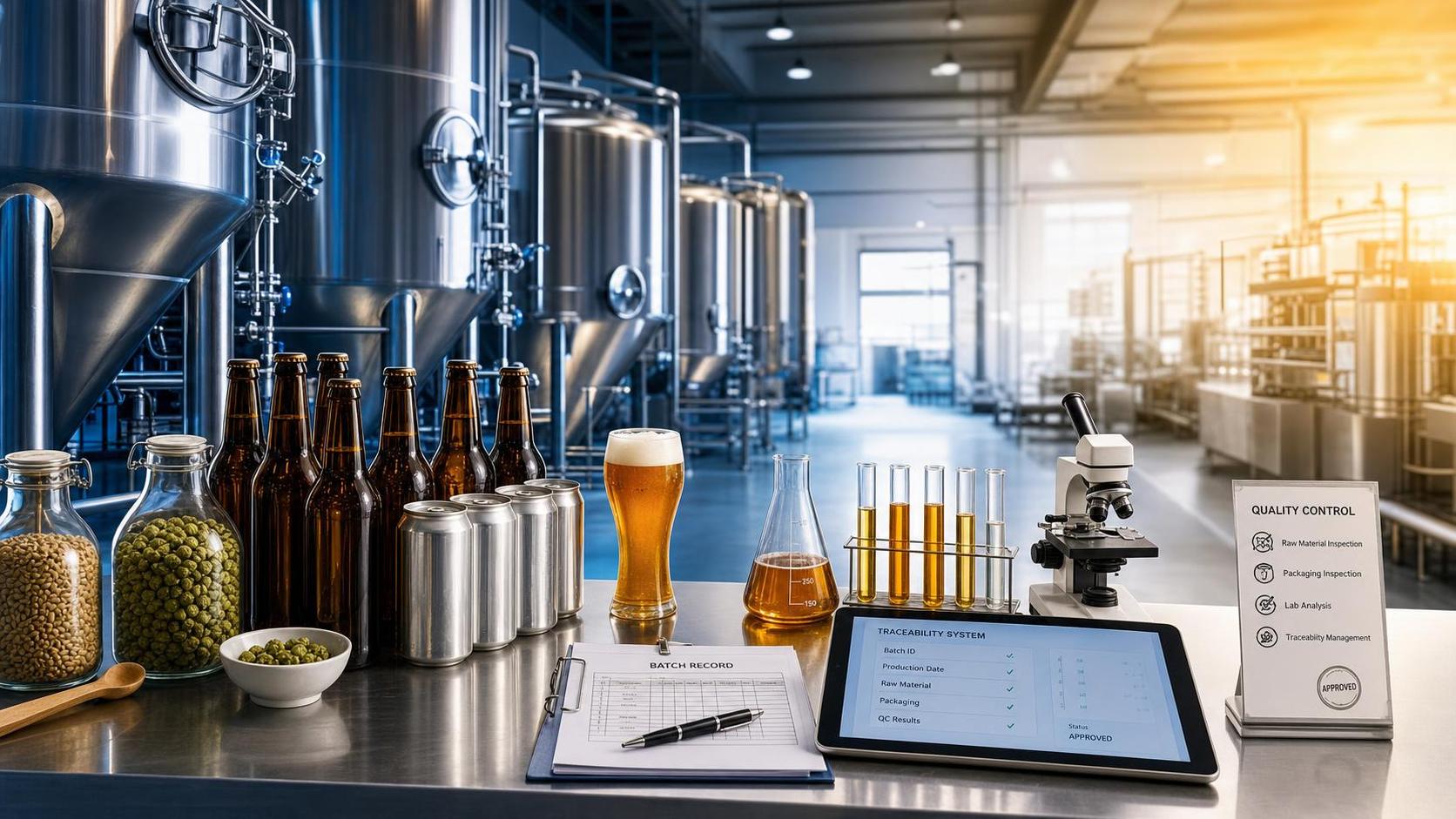
Key Quality Checks Before Choosing a Beer OEM Partner
Choosing the right Beer OEM partner is not only about price or production capacity, but about whether the factory can hold quality steady when orders scale, formulas change, or market requirements tighten. For quality control and safety management teams, that means looking past sales decks and asking harder questions about raw material control, brewing discipline, food safety systems, and traceability. A beer that tastes right in the sample stage but drifts after three production runs is not a sourcing win. It is a preventable failure.
In practice, most OEM problems do not start with one dramatic mistake. They come from small gaps: inconsistent malt lots, weak change control, unclear cleaning verification, incomplete packaging checks, or export documents that were treated as an afterthought. If you are screening a Beer OEM for long-term cooperation, this is the checklist that deserves real attention.
Start with what they can prove, not what they promise
The first filter is simple: can the factory document its system clearly and consistently? Ask for the current versions of its food safety and quality certifications, not just certificate numbers in a brochure. For Beer OEM projects, commonly requested documents may include HACCP, ISO 22000, FSSC 22000, and local production licenses, depending on the target market and the factory’s scope. If the product is intended for certain export destinations, additional compliance documents may be needed. Do not assume one certificate covers every product form, process, or packaging format.
A useful check here is whether the site can explain how the certification works in day-to-day production. Anyone can email a PDF. The stronger partner can show hazard analysis, CCP monitoring records where applicable, internal audit findings, corrective actions, and how they handle deviations. If the paperwork looks polished but the site team cannot explain it without calling sales, pause there.
Raw material control tells you more than the tasting sample
For beer, raw material variation shows up fast. Malt, hops, yeast, water, fruit preparations, flavor inputs, sweeteners, and processing aids all need defined acceptance criteria. Ask what they test on receipt, what comes with supplier COA support, and what is verified in-house or through third-party labs. A Beer OEM partner making classic lager, German wheat, sugar-free low-calorie beer, fruit-flavored beer, and functional specialty beers should already be used to handling very different raw material risks.
This matters especially for products with added ingredients. Fruit-based variants can bring microbiological and stability concerns. Functional beers may involve ingredients with tighter specification control or labeling sensitivity. Sugar-free and low-calorie claims raise another layer of review because formulation, residual sugar verification, and market-specific labeling rules may all come under scrutiny. If the factory says “we can make it” but cannot show how they separate and control those ingredient streams, the risk is not theoretical.
- Approved supplier list and supplier review frequency
- Incoming inspection standards for malt, hops, yeast, adjuncts, cans, bottles, crowns, and labels
- Handling rules for allergen-related or specialty ingredients where relevant
- Retention sample practice for raw materials and finished goods
- Lot coding that links every batch back to input materials
Look closely at brewing and fermentation discipline
This is where many evaluations stay too shallow. A decent sample can be made under controlled trial conditions. The real question is whether the Beer OEM can reproduce that profile consistently across commercial batches. Ask about brewhouse controls, fermentation monitoring, filtration or clarification practice if used, carbonation control, and how sensory release is tied to analytical results.
You do not need every proprietary detail, but you do need enough to judge process stability. Can they explain target ranges for original extract, alcohol, bitterness, pH, dissolved oxygen, CO2, and microbiological release criteria? Exact numbers may vary by recipe and should come from approved product specifications rather than generic claims. If a factory avoids giving any structured answer and falls back on “our brewmasters have experience,” that is not a substitute for process control.
One practical sign of maturity: how they handle deviations. Fermentation drift, low fill temperature control, or oxygen pickup after filtration are common operational realities. The better partner has escalation rules, hold procedures, investigation records, and documented disposition decisions. The weaker one tries to explain everything away as normal variation.
Do not skip microbiological control and sanitation verification
For quality and safety managers, this is usually where confidence is either earned or lost. Beer is not risk-free just because it is alcoholic. Spoilage organisms, contamination after processing, poor hygienic zoning, and weak CIP validation can damage shelf life and brand reputation very quickly.
Ask how the plant separates raw and finished product areas, how fermentation vessels and filling lines are cleaned, how cleaning effectiveness is verified, and what environmental or product micro testing is routine. The exact testing plan depends on process design and product type, so some details will need case-by-case review. Still, the factory should be able to show a clear sanitation program, trend records, and release logic. “We have never had a problem” is not evidence.
Pay attention to small operational details during an audit. Hose storage, gasket condition, line clearance practice, compressed air quality controls, and rework policy all tell you how seriously the site takes contamination risk. These are not cosmetic points.
Packaging quality is part of product quality
A good beer can still fail in the market because of packaging. Seam integrity, crown performance, label accuracy, ink adhesion, date coding, carton strength, and pallet stability all sit inside the OEM quality scope. For export business, transport stress and storage variability make packaging control even more important.
Ask the factory which in-process checks are standard for canning or bottling lines, how often they are recorded, and what triggers a line stop. If they work across online and offline channels worldwide, as some suppliers do, they should already understand that retail, bar, supermarket, and distributor requirements are not identical. A multipack for modern retail may need different transit performance from a glass bottle SKU built for restaurant service.
Traceability should work in hours, not days
Every Beer OEM says they have traceability. The useful question is how fast and how completely they can perform it. Ask them to walk through a mock exercise: start from one finished goods code and trace back to raw materials, packaging materials, production line, date, shift, and release records. Then go the other direction, from one ingredient lot forward to affected finished goods.
You are not looking for a perfect presentation. You are looking for operational readiness. If a trace exercise depends on one person’s memory or scattered spreadsheets, that is fragile. For export-oriented production, this becomes even more serious because document delays can slow recalls, customs responses, and distributor communication.
Check how they manage product changes
This point gets missed when commercial teams are moving fast. Recipes change. Can suppliers substitute. Label regulations shift. A Beer OEM partner needs formal change control so that procurement substitutions or process adjustments do not quietly alter the finished product.
Ask what requires customer approval, who signs off internally, and whether trial validation is required before mass production. For branded OEM business, uncontrolled change is one of the fastest ways to create quality disputes. It is also one of the hardest problems to unwind later, because each side tends to think the other already agreed.
Regulatory fit depends on destination market
A capable beer manufacturer can still be the wrong OEM partner for your market if compliance work is weak. Labeling rules, ingredient declarations, alcohol statements, deposit marks, language requirements, and claim restrictions vary by country. The factory does not need to act as your legal counsel, but it should understand its document responsibilities and where customer-side regulatory review is still needed.
Be especially careful with terms like “sugar-free,” “low-calorie,” or any functional positioning. Those claims can trigger market-specific conditions and should be verified against the target jurisdiction’s current rules【待核实】. If the OEM treats claim language as a design issue rather than a compliance issue, that is a warning sign.
Shelf life decisions need evidence
Do not accept a shelf life statement without asking how it was established. For beer, expected shelf life depends on recipe, packaging type, oxygen control, storage conditions, and distribution route. Some factories rely on historical practice. That may be acceptable only if the product and process are genuinely comparable, and even then it should be reviewed carefully.
A more reliable discussion includes real-time or supporting stability data where available, defined storage assumptions, and sensory plus analytical checkpoints. If the OEM serves supermarkets, bars, restaurants, and cross-border wholesale channels, the shelf life rationale should reflect those realities, not ideal warehouse conditions.
Audit the factory team, not only the factory site
An orderly site visit is useful, but team behavior tells you more. Sit with QA, production, procurement, and export documentation staff if possible. See whether their answers align. Mismatched answers on release authority, complaint handling, or customer approval flow usually mean the system is weaker than the visit suggests.
You also want to know what happens after the first order. Who owns complaints? How quickly are retain samples reviewed? Is there a CAPA process with deadlines? Can they support customized solutions without losing control of baseline standards? A Beer OEM relationship is rarely tested when everything is normal. It is tested when a shipment is delayed, a flavor drifts, or a market raises a documentation question two days before clearance.
A practical shortlist before approval
Before signing off on a new supplier, it helps to reduce the decision to a short approval gate:
- Current certifications and licenses reviewed against product scope and destination market.
- Raw material, process, microbiological, and packaging controls verified through records, not verbal claims.
- Traceability and recall readiness tested in a practical exercise.
- Product specification, claim wording, and change control responsibilities clearly assigned.
- Shelf life basis, storage assumptions, and complaint handling process reviewed and accepted.
If a supplier can meet those checks with clear records and a steady operating team, you are looking at a Beer OEM partner worth serious consideration. If they cannot, low pricing will not offset the downstream cost of instability, claims disputes, rework, or market complaints. For quality and safety professionals, that is usually the clearest decision point of all.
Thank you very much for writing to us. Please leave your message and contact information, we will reply to you within 24 hours.