



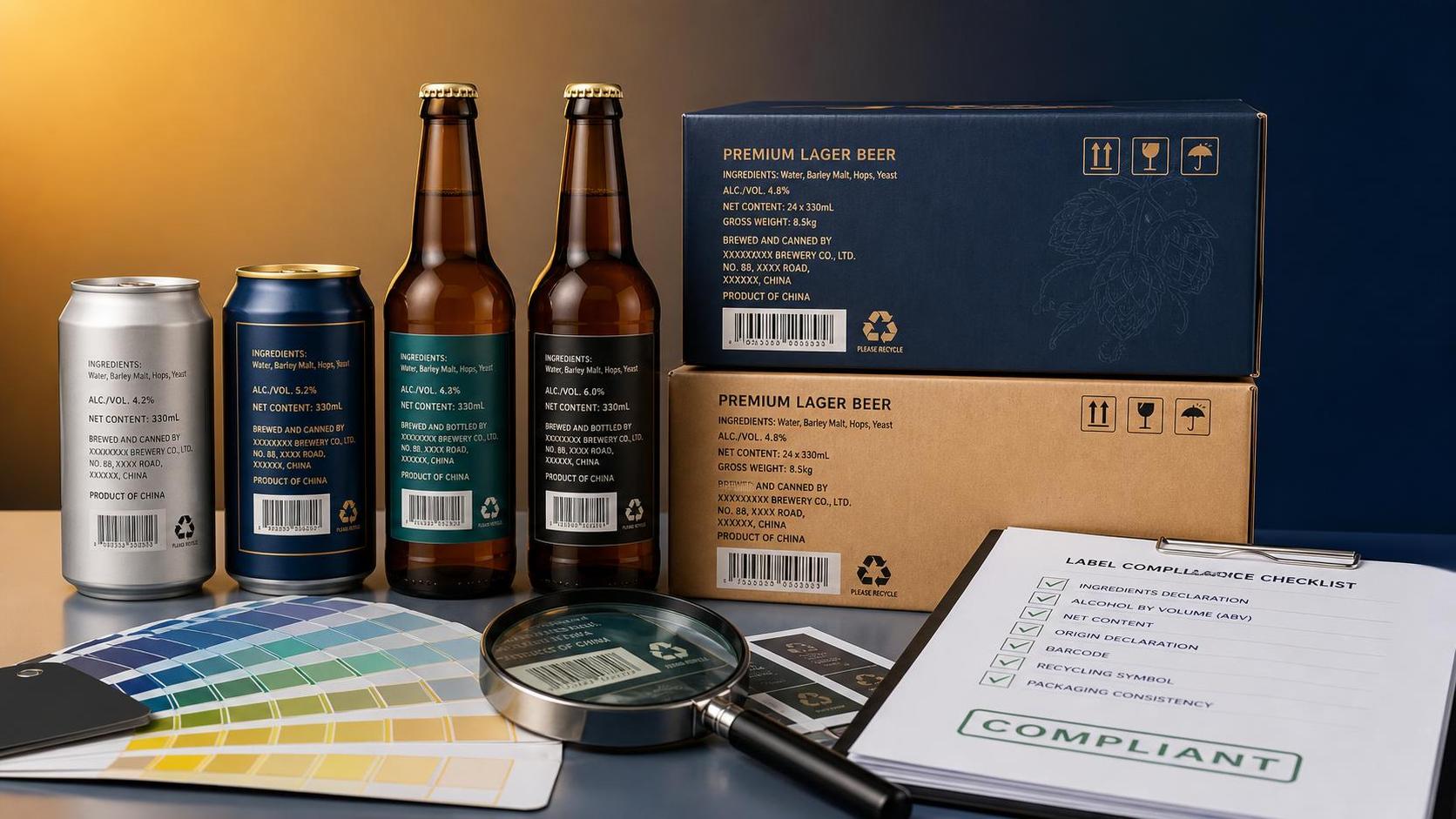
Common Beer OEM Labeling and Compliance Mistakes to Avoid
In Beer OEM projects, labeling and compliance mistakes can delay launches, increase costs and damage brand credibility across markets. For project managers and engineering leaders, understanding the most common risks, from ingredient declarations and alcohol content claims to packaging regulations and export requirements, is essential to keeping production on track. This guide outlines the key Beer OEM labeling and compliance errors to avoid for smoother execution and stronger market performance.
The part that catches teams off guard is this: labeling is rarely just a design step. In a Beer OEM program, it sits right in the middle of formulation, packaging engineering, regulatory review, market entry, and logistics. If one detail is wrong, the whole batch can get stuck. I have seen projects where the liquid was ready, cartons were printed, distributors were lined up, and then a single claim or missing declaration held everything up.
So this is not a branding checklist. It is the practical review list you want before approving artwork, booking packaging materials, or releasing production.
Do not treat one label version as “global”
This is probably the most common Beer OEM mistake. A team builds one label, translates a few lines, and assumes it can be used across several countries. In practice, labeling rules differ by market on mandatory fields, language, nutrition disclosure, deposit marks, recycling symbols, importer information, allergen wording, and alcohol warnings.
A label that works for one channel may fail in another. Even within the same region, retail and on-premise requirements can create different packaging decisions. Before artwork starts, lock down these points market by market:
- Country of sale and final customs destination
- Required language or bilingual text rules
- Whether local importer, distributor, or responsible operator details must appear on pack
- Container deposit, recycling, and waste sorting marks
- Any local warning statement requirements【待核实 by market】
If those basics are still moving, final label approval is premature.
Ingredient and allergen declarations are often checked too late
Teams usually focus on brand name, ABV, and can design first. The ingredient list gets reviewed near the end. That is backwards.
Beer formulations are not always simple lager recipes anymore. Once you move into German wheat, fruit-flavored beer, sugar-free low-calorie beer, or functional specialty beer, the declaration logic can change. Wheat, barley, flavorings, sweeteners, botanical extracts, and other added ingredients may trigger different labeling obligations depending on the market. “Natural” sounding product concepts create risk here because the commercial story and the legal declaration are not the same thing.
A good project rule is to freeze the commercial formula sheet and the regulatory review sheet together. If R&D changes an ingredient after artwork is approved, the label should automatically go back to review. No exceptions. Too many reprint costs come from late formula tweaks that nobody thought would matter.
ABV, net content, and unit expression errors are small on screen and expensive in print
This sounds basic, but it is one of the easiest ways to create a non-compliant pack. Alcohol by volume must be shown in the format required by the target market, and net content needs to match the legal unit style and the actual packaging configuration. A 330 mL sleek can, a 500 mL standard can, and a 1 L PET bottle may all need different layout handling even for the same brand family.
What causes trouble is not only the value itself. It is version control. The approved spec sheet says one fill volume, procurement sources another can format, and the designer copies the old file. Then the can body and shipper carton disagree.
Before print release, check these together on the same approval sheet:
- Product code and SKU description
- ABV shown on primary pack and outer carton
- Net content and unit format
- Container type, lid type, and pack count
- Barcode linked to the correct sales unit
If those five points are not aligned, stop the print order.
Claims around “sugar-free,” “low-calorie,” or “functional” need extra caution
For breweries offering broader portfolios, this is where marketing ambition can outrun compliance reality. A classic lager label is usually simpler. A sugar-free low-calorie beer or functional specialty beer label is not.
Terms like “sugar-free,” “low calorie,” “light,” “energy,” “boost,” “recovery,” or implied wellness language can fall under nutrition or health claim rules, and those rules vary significantly by market【待核实】. In some destinations, a phrase that looks harmless in a sales meeting creates a legal problem once it appears on consumer packaging.
The practical approach is simple: any claim beyond identity, flavor, or pack size should be reviewed against actual supporting documents before design sign-off. If lab reports, formulation records, or local legal review are missing, the claim is not ready. A Beer OEM partner should push back here, not just print what was requested.
Importer and responsible party details are often left unresolved until shipping week
This is a project sequencing problem more than a regulatory one. Some markets require the local importer, distributor, or responsible operator to be named on the label or added by sticker. But in many OEM projects, the customer is still finalizing channel partners while packaging deadlines are approaching.
If you do not decide early whether this information is preprinted or applied later, you will get caught between speed and cost. Preprint too soon, and you risk scrapping packaging when the importer changes. Wait too long, and you may miss production windows.
Experienced teams usually make this a formal gate: no final packaging route until the market entry entity is confirmed.
Packaging materials can create compliance issues even when the label text is correct
A label can be legally fine and still fail because the packaging system around it is wrong. Think about bottle embossing, can ink durability, carton markings, closure materials, recycling identifiers, or pallet labels that do not match export documentation.
This matters in Beer OEM because packaging changes happen late. A supplier substitutes an aluminum can specification, the printable area shifts slightly, or the secondary pack changes from shrink wrap to carton. Suddenly the mandatory text is too small, unreadable after condensation, or hidden by a seam.
Do a real packaging-line review, not just an artwork PDF review. Ask:
- Will the mandatory text stay legible after filling, pasteurization, chilling, and transport?
- Does date coding interfere with required information?
- Are shipper cartons marked in a way that matches customs and warehouse handling needs?
- If stickers are used, will they adhere and remain readable in cold-chain or humid conditions?
Translation is not regulatory review
This point deserves blunt wording because it causes avoidable mistakes. A fluent translation does not mean the label is compliant. A translator may produce natural wording that is commercially attractive but legally inaccurate. That is especially risky with product names, ingredient terminology, warnings, and claim language.
If you are launching into multiple markets, build a review path that separates language quality from compliance approval. Those are different jobs. For technical terms and mandatory statements, use the exact approved wording required or commonly accepted in that destination where verified. If the team is uncertain, mark it for local review instead of guessing.
Shelf life, storage, and traceability details get inconsistent across documents
Another pattern in Beer OEM work: the label says one thing, the specification sheet says another, and the export file says something else. Shelf life, storage conditions, batch coding format, and production date expression need to be aligned from QA through logistics.
This is particularly important for craft beer or fruit-flavored beer programs where stability and sensory performance can vary by formulation and packaging type. Even when the product itself is sound, mismatched coding formats or unclear storage instructions can trigger distributor questions or customs delays.
Export documents and packaging approval should not run on separate tracks
Many delays blamed on “customs” actually start upstream. The commercial invoice, packing list, certificate set, product description, HS classification, and label wording should tell the same story. If the product is described one way in export documents and another way on packaging, that inconsistency can create inspections or hold-ups.
Project leaders should pull regulatory, QA, and shipping into the same review checkpoint before the first production run. It saves time later. You do not want the freight booking completed only to discover that the outer cartons, inner labels, and export docs are using different SKU names.
The cleanest fix is process discipline, not last-minute proofreading
Most labeling failures in Beer OEM are not caused by one careless designer. They come from weak change control. Product brief changes after compliance review. A distributor sends new market info by email, but the master file is not updated. Procurement swaps packaging material without relaunching artwork validation.
What works better is a short approval path with named owners:
- Commercial team confirms market, channel, claims, and importer route.
- R&D and QA freeze formula-linked declarations.
- Regulatory review checks mandatory text and market-specific requirements.
- Packaging engineering confirms print area, coding, and material compatibility.
- Only then does final artwork go to print approval.
That sequence sounds strict, but it is cheaper than reworking cans, labels, cartons, and shipping schedules.
For breweries and brand owners working with a manufacturing partner, the most useful OEM supplier is not just the one that can brew and pack. It is the one that can flag these label and compliance risks early, especially across classic lager, wheat beer, low-calorie lines, fruit variants, and custom formulations headed to different markets. If you are managing launch timing, cost, and cross-border execution, that is where a Beer OEM relationship starts proving its value.
Thank you very much for writing to us. Please leave your message and contact information, we will reply to you within 24 hours.