



How to Choose a Lager Beer for Casual Drinking, Food Pairing, or Parties
Choosing a Lager beer sounds simple until the setting changes. A bottle that feels clean and satisfying after work can disappear beside grilled food, and a beer that works beautifully at the table may feel too heavy when people are standing, talking, and drinking over several hours. The mistake is usually not in the beer itself. It is in treating all occasions as if they ask for the same thing.
In practice, the right choice depends on three variables that matter more than label language: how long people will be drinking, what else is happening on the palate, and how the beer will be served. A crisp classic lager, a lighter low-calorie option, or even a fruit-accented easy-drinking style can all make sense, but not for the same reasons. When breweries and channel buyers build a lineup for restaurants, bars, supermarkets, or event supply, this is usually the real discussion behind the product mix.
For casual drinking, balance matters more than intensity
The best Lager beer for casual drinking is rarely the most memorable in a tasting lineup. It is the one that stays comfortable through the whole bottle or can. After-work drinking, home consumption, and low-pressure social moments usually favor a clean finish, moderate body, restrained bitterness, and good carbonation control. People often say they want “refreshing,” but in actual consumption that usually means something more specific: the beer should clear the palate without feeling thin, and it should not leave sweetness or heaviness building up after a few sips.
This is where classic lager keeps its place. A well-made classic style tends to be forgiving across temperature variation and glassware differences, which matters because casual drinking is not always tightly controlled. At home, beer may be poured into whatever glass is available or consumed directly from the can. In convenience retail or supermarket channels, consumers may chill the product unevenly. Under those conditions, a balanced lager generally performs more reliably than a style that depends on a narrow serving window to show well.
Low-calorie or sugar-free variants also fit this use case, but for a different reason. They are often chosen not because drinkers want a “diet” beer in the abstract, but because they want repeatability without palate fatigue. That matters in warm climates, for weekday consumption, and in markets where lighter drinking occasions are common. The risk is assuming that lighter always means better. If body and aroma are stripped too far back, the beer can feel empty rather than refreshing. For casual drinking, lighter works when the finish stays crisp and the mouthfeel still has enough structure to avoid tasting diluted.
At the table, the food decides more than the beer style name
Food pairing is where many people overcomplicate lager. They look for formal rules when the better approach is to read the weight, salt, fat, spice, and sweetness of the dish. Lager is often underestimated here because it does not announce itself as loudly as some ale styles, yet that restraint is exactly why it works across mixed menus.
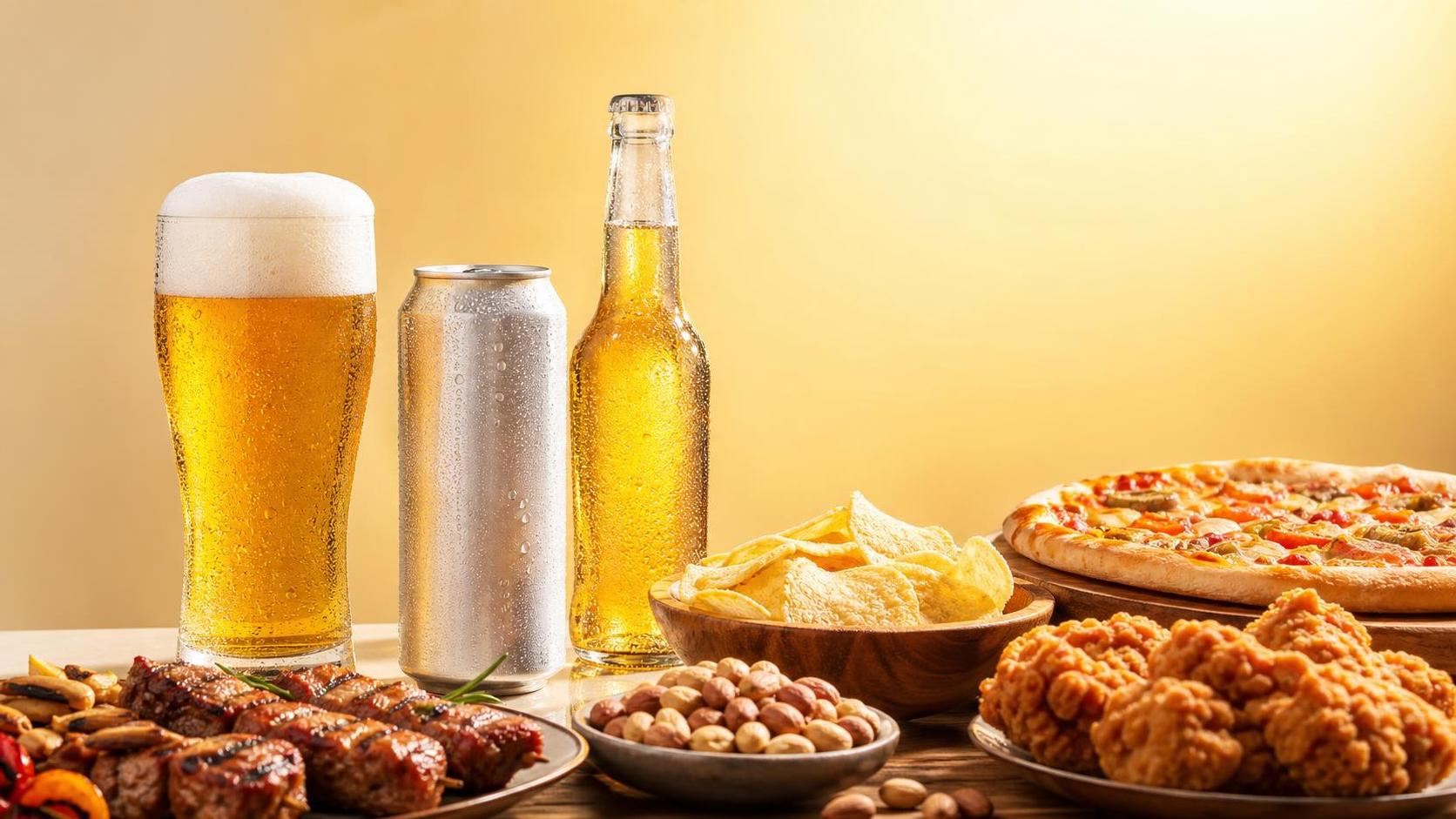
With fried food, grilled meats, pizza, burgers, roast chicken, or salty snacks served as part of a meal, classic lager is usually the safest choice. Its carbonation lifts oil, and its clean finish resets the palate between bites. This is especially useful in restaurant service where one beer may need to work across different orders at the same table. In those situations, versatility matters more than a highly specific pairing success with one dish.
German wheat may still appear on the same menu, but it behaves differently. Its softer body and fuller texture can complement lighter poultry, sausages, salads with creamy dressing, or mildly spiced food, yet it does not always cut through fat the way a crisper lager can. If the meal is broad and informal, lager often remains the easier recommendation because it creates fewer clashes as the menu shifts.
Spicy food needs a little more care. People sometimes assume a stronger or more bitter beer will stand up better, but bitterness can make chili heat feel sharper. A smoother lager with restrained bitterness and steady carbonation is often more comfortable. Fruit-flavored beer can also work with spicy or sweet-savory dishes, though that depends heavily on whether the fruit character tastes integrated or candy-like. If the fruit note feels artificial or the residual sweetness is too obvious, it can make the pairing feel disjointed instead of refreshing.
For parties, drinkability and logistics come first
Party buying is often approached from flavor preference alone, but service conditions matter just as much. The beer may sit in ice tubs, move in and out of refrigeration, or be poured quickly into plastic cups. People may not be focused on aroma or nuance. They want something easy to recognize, easy to continue drinking, and unlikely to divide the group. That usually pushes the decision toward clean, approachable lager profiles rather than highly distinctive specialty products.
For large gatherings, the first question should be duration. A two-hour dinner party can support a fuller beer than an all-evening house party, outdoor event, or wedding reception. The longer the drinking window, the more important refreshment, moderate alcohol perception, and low palate fatigue become. In supply terms, this is one reason classic lager and lighter variants tend to dominate high-volume social occasions. They are not chosen because they are generic. They are chosen because they remain stable in broad, imperfect consumption conditions.
Format matters too. Cans often make more sense than glass for poolside events, outdoor parties, concerts, and mobile service setups. They chill quickly, travel more easily, and reduce breakage risk. For bars or restaurants planning event packages, this affects not only safety but also labor and waste handling. A beer that tastes excellent only under ideal draft conditions may not be the best operational choice for a busy event team.
There is room for fruit-flavored beer or functional specialty beer at parties, but usually as part of the mix rather than the core volume. These styles can attract occasional beer drinkers or guests looking for novelty, especially in younger social settings, mixed-gender groups, or summer events. The operational mistake is building the entire offer around a niche flavor profile. A party lineup works better when the base option is familiar and broad in appeal, with one or two secondary styles adding range.
What buyers and distributors usually have to judge behind the scenes
From a channel perspective, selecting Lager beer is not only about taste. Restaurants need something that fits menu width and table turnover. Supermarkets need packaging and flavor profiles that read clearly at the shelf. Bars may want a dependable draft or packaged option that works for mainstream orders without constant explanation. For distributors and private-label partners, consistency becomes a bigger factor than individual tasting notes because repeat purchase depends on the product behaving the same way across batches and markets.
This is where a broad producer with classic lager, wheat beer, sugar-free low-calorie beer, fruit-flavored beer, and specialty functional options has practical value. Not because every customer wants every style, but because different channels rarely need the same range. An OEM or ODM project for retail multipacks may prioritize easy-drinking lager with clear positioning, while a bar chain may want a house-label product that sits between mainstream familiarity and slight craft differentiation. The use scenario drives the formulation and packaging decision.
Questions from buyers tend to be very concrete. Will this beer still show well if the cold chain is not perfect at every handoff? Does it remain approachable for mixed-age groups? Is the lighter variant refreshing enough to justify its claim in actual drinking, not just on paper? Can the flavor hold up in busy foodservice? Those are reasonable questions, and they usually matter more than abstract style descriptions.
Common selection mistakes
One common mistake is choosing by trend instead of occasion. A beer that attracts attention in sampling or online promotion may underperform in repeat drinking if it is too sweet, too heavy, or too narrow in appeal. Another is confusing “smooth” with “bland.” Smoothness should mean no harsh edges, not the absence of flavor. There is also a recurring problem with overestimating how much consumers care about technical style distinctions in relaxed settings. Most people respond first to refreshment, finish, and how the beer fits the moment.
Temperature and storage are another source of misjudgment. If a beer will be consumed in variable site conditions, selection should lean toward styles that stay coherent as they warm slightly. This matters for outdoor retail displays, festival service, and informal parties. The more demanding the serving conditions, the more useful a stable, clean lager becomes.
A practical way to decide is simple. For casual drinking, prioritize comfort over complexity. For meals, read the food before the label. For parties, think in terms of duration, service method, and group preference. When the setting is mixed or uncertain, classic lager usually gives the widest margin for success. Lighter or flavored options can add range, but they work best when they are chosen for a clear reason rather than used as a substitute for a dependable base beer.
Thank you very much for writing to us. Please leave your message and contact information, we will reply to you within 24 hours.