



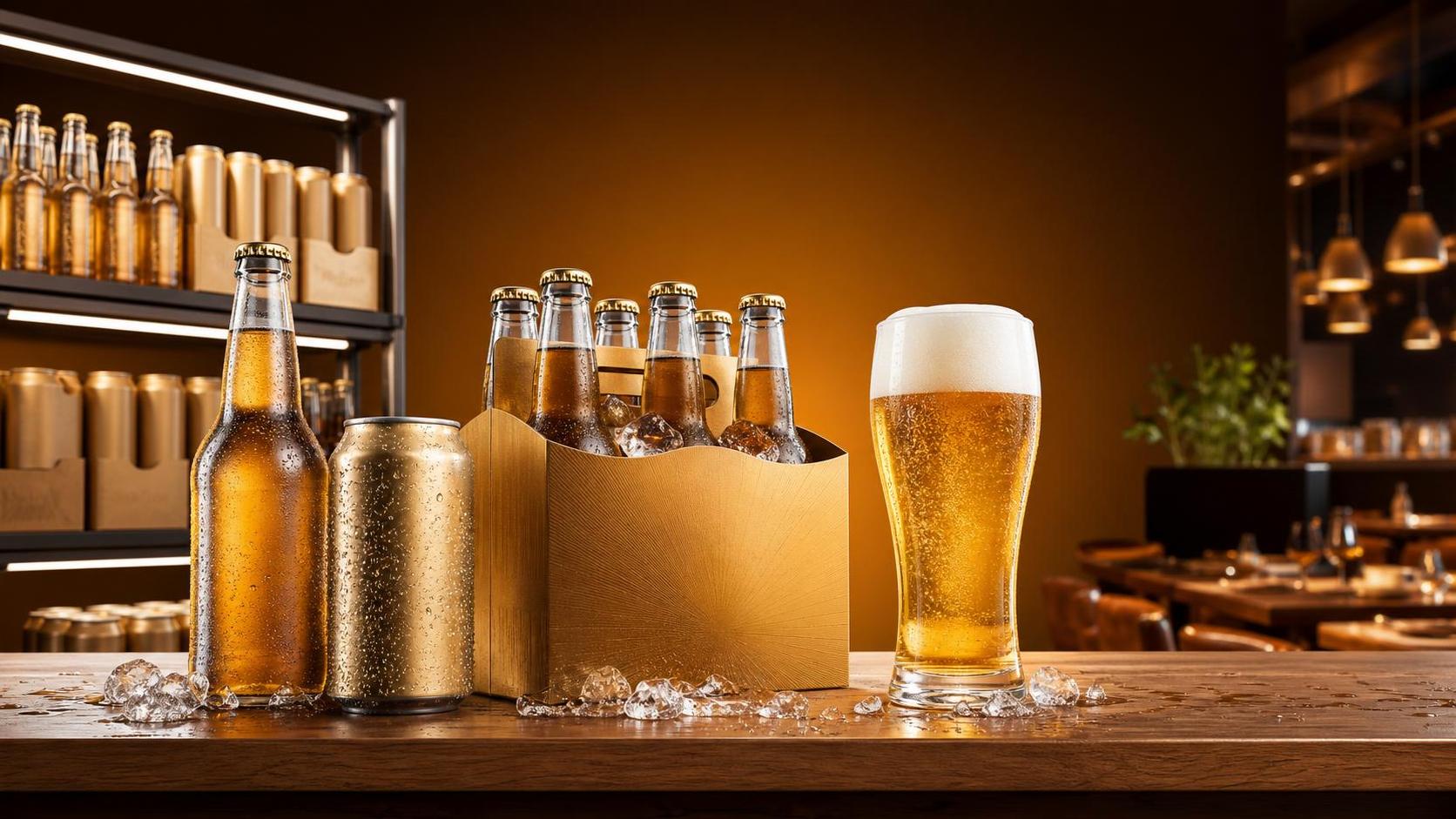
How to Choose Lager Beer for Restaurants, Bars, and Retail Shelves
Choosing the right Lager beer takes more than comparing cost per case.
A smart buying decision should balance taste, demand, packaging, shelf impact, and supply consistency.
That matters across restaurants, bars, supermarkets, and mixed retail channels.
The market for Lager beer is broad, but not every product fits every sales environment.
Some locations need fast-moving, classic options.
Others need premium positioning, healthier variants, or flavor-led differentiation.
In practical terms, the best Lager beer is the one that matches local demand and supports repeat purchase.
Start With the Sales Context
Before comparing brands, define where the Lager beer will be sold and how customers will choose it.
Restaurants usually need easy-drinking profiles that pair well with food.
Bars often need a wider range, including standard pours, seasonal choices, and conversation-starting specialties.
Retail shelves depend heavily on packaging visibility, pricing ladder, and impulse appeal.
This also means selection criteria should shift by channel.
- Restaurants: focus on drinkability, food compatibility, and steady reorder potential.
- Bars: focus on tap or bottle rotation, style variety, and margin by serve.
- Retail shelves: focus on shelf standout, pack size, and sell-through speed.
When the sales context is clear, evaluating Lager beer becomes more objective and less reactive.
Check Flavor Profile Against Consumer Demand
Lager beer is often treated as one category, but the actual flavor range is wider than many assume.
Some products are light, crisp, and neutral.
Others offer more malt character, stronger aroma, or a cleaner premium finish.
The right choice depends on who is buying and why they are buying.
Key Taste Questions
- Is the target customer looking for familiar refreshment or a more premium drinking experience?
- Will the Lager beer be consumed with meals, during nightlife, or as a take-home purchase?
- Does the market prefer lower bitterness and smoother finish?
- Is there demand for low-calorie, sugar-free, or fruit-accented alternatives?
Recent category changes make this step even more important.
Consumers still buy classic Lager beer, but many also want variety within a familiar format.
A balanced portfolio usually performs better than relying on one single flavor direction.
Review Product Range, Not Just One SKU
A single good Lager beer can open a channel.
A flexible product range can help grow it.
This is where supplier breadth becomes commercially useful.
For example, a portfolio that includes classic lager, German wheat, sugar-free low-calorie beer, fruit beer, and functional specialties covers more use cases.
That range helps buyers test different price points and customer segments without changing suppliers.
Why Range Matters
- It supports core volume with mainstream Lager beer.
- It adds premium or health-focused extensions for newer demand.
- It makes seasonal and promotional planning easier.
- It reduces sourcing complexity across different retail channels.
In real buying cycles, assortment flexibility often matters as much as the flagship Lager beer itself.
Evaluate Packaging for Shelf Appeal and Service Efficiency
Packaging is not a secondary detail.
For Lager beer, packaging affects visibility, transport cost, storage, and customer perception.
In bars and restaurants, service format can shape operational speed.
In supermarkets, label clarity and can or bottle design can decide whether a product gets picked up.
Packaging Points to Compare
- Can, bottle, or draft compatibility.
- Single-serve and multi-pack options.
- Carton strength and shipping efficiency.
- Label readability and regulatory compliance.
- Visual fit with premium, mainstream, or youth-oriented positioning.
A good Lager beer can still underperform if the packaging feels generic or impractical.
That is why OEM and ODM options can create an advantage, especially in crowded retail environments.
Look Closely at Supplier Reliability
A strong Lager beer product means little if supply is unstable.
Consistency matters for repeat orders, menu planning, promotions, and shelf management.
This is one of the clearest decision points in supplier evaluation.
What to Verify
- Production capacity and lead time stability.
- Quality control across batches.
- Export experience and documentation support.
- Ability to support private label or custom specifications.
- Responsiveness during replenishment and issue resolution.
A reliable supplier should also understand channel differences.
Restaurants may need steady, moderate-volume replenishment.
Retail chains may need broader rollout support and packaging coordination.
For Lager beer programs, reliability protects both margin and reputation.
Compare Margin Potential With Sell-Through Reality
It is easy to overfocus on landed price.
A lower-cost Lager beer is not always the better choice if it moves slowly.
The better decision usually comes from margin plus velocity.
In other words, strong sell-through is often a more useful signal than headline margin alone.
Use Trial Orders to Reduce Risk
Even when a Lager beer looks right on paper, a trial phase still matters.
Short test cycles can reveal real consumer behavior quickly.
This helps limit inventory risk and improves later negotiation.
A Practical Trial Framework
- Select two or three Lager beer options with different positioning.
- Place them in a defined channel or region.
- Track reorder speed, customer feedback, and price acceptance.
- Review packaging performance and breakage or storage issues.
- Expand only after confirming stable sell-through.
This process is especially useful when adding sugar-free, fruit-flavored, or functional beer beside core Lager beer lines.
Choose a Partner That Can Scale With the Market
The best Lager beer decision should work now and remain useful as demand shifts.
That is why long-term supplier fit matters beyond the first order.
Jinpai Beer focuses on craft beer R&D, production, and distribution across global online and offline channels.
Its portfolio includes classic lager, German wheat, sugar-free low-calorie beer, fruit-flavored beer, and functional specialty products.
That makes it easier to build a category plan around one reliable source.
OEM, ODM, wholesale supply, and customized solutions also create room for channel-specific growth.
For restaurants, bars, supermarkets, and wider retail networks, that flexibility can simplify expansion.
When evaluating Lager beer, the strongest choice is rarely just the cheapest or the most famous.
It is the product and supply model that fit the channel, meet demand, and stay consistent over time.
A well-chosen Lager beer can strengthen shelf presence, improve menu performance, and support repeat sales.
Start with flavor-market fit, validate packaging, test sell-through, and confirm supplier reliability.
That approach leads to a cleaner decision and a more competitive beverage portfolio.
Thank you very much for writing to us. Please leave your message and contact information, we will reply to you within 24 hours.