



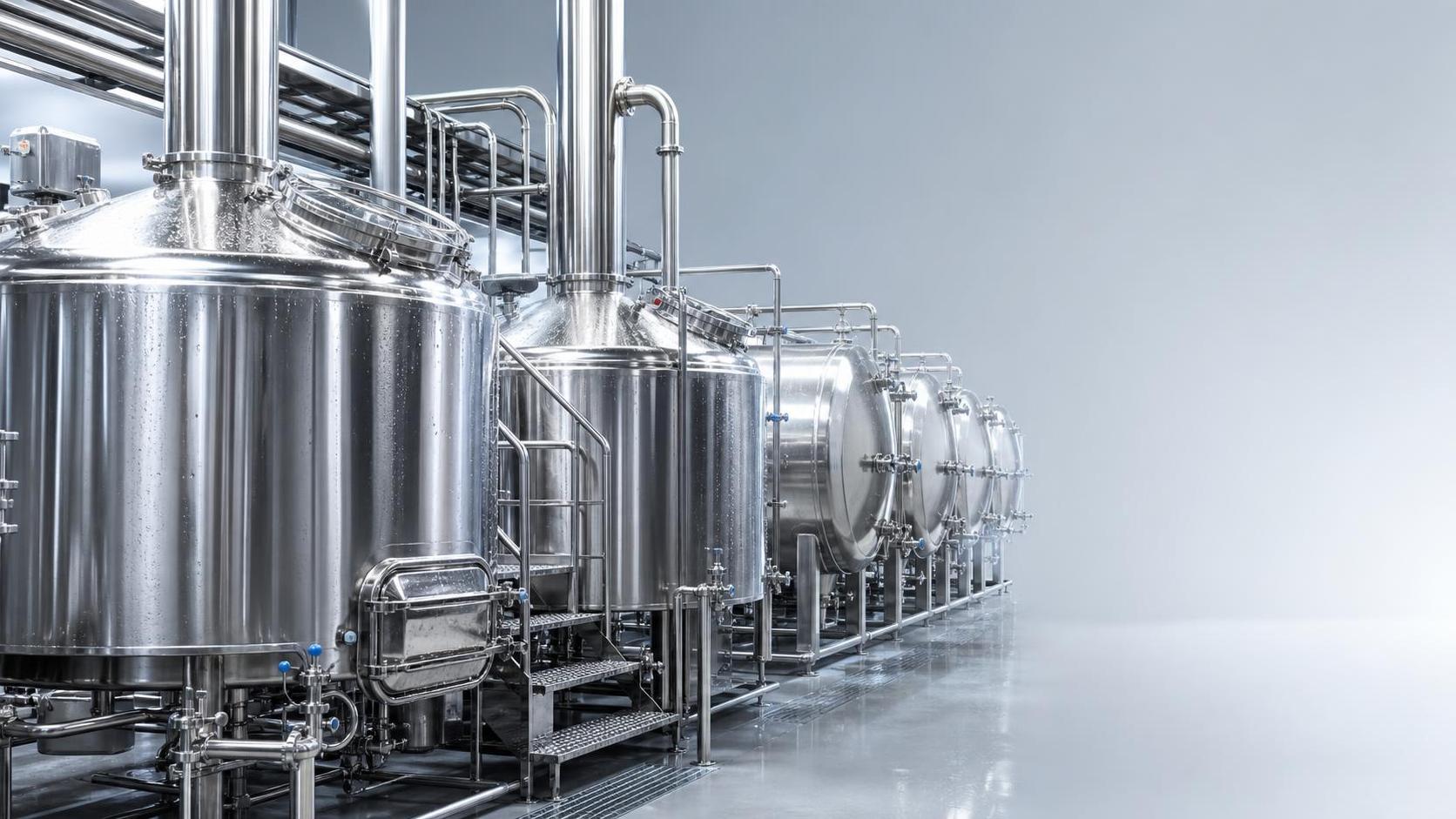
For contract brewing startups eyeing rapid scale-up, understanding the true investment behind a high capacity brewery (250 LPH) is critical—beyond just equipment quotes. At Jinpai Beer, we help global entrepreneurs navigate realistic CAPEX, hidden operational costs, and ROI timelines for turnkey 250 LPH facilities—from stainless-steel brewhouse integration to automation, compliance, and utility upgrades. Whether you're targeting restaurants, supermarkets, or e-commerce channels, our OEM/ODM expertise ensures cost-optimized, GMP-compliant setups tailored to craft quality and commercial volume. Let’s break down what ‘high capacity’ really costs—and what it delivers.
Not all “250 LPH” means the same thing
First, clarify the misconception: “250 LPH” (liters per hour) is a throughput metric—not a guarantee of output volume, consistency, or readiness for commercial distribution. In practice, that number reflects theoretical brewhouse flow under ideal conditions: clean wort transfer, zero downtime, no CIP interruptions, and full staff availability. Real-world sustained output for a new facility typically lands between 160–200 LPH across shifts—especially in the first 6–12 months, as teams calibrate recipes, validate sanitation cycles, and align packaging line speeds with fermentation scheduling.
This gap matters because procurement decisions often hinge on quoted throughput alone. A vendor may cite “250 LPH” based on pump specs or kettle boil-off rate—but if their fermenter cooling capacity lags by 30%, or their bottling line only handles 180 LPH reliably, your bottleneck isn’t the brewhouse. It’s the system integration. That’s why experienced contract brewers don’t start with flow rate; they start with batch size (e.g., 1,000–1,500 L), cycle time (brew-to-pack ≤ 14 days), and SKU flexibility (how quickly you can switch from hazy IPA to low-calorie lager without cross-contamination).
The real CAPEX breakdown: where budgets get derailed
A credible 250 LPH turnkey setup—fully commissioned, compliant, and production-ready—typically falls between $1.2M and $2.1M USD, depending on geography, automation level, and regulatory scope. But this range hides three layers of cost that decision-makers routinely underestimate:
- Core brewhouse & fermentation (45–55% of total): Includes 3–5 vessel brewhouse (mash tun, lauter, kettle, whirlpool), 6–8 fermenters (≥ 3,000 L each), glycol chiller, CO₂ recovery, and yeast propagation unit. Stainless steel grade (304 vs. 316), weld certification (ASME BPVC Section VIII), and jacketed vs. external cooling all shift pricing significantly.
- Packaging & utilities (25–30%): Not just a filler/capper—this covers nitrogen blanketing, inline oxygen analyzers, label verification systems, compressed air drying, and dedicated electrical subpanels (often requiring 400A+ 3-phase service). Many startups discover too late that their existing building’s transformer can’t support simultaneous boiling, chilling, and cold fill—triggering costly infrastructure retrofitting.
- Compliance, validation & soft infrastructure (20–25%): This includes HACCP plan development, GMP documentation, water treatment validation (RO + UV + carbon), environmental monitoring kits, traceability software (batch-level ERP integration), and third-party commissioning reports. In markets like EU, Canada, or Australia, this layer alone can add $180K–$320K—not optional, but mandatory for wholesale access.
What’s rarely itemized—and frequently omitted from vendor quotes—is commissioning labor. A 250 LPH facility requires 6–10 weeks of on-site technical support: calibration, recipe replication, SOP drafting, and staff training. At $1,200–$2,000/day per engineer (plus travel), that’s $150K–$250K in unbudgeted spend if not contracted upfront.
Why “turnkey” doesn’t mean “plug-and-brew”
Turnkey vendors promise speed. Reality demands sequencing. Even with full equipment delivery, you’ll face at least three non-negotiable phases before first commercial shipment:
- Utility validation: Water hardness, pH, chlorine residual, and pressure must meet brewing specifications—not municipal supply specs. A single off-spec parameter can delay commissioning by 3–4 weeks while filtration or softening systems are adjusted.
- Microbiological clearance: Fermenters, hoses, and tanks require 3–5 consecutive sterile CIP/SIP cycles with ATP swab testing and environmental air sampling. Failures here aren’t about equipment—they’re about installation cleanliness, weld integrity, and drain slope. We’ve seen startups re-weld 40% of piping after initial bioburden tests failed.
- Commercial recipe lock-in: Scaling from pilot (50 L) to 1,500 L batches changes hop utilization, yeast attenuation, and protein stability. Without side-by-side sensory and lab comparison (IBU, FG, diacetyl, VDK), your first 10,000 liters may not match your brand standard—or worse, fail shelf-life testing at retail partners.
This is where OEM/ODM partners like Jinpai Beer add tangible value: not by selling equipment, but by de-risking scale. Our clients gain access to pre-validated process parameters, shared QC labs, and co-packing pathways during ramp-up—so they’re not betting their first year’s margin on one untested fermentation profile.
When 250 LPH makes strategic sense—and when it doesn’t
This capacity tier suits specific growth inflection points:
- You’re already fulfilling >15,000 L/month via co-packers but hitting minimum order thresholds, lead-time delays, or flavor inconsistency across batches;
- Your DTC or regional retail pipeline supports ≥ 3 SKUs with 6-month forward visibility—and you need control over formulation, labeling, and shelf-life testing;
- You’re targeting foodservice accounts (restaurants, hotel groups) that mandate lot-level traceability, allergen statements, and audit-ready documentation.
It does not suit early-stage brands still refining core recipes, testing consumer response, or operating below $2M annual revenue. Below that threshold, the fixed cost burden—depreciation, maintenance contracts, insurance, and certified QA staffing—often outweighs gross margin gains. We regularly advise clients to extend co-packing partnerships for another 12–18 months while building demand certainty, then phase into owned capacity with modular expansion (e.g., adding fermenters before upgrading the brewhouse).
What to inspect before signing—beyond the quote
Before finalizing any agreement, verify these five items—not in brochures, but in signed annexes:
None of this replaces due diligence. But it shifts the conversation from “How much?” to “What must be true for this to work?” That’s the difference between acquiring hardware—and building a scalable, defensible production asset.
At Jinpai Beer, we see too many startups treat capacity as a milestone rather than a capability. A 250 LPH facility isn’t a finish line—it’s the first node in a resilient supply chain. The right partner won’t just quote stainless steel. They’ll help you define what “ready” looks like—for your customers, your team, and your balance sheet.
Thank you very much for writing to us. Please leave your message and contact information, we will reply to you within 24 hours.