



Where Contract Brewing Really Helps a Young Brand
The difficult part for an emerging beer label is usually not coming up with a recipe. It is getting from a promising sample to repeatable commercial beer without tying up too much capital, losing control of flavor, or missing the sales window. That is where a Chinese beer factory can make practical sense, especially for brands that need flexible batch planning, mixed product styles, and export-oriented supply arrangements rather than a single flagship SKU produced at one fixed volume all year.
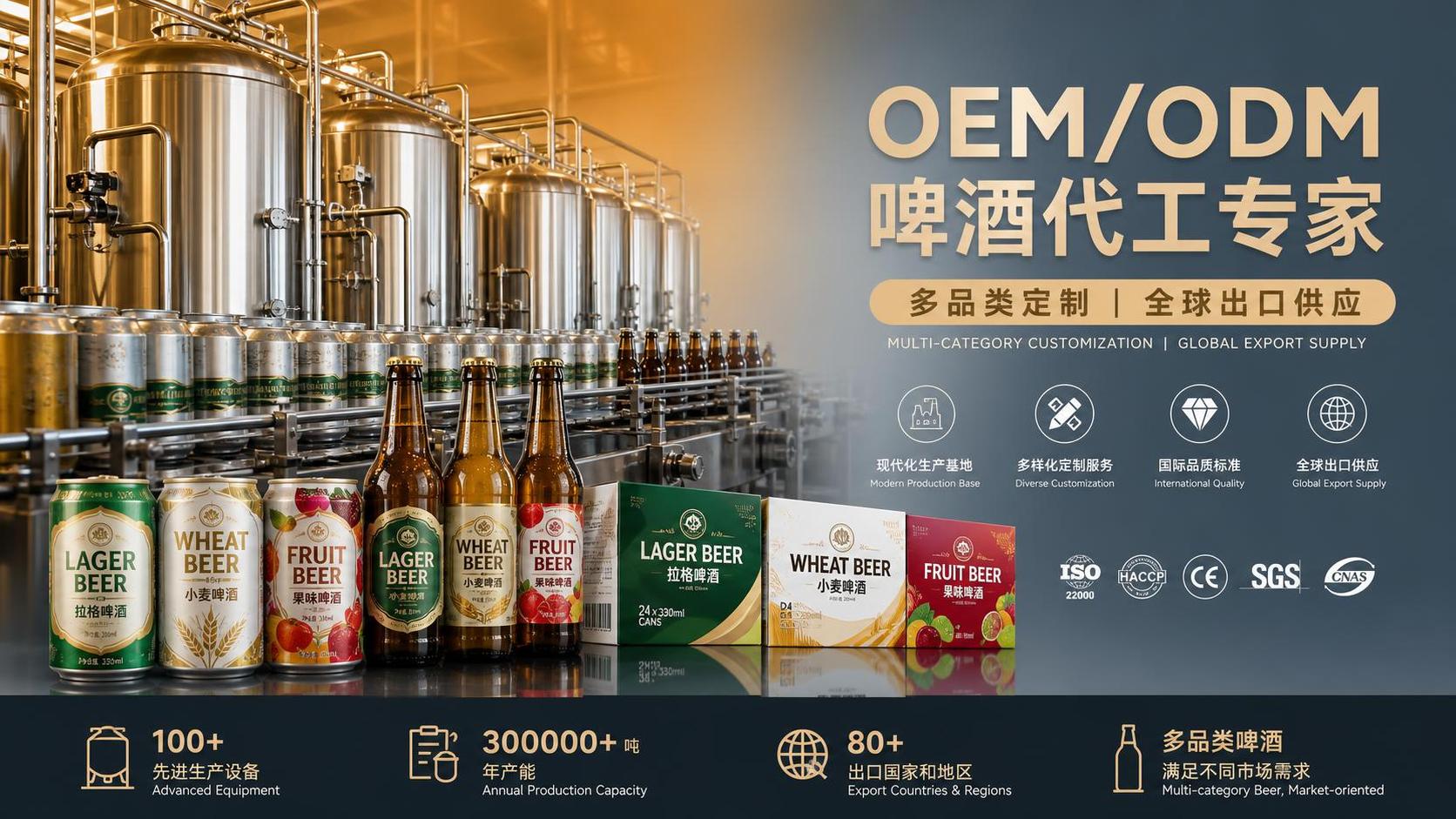
Jinpai Beer operates in that space: craft beer R&D, production and distribution, with OEM/ODM support across classic lager, German wheat, sugar-free low-calorie beer, fruit-flavored beer and functional specialty beers. On paper, that sounds broad. In actual use, the value depends on what stage the brand is in and what kind of channel it is trying to serve. A restaurant group launching a house beer does not need the same production logic as an online seller testing seasonal fruit profiles. A supermarket private label needs different packaging discipline than a taproom-driven concept trying to preserve a more expressive wheat or specialty line.
The useful question is not whether contract brewing is “good” or “bad.” It is whether the factory can match the commercial reality behind the beer.
When the Brand Is Still Proving Demand
Early-stage brands often overestimate how stable their first-year volume will be. They may forecast one hero lager, then discover that the market responds better to wheat beer, a lighter low-calorie concept, or a fruit-driven line that performs well online but not in bars. Building your own brewing and packaging setup around that uncertainty is expensive and usually premature. In this phase, the attraction of working with a contract producer is not only lower initial investment. It is the ability to adjust the product mix without rebuilding the operation each time the channel shifts.
This is one of the more practical use cases for a Chinese beer factory with a wider formulation base. If the brand needs to test a clean, accessible lager for retail entry while also developing a sweeter or more aromatic line for convenience stores or e-commerce promotions, it helps when the supplier is already accustomed to different beer categories instead of treating every request as a custom engineering project. The risk here is simple: some buyers focus only on quoted price per unit and ignore whether the factory can keep sensory consistency across repeat runs. For a new brand, one unstable batch can do more damage than a delayed launch.
A sensible screening approach is to look at sample-to-production reproducibility, packaging flexibility and communication discipline. If a factory can discuss not just flavor direction but also shelf-life expectations, channel fit and likely reformulation constraints, that is usually a better sign than a supplier that promises every style with no questions asked.
Private Label for Retail Is More About Stability Than Creativity
Retail buyers often say they want differentiation, but once the product reaches supermarket shelves, consistency and cost structure matter more than novelty. A private-label lager or wheat beer may not need to impress a festival judge. It needs to survive repeated purchasing decisions by consumers who expect the same drinking experience every time. It also needs packaging, labeling and carton configuration that can move through distribution cleanly.
This is where OEM production becomes a different discipline from making experimental craft beer. The recipe must be robust enough for scale. The visual identity has to work across cans, bottles or secondary packaging. Forecast swings from promotions or holiday periods have to be manageable. For retailers and importers, a Chinese beer factory is often attractive because one supplier may cover multiple styles and pack formats under a single coordination chain. That can reduce the operational friction of working with several small breweries for what is, in the end, a distribution business.
Still, private-label projects fail for predictable reasons. One is trying to force a highly niche flavor profile into a mainstream retail environment. Another is ignoring local taste calibration. A fruit-flavored beer that performs in one region may read as too sweet, too artificial, or too unfamiliar elsewhere. A factory with OEM/ODM experience should be able to flag these mismatches early, not merely execute the formula exactly as submitted.
On-Trade and Restaurant Supply Needs Different Beer Decisions
Bars, restaurants and hospitality groups usually buy beer as part of a service experience, not just as a packaged SKU. Their concerns are more situational. They may want a house lager that remains easy to drink across different food pairings, or a wheat beer that feels more distinctive but still works for guests who are not craft-focused. In these settings, the “best” beer is often the one with fewer service complaints, reliable replenishment and broad guest acceptance.
That sounds conservative, but it is realistic. A contract-brewed product for restaurant use should match turnover speed, storage conditions and serving habits. If the outlet has limited cold storage, slower-moving specialty lines become harder to manage. If the brand is supplying multiple locations, packaging uniformity and order predictability matter as much as recipe character. For this kind of customer, Jinpai Beer’s broader product range can be useful because the operator does not need separate suppliers to build a simple ladder: an everyday lager, a wheat option, and one rotating flavored or specialty product.
What often gets missed is that hospitality clients may ask for “customization” when they actually need menu coherence. A beer that tastes unique but does not fit the food program, price point or customer traffic pattern is not a strong house product. The right contract brewing partner should push that conversation beyond branding and into practical sell-through conditions.
Why Low-Calorie, Sugar-Free and Functional Lines Need More Care
Specialty categories draw attention because they promise faster differentiation. Sugar-free low-calorie beer, fruit beer and functional specialty beers can help a newer brand enter a crowded market with a clearer hook. But these categories are less forgiving than a standard lager. Consumer expectations are narrower. Small imbalances in sweetness, body, aroma or aftertaste become more noticeable because the buyer is already comparing the product against a very specific claim or lifestyle position.
That is one reason OEM/ODM support matters here. A factory may be able to brew a fruit-style beer, but that does not automatically mean it can support a commercially viable fruit beer program. The issue is not only flavor. It includes ingredient sourcing stability, batch-to-batch uniformity, packaging compatibility and realistic channel placement. A sweeter flavored beer that performs in convenience or social drinking channels may underperform in traditional dining venues. A low-calorie concept may need cleaner branding and more disciplined sensory control because the consumer is buying the promise of “lighter” without wanting a thin or empty drinking experience.
Functional specialty beers deserve even more caution in communication and market positioning. Claims, ingredients and labeling requirements can differ by destination market. Without verified local compliance review, a concept that seems commercially attractive can become difficult to place. That is not a reason to avoid the category. It is a reason to develop it with stricter discipline than a standard line extension.
What Buyers Usually Ask Before Committing
The common questions are rarely glamorous. Can the supplier handle both trial orders and scaled runs? How much recipe adjustment is realistic once packaging is fixed? Is the beer meant for online retail, supermarkets, bars, or mixed channels? Are seasonal SKUs worth the complexity? These are not purchasing formalities. They determine whether the contract brewing model will remain workable after launch.
What a Reliable Factory Relationship Looks Like
In this business, the strongest supplier relationships are usually the least theatrical. The factory understands what kind of brand is being built, what channels will carry it, and how much variation the commercial model can tolerate. The brand owner understands that not every fashionable beer concept should be commercialized immediately. Somewhere in the middle, the beer becomes bankable.
For distributors, agents and private-label buyers, a Chinese beer factory is useful when it can combine breadth of styles with enough production discipline to support long-term repeat business. Jinpai Beer’s range gives partners room to build a practical portfolio rather than a one-off product: classic lager for volume, German wheat for style variety, low-calorie or sugar-free options for shifting consumer preferences, fruit-flavored beer for promotional or younger-channel demand, and specialty lines where market positioning justifies the added complexity.
The real decision should come down to fit. If the product roadmap is unstable, flexibility matters. If the brand is entering retail, consistency matters more. If the goal is hospitality supply, service conditions and reorder reliability matter most. Contract brewing works well when those priorities are identified early and discussed honestly with the producer. That is usually the point where a promising beer idea becomes a workable business line.
Thank you very much for writing to us. Please leave your message and contact information, we will reply to you within 24 hours.