



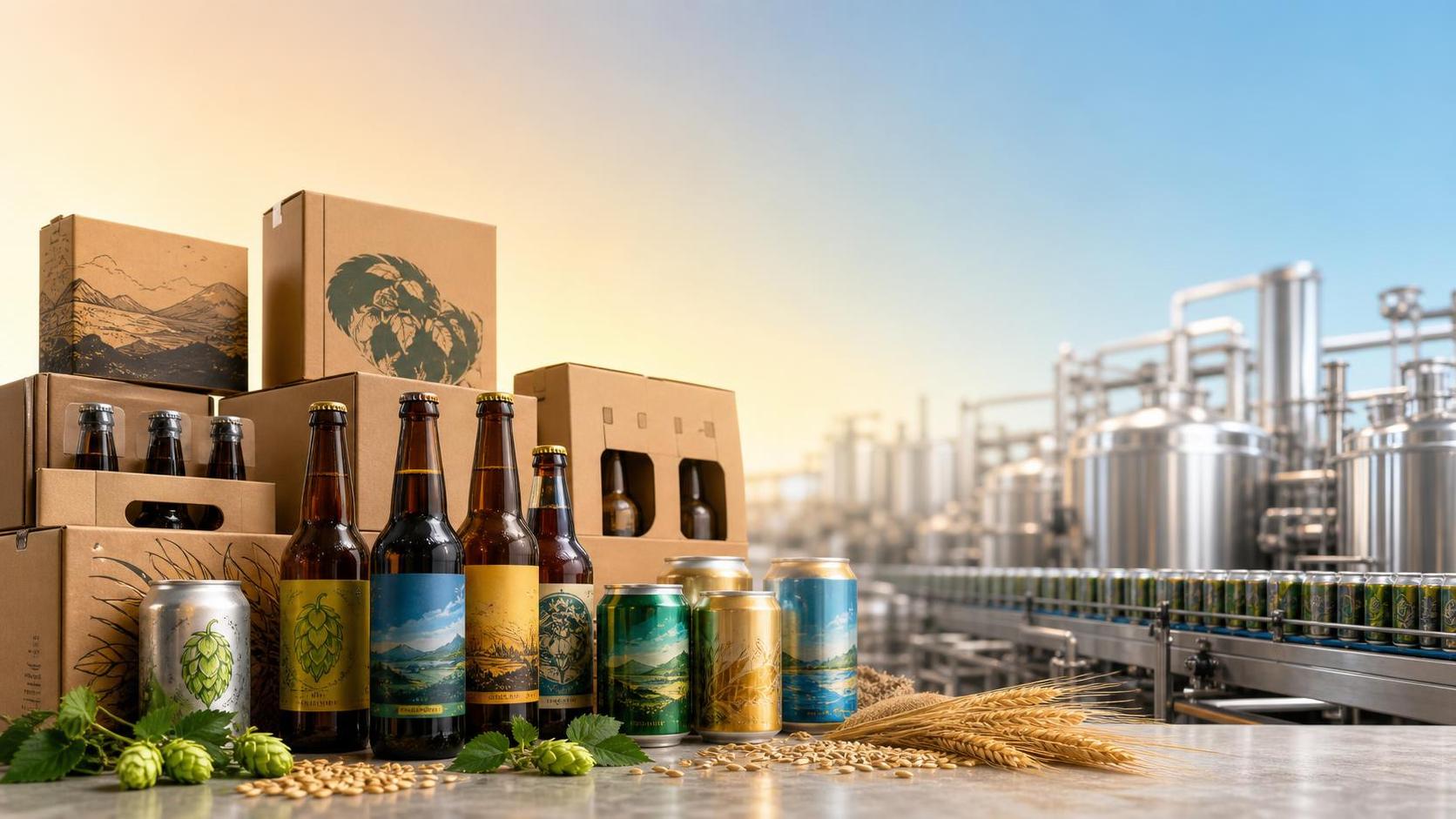
How Beer OEM Supports Fast New Product Launches
For distributors, agents and brand owners, Beer OEM is one of the fastest ways to turn market trends into profitable new products. From recipe development and packaging customization to stable production and global supply, the right OEM partner helps shorten launch cycles while reducing operational pressure. This article explores how Beer OEM supports fast product launches and creates more flexible growth opportunities in the competitive beverage market.
The real value of Beer OEM shows up when a launch window is narrow. A seasonal fruit beer for summer retail, a low-calorie SKU requested by a supermarket chain, or a wheat beer line designed for a bar group all work on different timelines, with different failure points. In practice, speed is rarely just about how fast a factory can brew. It depends on whether recipe trials, packaging confirmation, label compliance, production scheduling, and export coordination can move without blocking one another.
That is why experienced buyers do not evaluate an OEM brewery only by product range. They look at how the supplier handles change. Can the plant move from classic lager to fruit-flavored beer without dragging the launch into repeated sampling rounds? Can the packaging team adjust can, bottle, or carton details without forcing a full redesign each time? Can the supply plan support both a trial order and a follow-up order if the first batch performs well? Those questions usually decide whether a new product reaches shelves on time or misses the selling season.
When launch speed depends more on coordination than on brewing alone
Many brand owners enter Beer OEM expecting brewing to be the longest stage. Sometimes it is, especially for styles that need more process stability or flavor adjustment. But for many commercial launches, the slower part is coordination across functions. A beer can be technically ready while label text is still being revised for market requirements, or while the customer is undecided between glass bottle and slim can formats because each one changes freight efficiency, shelf appearance, and minimum packaging preparation.
A capable OEM partner reduces those decision loops early. Jinpai Beer, for example, works across craft beer R&D, production, and distribution, with products covering classic lager, German wheat, sugar-free low-calorie beer, fruit-flavored beer, and functional specialty beers. That matters because buyers launching line extensions are often not starting from zero. They usually need to adapt an existing market idea into a commercially manufacturable product. If the brewery already has familiarity with multiple beer styles and OEM/ODM workflows, the discussion can move quickly from concept to what is actually feasible in packaging, filling, and shipment.
This becomes especially relevant for customers selling through both online and offline channels. An online-first launch may tolerate shorter initial volumes and faster SKU testing, while supermarket and restaurant channels usually ask for more consistency in appearance, replenishment, and outer packaging. The same beer concept may need different launch logic depending on where it will be sold.
Not every product idea is equally easy to industrialize
Some beer concepts move quickly because the path is already familiar. A standard lager with private-label packaging is usually more straightforward than a specialty beer with layered flavor positioning. German wheat beer, for instance, may be attractive for premium channel placement, but the target sensory profile needs to be stable enough that each batch matches the commercial expectation. Fruit-flavored beer can appear simple from a branding perspective, yet flavor balance, sweetness perception, and visual consistency often create more back-and-forth during sampling.
Low-calorie or sugar-free products bring a different challenge. They are often launched to answer a clear retail trend, so timing matters, but positioning claims must be handled carefully and in line with the destination market’s labeling rules. A brand owner may want to move fast, but pushing packaging to print before the claim language is checked can create delays later. In these projects, the fastest route is usually the one with fewer corrections, not the one with the fewest meetings.
Functional specialty beers deserve even more caution. They can be commercially interesting, particularly for niche retail or social media-driven launches, but they also require closer alignment between formula intent, taste acceptance, and market-facing communication. If the product concept relies on wording that may be interpreted differently across countries, launch speed can disappear in regulatory review and packaging revision. An OEM brewery that understands this early can help keep the idea within a realistic commercial boundary.
Channel decides the right OEM model
One reason Beer OEM works well for fast launches is that it can match different channel economics without the brand owner building production capacity. But the right setup depends heavily on where the product will land.
A restaurant group may care less about broad retail appeal and more about whether the beer supports menu pairing and keeps a stable house style. A supermarket buyer usually looks harder at packaging execution, listability, and whether the supplier can support promotional periods without disruption. For online channels, speed often comes from testing a narrower first run with distinctive branding, then expanding only after sales feedback is clear.
This is where OEM flexibility has practical value. It allows a brand owner to enter one channel with a focused product instead of waiting to build a universal range that fits every buyer at once. In many launches, that narrower first step is what makes the project commercially viable.
Packaging is often the hidden schedule driver
People tend to talk about formulation, but packaging decisions often control the calendar. Bottle and can formats affect not only appearance, but also filling compatibility, carton layout, pallet efficiency, and transport cost. If the beer is intended for export, secondary packaging becomes part of the risk calculation. A design that looks good in a mock-up may not be the best option if it complicates logistics or slows production preparation.
For private-label launches, label compliance deserves early attention. Market-specific wording, alcohol declaration, ingredient presentation, and importer details can all become late-stage blockers if handled casually. The usual mistake is treating packaging as a finishing step. In faster OEM projects, packaging review starts while product samples are still being finalized, because those two tracks affect each other.
Another common misunderstanding is assuming that maximum customization always supports better market entry. Sometimes it does. Sometimes it just creates procurement and inventory complexity for materials that are hard to reuse if the first order needs adjustment. For an untested SKU, a measured level of customization is often more practical than redesigning every component.
What buyers should verify before treating an OEM brewery as a launch partner
The useful discussion is not “Can you make this beer?” It is “Can you launch this beer under these conditions?” That means checking a few operational points before the project moves too far:
- Whether the proposed style already sits close to the brewery’s existing production strengths, or whether it will require extended trial work.
- How packaging approval, artwork confirmation, and production scheduling are sequenced.
- Whether the supplier can support both the first commercial batch and the reorder pattern that follows if the product moves faster than expected.
- How export, channel, or labeling requirements will be reviewed before materials are locked.
- What degree of customization is sensible for the expected sales volume.
None of these points are abstract. They are where launch schedules usually tighten or slip. An OEM brewery involved in wholesale supply and customized solutions, as Jinpai Beer is, can be useful here because product, packaging, and channel discussions are less likely to be treated as separate conversations. That kind of alignment is often more valuable than any single production feature.
The best Beer OEM projects start with a narrower question
When a launch needs to happen quickly, the most effective starting point is usually not “We want a new beer brand.” It is something more concrete: a low-calorie product for a retail buyer asking for lighter options, a fruit-flavored SKU aimed at younger social drinking occasions, or a classic lager line that needs private-label packaging for a distributor portfolio. Clear use conditions reduce revision cycles. They also help the brewery recommend whether an OEM route, an ODM approach, or a more customized development path makes commercial sense.
Fast launches succeed when the product idea matches operational reality. Beer OEM supports that by giving brand owners access to recipe development, production resources, packaging options, and supply capability without building everything in-house. But speed is not automatic. It comes from choosing a partner that can translate market intent into a product that can actually be sampled, packed, shipped, and reordered without unnecessary resets.
Before moving forward, it is worth confirming three things in detail: where the beer will be sold first, how much customization the first batch truly needs, and which approval step is most likely to slow the schedule. Those answers usually tell you more about launch readiness than a broad product catalog ever will.
Thank you very much for writing to us. Please leave your message and contact information, we will reply to you within 24 hours.