Global Beer Industry Update: Q2 2026
Market Divergence: Asia's Growth vs. Europe's Challenges
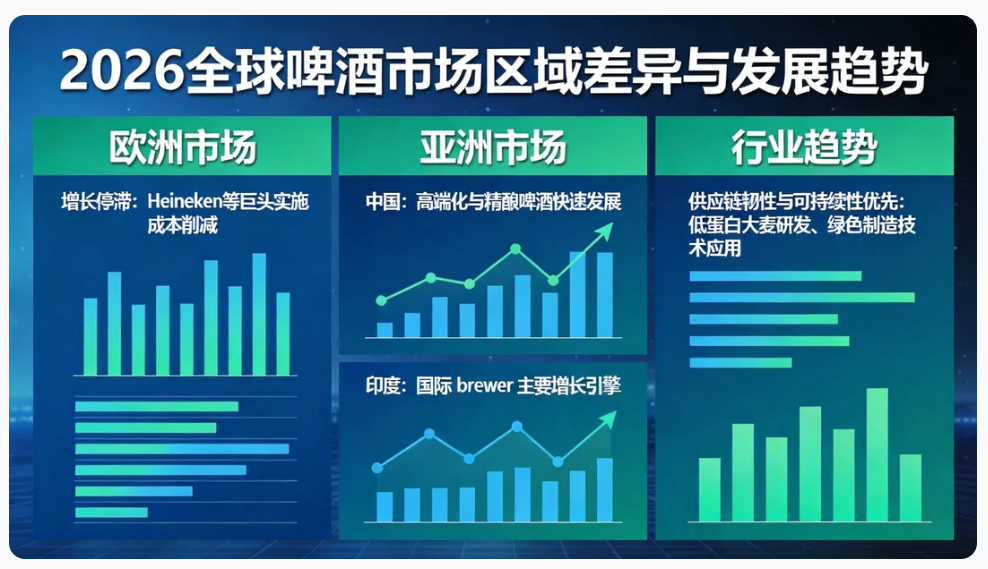
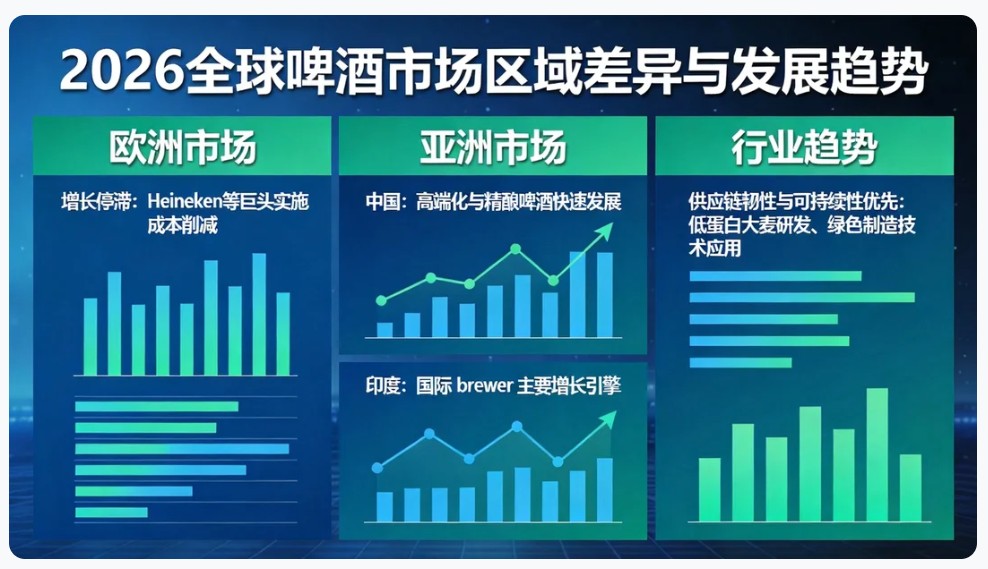
The global beer landscape is currently defined by a sharp contrast between mature Western markets and emerging Asian economies.
China's "Value over Volume" Shift: The Chinese market is undergoing a significant transformation. While total volume remains stable, the focus has shifted to premiumization. Major players are seeing divergent results:
- Tsingtao Brewery is aggressively upgrading its core "1903" classic product with new packaging and all-malt brewing to capture the high-end market.
- Yanjing Beer reported a nearly 60% surge in net profit for 2025, driven by its successful U8 product line, while Budweiser Asia Pacific faced sales declines in China for the second consecutive year.
- Russia has emerged as a key trade partner, becoming the third-largest buyer of Chinese beer exports in early 2026.
India as the New Growth Engine: With per capita consumption at only 2 liters, India is attracting massive investment.
- Carlsberg is exploring an IPO for its Indian unit, citing it as a primary growth engine surpassing China in potential.
- Heineken, through its majority stake in United Breweries, controls nearly half the Indian market and is betting on the country's demographic shift toward nuclear families and urbanization.
European Stagnation: Major brewers in Europe are facing structural headwinds, including aging populations and health-conscious consumers. Heineken has announced plans to cut 6,000 jobs and lower profit expectations due to weak demand, while Soufflet Malting is closing facilities in Germany and the UK to invest in India.
Corporate Strategy & Consolidation
Global giants are reshaping their portfolios through acquisitions and supply chain integration.
Budweiser's Aggressive Moves: Anheuser-Busch InBev is strengthening its grip on the supply chain by buying back a 49.9% stake in a US metal can factory for $300 million to control costs. Simultaneously, they are acquiring BeatBox Beverages to capture the Gen Z party drink market.
Carlsberg's Portfolio Expansion: Following the acquisition of Britvic, Carlsberg is diversifying into soft drinks, with non-alcoholic and low-alcohol products now accounting for 31% of their portfolio.
Craft Beer Resilience: In the premium segment, brands like Xinbaha in China are reporting sales exceeding 300 million yuan, proving that high-end craft beer remains a lucrative niche despite broader market slowdowns.
Sustainability & Supply Chain Innovation
Environmental concerns are driving technical innovation in brewing ingredients and processes.
Low-Protein Barley: The US Brewers Association is urging breeders to develop low-protein barley varieties. Climate change has led to higher protein levels in barley, which can negatively affect the flavor stability of all-malt beers.
Green Brewing: Carlsberg launched its upgraded "Brewing Tomorrow" ESG plan in March 2026, aiming for net-zero emissions by 2040. Meanwhile, Chinese breweries like Tsingtao and Budweiser Harbin are utilizing industrial heat pumps and solar power to drastically reduce water usage and carbon emissions, with some factories acting as "lighthouse" examples of sustainable manufacturing.