



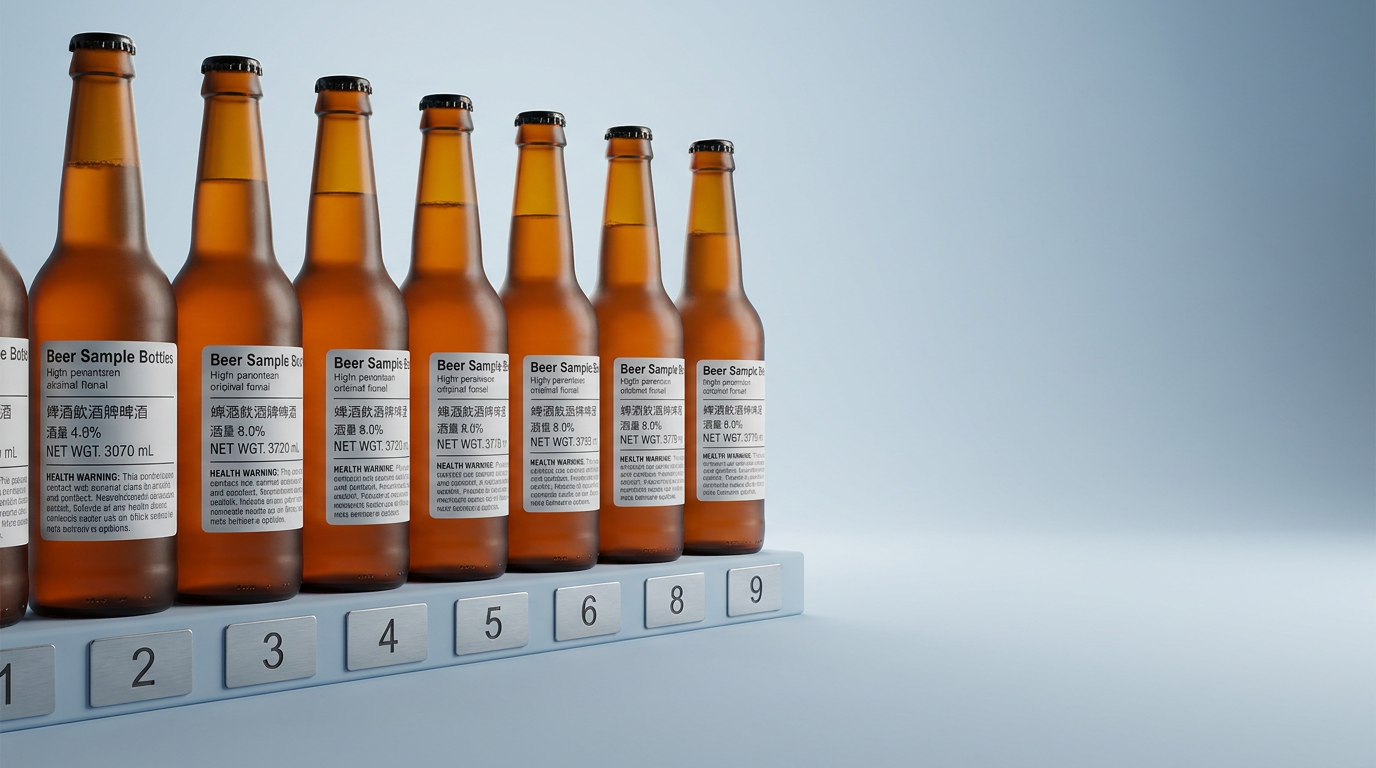
Wondering how long is the lead time for China beer OEM orders? Many international buyers assume brewing capacity or logistics are the main constraints. In reality, the longest delays occur not in the brewhouse—but in a tightly interlocked 9-step administrative and compliance sequence that begins the moment sample approval is signed and ends only when FOB shipment clears final documentation. At Jinpai Beer, we’ve tracked over 217 craft beer OEM projects across 14 markets. The data shows this handoff phase consistently adds 13–18 calendar days—nearly three full weeks—beyond production scheduling.
The Hidden Bottleneck: From Sample Sign-Off to FOB Release
Unlike mass-produced lagers with standardized packaging, craft beer OEM demands layered regulatory alignment. Each step requires cross-departmental sign-off, third-party verification, or government-facing submissions. Skipping or rushing one stage triggers rework downstream—often doubling delay impact.
Step 1: Final Label Artwork Compliance Review
Labels must meet China’s GB 7718 (prepackaged food labeling), GB 2758 (fermented alcoholic beverages), and local customs requirements—including bilingual Chinese/English text, alcohol content, net volume, allergen statements, and mandatory health warnings.
Step 2: Domestic Food Safety License Verification
Jinpai Beer’s SC license (SC11537021400567) must be validated per batch. Exporters require updated copies submitted to CIQ (China Inspection and Quarantine) before clearance.
Step 3: Ingredient & Additive Declaration Audit
All functional ingredients—including natural fruit extracts, botanicals, or low-calorie sweeteners—must be cross-referenced against China’s GB 2760 list. Non-listed items trigger lab testing or formulation revision.
Step 4: Carton & Outer Packaging Structural Approval
Corrugated strength, stacking load capacity, and moisture resistance must pass ISTA 3A simulation. Design changes after sample sign-off restart structural validation—adding 5–7 working days.
Step 5: Batch-Specific Microbiological Testing
Every OEM batch undergoes 72-hour aerobic plate count, yeast/bacteria isolation, and ethanol stability analysis. Results must be issued by CNAS-accredited labs before release.
Step 6: Customs Pre-Declaration & HS Code Confirmation
Beer classification under HS 2203.00 varies by ABV, sugar content, and flavoring. Misclassification risks detention. Jinpai coordinates with licensed customs brokers 10 days pre-shipment.
Step 7: Certificate of Origin (Form A or CO)
Required for preferential tariffs under ASEAN, RCEP, or China–Chile FTAs. Processing takes 2–4 business days at local CCPIT offices—and requires full bill of materials traceability.
Step 8: Fumigation & Phytosanitary Certification (if wooden pallets used)
ISPM-15 compliant heat treatment certificates must accompany all wood-based dunnage. Non-compliant pallets are rejected at port—causing unplanned container demurrage.
Step 9: Final FOB Documentation Package Assembly
Includes commercial invoice, packing list, bill of lading, health certificate, and export declaration. All documents must reflect identical consignee, quantity, and unit values—or risk customs hold.
Why This Matters for Your How Long Is the Lead Time for China Beer OEM Orders Timeline
This 9-step sequence isn’t bureaucratic overhead—it’s risk mitigation. Rushing it compromises label legality, shelf-life integrity, or tariff eligibility. But proactive alignment cuts cumulative delay by up to 65%.
- Early label submission (≥25 days pre-brew) avoids 4-day design rework cycles
- Pre-approved ingredient dossiers reduce Step 3 audit time from 72 to 8 hours
- Shared access to Jinpai’s customs broker portal enables real-time HS code validation
- Digital document templates auto-populate fields—cutting Step 9 assembly from 3 days to 6 hours
Jinpai Beer’s OEM Acceleration Framework
We embed timeline visibility into every OEM engagement:
Our fastest recorded OEM timeline—from signed sample to FOB Qingdao—was 8 calendar days. That required joint planning starting 30 days pre-brew, shared cloud folders for approvals, and concurrent execution of Steps 1–4.
Actionable Next Steps
To accurately forecast your how long is the lead time for China beer OEM orders timeline:
- Request Jinpai’s OEM Readiness Checklist—includes label specs, ingredient compliance forms, and carton test protocols
- Share target launch date early; we’ll reverse-engineer the critical path and flag dependencies
- Assign one internal contact for documentation sign-offs—reducing email lag by 60%
- Opt for digital certificates (e-CO, e-Health Cert) where accepted—eliminates courier delays
Lead time isn’t fixed—it’s negotiated through clarity, preparation, and partnership. Jinpai Beer serves global restaurants, supermarkets, bars, and specialty retailers with classic lager, German wheat, sugar-free low-calorie beer, fruit-flavored variants, and functional specialty brews—all backed by end-to-end OEM transparency.
Start your timeline optimization today. Contact our OEM team to receive your customized lead time roadmap—and discover how much faster your next craft beer launch can be.
Thank you very much for writing to us. Please leave your message and contact information, we will reply to you within 24 hours.