



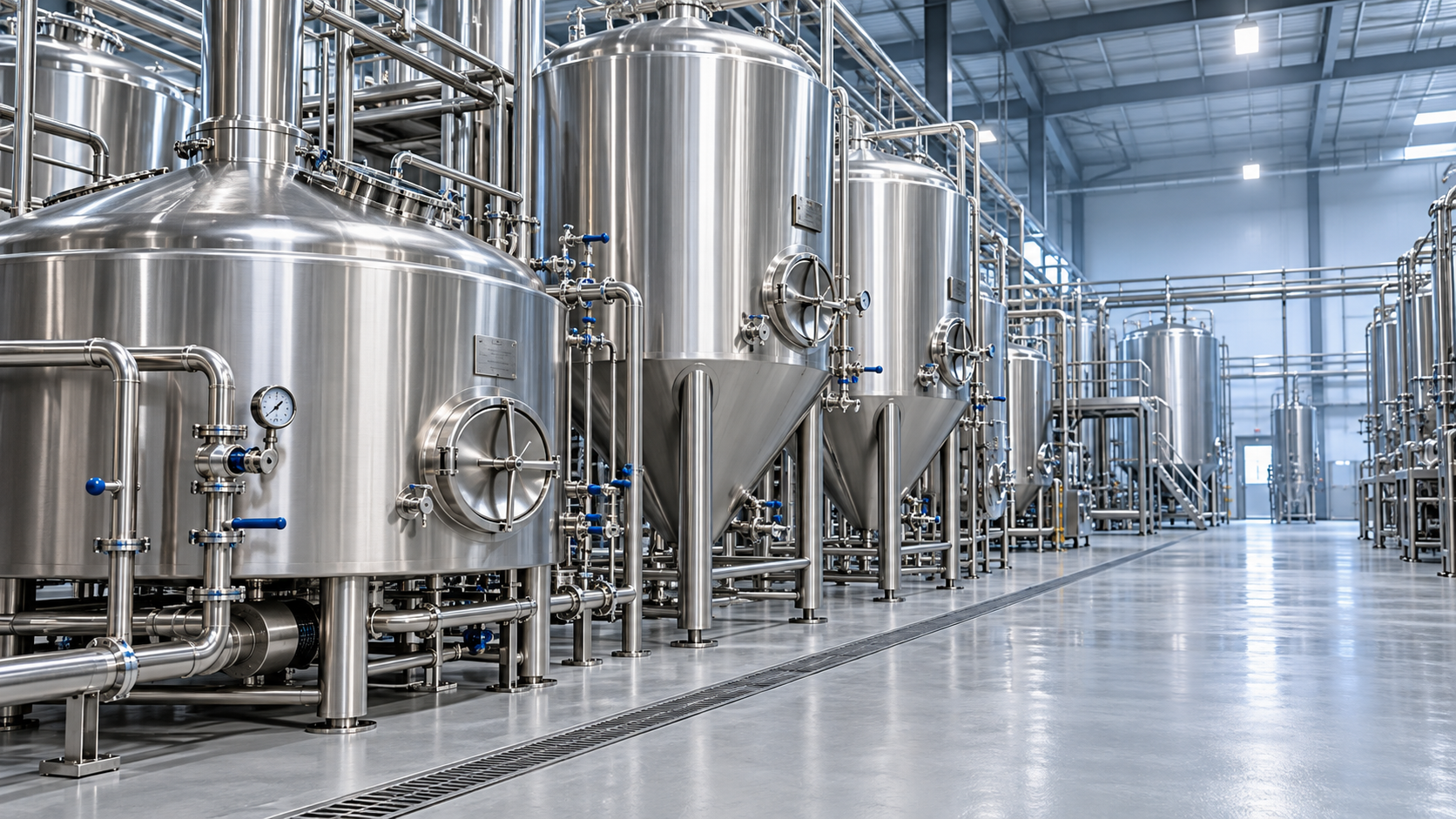
Every glass of beer begins with a carefully managed journey through grain handling, brewing, fermentation and packaging, with quality checks connecting each production stage.
Inside an industrial beer factory, equipment moves ingredients efficiently, while brewers control temperature, time, sanitation and oxygen exposure to maintain flavor and product consistency.
The basic route is straightforward: prepare malt, extract sugars, boil wort, ferment, condition and package. Fermentation and maturation usually take much longer than brewing itself.
This guide follows that production flow and explains which equipment, controls and supplier records matter when researching brewery operations or evaluating a potential manufacturing partner.
What Actually Happens Inside a Beer Factory?
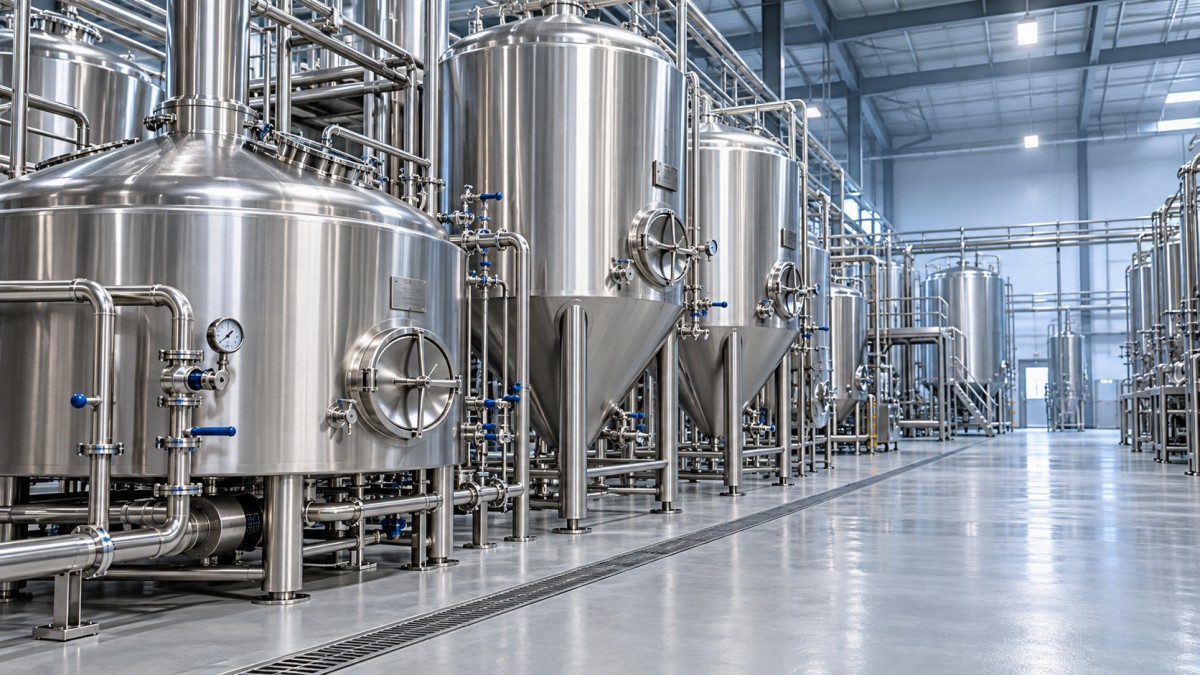
A brewery operates as a connected production system. Grain handling feeds the brewhouse; fermentation tanks hold developing beer; packaging lines prepare finished products for distribution.
The main sequence runs from milling and mashing through wort separation, boiling, cooling, fermentation, conditioning and filling. Filtration or stabilization depends on the product.
Several batches may occupy different stages simultaneously. One batch can enter fermentation while another matures and a third moves through the canning or bottling line.
This overlap explains why a large brewhouse alone does not guarantee high output. Fermentation capacity, packaging speed, cleaning schedules and warehouse space also constrain production.
For researchers, the central question is how reliably the whole system produces the intended beer. Equipment size matters only alongside process control and repeatable results.
How Are Ingredients Checked Before Brewing Starts?
Most beer starts with water, malted grain, hops and yeast. Wheat, fruit ingredients, enzymes or other additions may appear according to the recipe and regulations.
Malt provides starch and enzymes, while its processing influences color and flavor. Incoming checks commonly cover moisture, identity, supplier documentation and signs of damage.
Grain storage must limit moisture, pests and contamination. Silos, enclosed conveyors and dust extraction support orderly handling, while appropriate dust controls also address workplace hazards.
Water deserves equal attention because its mineral profile affects mashing, bitterness and taste. Treatment may include filtration, dechlorination or mineral adjustment, depending on source quality.
Hops require storage suited to their form and supplier specifications. Yeast needs controlled handling because strain identity, health and contamination directly affect fermentation performance.
Useful supplier evidence includes ingredient specifications, lot identification and water testing records. These documents help connect finished beer characteristics with the materials used to produce it.
How Do Milling and Mashing Turn Grain into Sugars?
A malt mill opens kernels so water can reach their contents. For a lauter tun, the goal includes preserving enough husk structure for wort separation.
Overly coarse milling can reduce extraction, while excessive flour can complicate separation. Breweries adjust milling to their raw materials and chosen brewhouse filtration system.
The milled grain mixes with brewing water in a mash vessel. Controlled temperature rests allow malt enzymes to convert starch into sugars and other carbohydrates.
Many mash programs operate within approximately 62–72°C, although recipes may include additional rests. Exact settings depend on malt characteristics, equipment and the intended beer profile.
Temperature, pH, time and water composition influence conversion. Changes here affect fermentability, body and yield, so automation helps operators repeat validated settings across batches.
Brewers monitor the mash rather than relying solely on elapsed time. Conversion checks and process measurements help establish whether the batch can proceed as intended.
Why Are Wort Separation and Boiling So Important?
After mashing, the brewery separates sugar-rich liquid, called wort, from spent grain. A lauter tun or mash filter performs this task using different separation mechanisms.
Additional brewing water commonly rinses remaining extract from the grain. Operators balance recovery against wort quality, avoiding excessive rinsing that can extract undesirable grain compounds.
Spent grain leaves the main beer stream and may enter animal feed or other recovery routes where suitable. Timely handling prevents deterioration and storage problems.
The wort then enters a kettle for boiling. This stage reduces microbial load, drives off unwanted volatile compounds and supports protein coagulation and hop utilization.
Hop timing changes the result: earlier additions generally contribute more bitterness, while later additions can retain more aroma. Recipe and equipment influence the final balance.
After boiling, a whirlpool or another separation system removes much of the hop material and coagulated protein before the wort moves toward cooling and fermentation.
What Changes When Wort Enters Fermentation?
A heat exchanger cools hot wort to the selected fermentation temperature. Cooling performance matters because the process must reach suitable conditions without introducing contamination.
Before or during yeast addition, many breweries introduce a controlled amount of oxygen into cooled wort. Yeast uses this oxygen to support healthy early growth.
Once fermentation begins, yeast converts fermentable sugars into alcohol and carbon dioxide. It also produces flavor compounds that help distinguish one beer style from another.
Fermentation temperature strongly influences flavor and yeast behavior. Many lagers ferment around 8–15°C, while many ales use warmer conditions, often approximately 16–24°C.
These ranges are illustrative rather than universal specifications. Particular strains, pressure settings and product targets can require different temperatures, schedules or operating conditions in practice.
Operators track temperature, gravity, pressure and sensory development. Gravity trends show fermentation progress, while laboratory checks help detect contamination or unexpected changes in yeast performance.
Fermentation should finish against defined criteria, not simply a calendar date. Stable gravity and acceptable flavor development help determine when beer can advance safely.
Why Does Beer Need Conditioning After Fermentation?
Newly fermented beer may contain suspended yeast, unstable haze components or unwanted flavor compounds. Conditioning gives the brewery time and control to refine the product.
Depending on the beer, this can involve warmer maturation, gradual cooling and cold storage. Yeast activity helps reduce compounds such as diacetyl under suitable conditions.
The required time varies considerably. Some products move through production relatively quickly, while many lagers need longer maturation to achieve their intended flavor and stability.
Dry hopping, fruit additions or other ingredients can introduce further complexity. Breweries must consider microbial risks, additional fermentation, oxygen exposure and compatibility with downstream equipment.
Some beers undergo centrifugation or filtration for clarity and stability. Others intentionally retain haze, so visual brightness alone cannot establish whether a beer is well made.
Carbonation is adjusted to the product specification, through retained fermentation gas, added carbon dioxide or both. Excessive or insufficient carbonation changes mouthfeel and filling performance.
How Do Filling Lines Protect Finished Beer?
Packaging can damage beer that was brewed correctly. Oxygen pickup, contamination, inaccurate fills and defective closures can shorten shelf life or create inconsistent drinking experiences.
Finished beer commonly moves into a bright beer tank before filling. This vessel provides controlled holding conditions and supports final checks on carbonation and product specifications.
Cans, bottles and kegs require different filling systems. Container preparation, gas purging, controlled filling and reliable closing all contribute to preserving the beer inside.
Canning operations check seams, while bottling lines assess closure integrity. Keg lines require effective cleaning and inspection procedures suited to the container and filling process.
Breweries monitor package oxygen because it can accelerate flavor deterioration. Measurements should distinguish oxygen dissolved in beer from oxygen present elsewhere inside the sealed package.
Some products receive pasteurization or use validated filtration and hygienic filling systems. The appropriate approach depends on product characteristics, distribution conditions and required shelf life.
Labels and batch codes complete the package. Accurate allergen declarations, alcohol information, storage instructions and traceable production details must meet the destination market’s applicable requirements.
Which Quality Checks Matter Across the Whole Process?
Quality control works best throughout production, beginning with incoming ingredients and continuing through brewing, fermentation and packaging. Final inspection alone cannot explain every process problem.
Common measurements include gravity, pH, alcohol content, bitterness, color, carbonation and microbiological condition. The exact testing program should reflect the product and its specific risks.
Sensory assessment adds information that instruments cannot fully capture. Trained evaluation can reveal oxidation, unwanted fermentation notes or differences from an approved reference sample.
Cleaning in place systems circulate cleaning solutions through suitable tanks and pipework. Effective programs control chemical concentration, temperature, contact time and flow for each application.
Cleaning and sanitation require verification appropriate to the equipment and risk. A completed cleaning cycle does not automatically demonstrate that every product-contact surface is acceptable.
Traceability connects ingredient lots, production records, packaging materials and dispatch information. This allows a brewery to investigate complaints and identify affected batches when necessary.
What Should Researchers Ask a Potential Brewing Partner?
Start with product fit: can the brewery demonstrate experience with the intended beer style, package format and destination market? Request specifications and representative samples.
Ask how production capacity is calculated. Practical capacity depends on tank occupancy, changeovers, cleaning and packaging availability, so annual headline figures need operating context.
For OEM or ODM projects, clarify recipe ownership, development stages, minimum order quantities and approval criteria. Confirm how ingredient substitutions or process changes are authorized.
Specialty claims require particular scrutiny. Sugar-free, low-calorie and functional positioning need suitable formulation evidence, testing and labeling review under the rules of each sales market.
Jinpai Beer offers craft beer products, OEM/ODM services, wholesale supply and customized solutions. Potential partners can use these questions to define requirements before discussing a project.
What Determines Whether Beer Reaches the Glass in Good Condition?
Dispatch planning should match the beer’s validated storage requirements. Temperature exposure, transport duration and stock rotation influence whether its intended quality survives the distribution journey.
For bars and restaurants, quality protection continues through keg storage, draft-line hygiene and serving conditions. Packaged products likewise depend on appropriate handling after brewery release.
A capable beer factory connects ingredient control, disciplined fermentation, hygienic packaging and documented release checks. Each stage protects the work completed before it arrives.
When evaluating a brewery, look for evidence that connects process settings with finished product quality. That connection provides a stronger basis for judgment than equipment photographs.