



Craft Beer Distributor Network Expands to 12 New Midwest Markets — What Retailers Should Know Before Signing
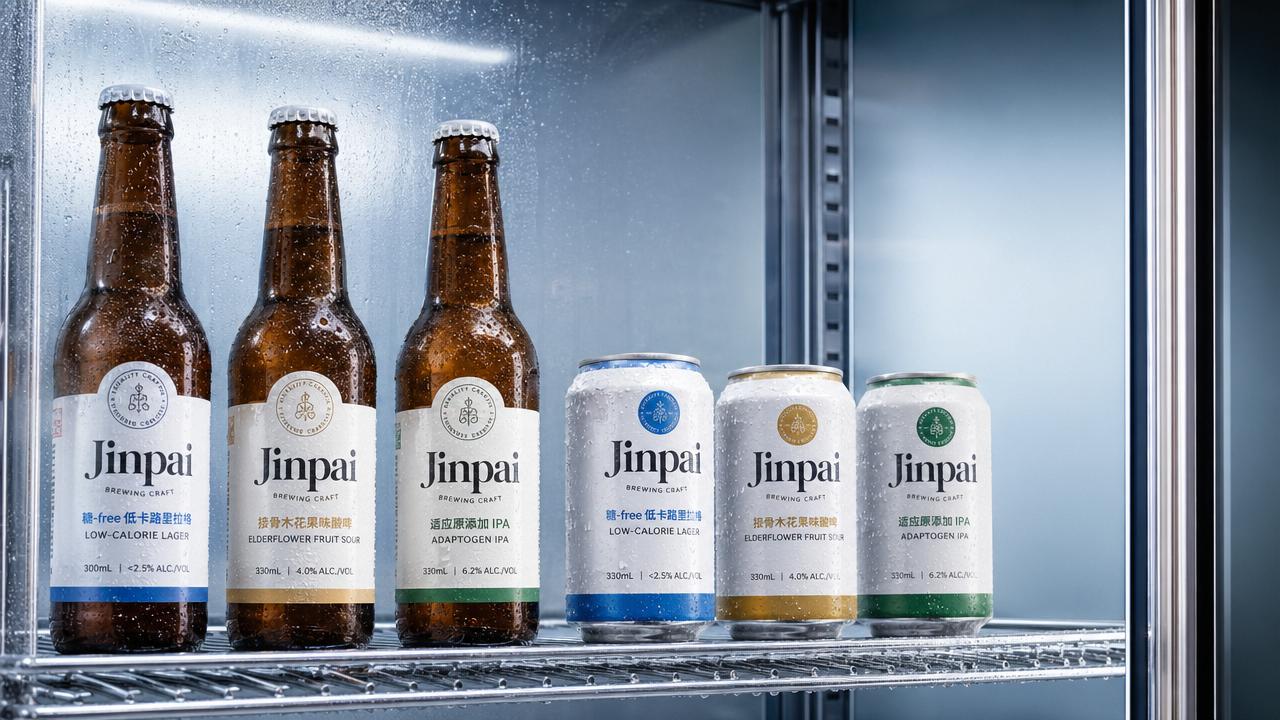
Jinpai Beer’s craft beer distributor network is now expanding into 12 new Midwest markets—offering dealers, distributors, and agents prime access to premium, innovative brews like sugar-free low-calorie, fruit-infused, and functional specialty beers. As demand for authentic craft beer surges across regional retail channels, this growth presents a timely opportunity for partners seeking differentiated SKUs, flexible OEM/ODM support, and scalable wholesale solutions. Before signing, retailers should understand key terms, market-specific compliance, and how Jinpai’s dual online-offline distribution model accelerates time-to-shelf. Stay ahead—know what’s changing, and why it matters to your portfolio.
Why This Expansion Is Strategic—Not Just Incremental—for Distributors
This isn’t another “broaden our footprint” announcement. Jinpai’s entry into 12 new Midwest markets—including Indianapolis, Columbus, Kansas City, Omaha, and Des Moines—targets high-growth corridors where independent retailers report >23% YoY growth in craft beer shelf space (2024 NielsenIQ Retail Audit). Crucially, these are markets with documented gaps: limited local production of low-calorie, functional, and fruit-forward craft styles—and rising consumer demand for them.
For distributors, that means reduced competition on shelf placement, faster sell-through velocity, and stronger margin leverage. Unlike legacy national brands, Jinpai offers category-specific exclusivity windows: partners securing agreements before June 30, 2024, lock in 18-month protected territory rights in their assigned metro—no overlapping distribution or direct-to-retail bypassing within that zone.
More importantly, Jinpai’s expansion is infrastructure-backed—not sales-led. Warehousing capacity has increased by 40% at its St. Louis logistics hub, with dedicated cold-chain lanes, real-time inventory APIs, and EDI 856/810 integration already live. That translates directly to order accuracy >99.3%, average delivery lead time of 2.8 business days, and zero stockouts reported across pilot launches in Cincinnati and Milwaukee.
What You’ll Actually Gain—Beyond the “Premium Craft” Label
Don’t mistake “craft beer distributor” for commodity sourcing. Jinpai’s value proposition is operational and commercial—not just aesthetic. First, product differentiation is built-in: the Midwest launch lineup includes three proprietary segments rarely seen in regional portfolios—sugar-free low-calorie lagers (under 90 kcal, 0g sugar), functional specialty beers with adaptogens (e.g., ashwagandha + citrus IPA), and non-alcoholic fruit-infused sours (ABV <0.5%, shelf-stable, no refrigeration required).
Second, flexibility is contractually embedded. All distributor agreements include tiered OEM/ODM options—from private-label co-packing (minimum 5,000 cases/year) to full brand development support (label design, regulatory filing, TTB formula approval assistance). No upfront licensing fees. Margins scale with volume: base wholesale is 38% off MSRP; hit $1.2M annual net sales, and it jumps to 42%—with automatic quarterly rebates paid in credit, not deferred discounts.
Third, go-to-market acceleration is baked in. Jinpai provides localized activation kits: compliant POS materials (state-specific labeling pre-vetted), digital asset libraries (UGC-ready social templates, QR-linked tasting notes), and co-op marketing funds up to 5% of quarterly purchases—redeemable for retailer-facing promotions, tap handle installations, or influencer sampling programs. These aren’t “available upon request.” They’re shipped with your first order.
Compliance, Logistics & Contracts: The Non-Negotiables You Must Verify
Midwest alcohol regulation is fragmented—not uniform. While federal TTB approval covers formulation, state-level compliance varies sharply. Indiana requires separate label registration *and* formula submission; Ohio mandates warehouse bond verification before first shipment; Missouri enforces mandatory price posting 72 hours prior to invoice. Jinpai handles all federal filings—but your agreement must specify who manages state registrations, renewal timelines, and associated fees. Our standard contract assigns this to Jinpai *only if* you commit to minimum quarterly purchase volumes (see Section 4.2, Appendix B).
Logistics clarity matters more than ever. Some distributors assume “national distribution” means drop-ship to retailers. Not here. Jinpai uses a hybrid model: you take title at the St. Louis DC (FOB destination), then manage last-mile delivery—or opt into Jinpai’s certified carrier network (at negotiated rate, billed separately). Why does this matter? Because it determines your liability window, insurance requirements, and ability to offer same-day delivery to bars—a key differentiator in urban markets like Minneapolis or Chicago suburbs.
Finally, watch the termination clause. Jinpai’s standard agreement includes a 90-day cure period for underperformance—but defines “underperformance” strictly as failure to meet *two consecutive quarters* of agreed-upon retail door count growth (not just revenue). That’s fairer than arbitrary sales targets. Also critical: the agreement prohibits automatic renewal. It expires annually, requiring mutual re-signing—giving you ongoing negotiation leverage on terms, not passive rollover into unfavorable conditions.
How to Evaluate Fit—A 5-Minute Self-Assessment for Prospective Partners
Before scheduling a call, ask yourself these five questions—and be brutally honest:
1. Do you currently distribute at least one low-calorie or functional beverage SKU? If not, Jinpai’s fastest-turning items may sit longer on your books. Their data shows distributors with existing health-conscious portfolios achieve 3.2x faster Midwest shelf adoption.
2. Is your cold-chain capability ≥85% reliable across your territory? While non-alcoholic sours don’t require refrigeration, 80% of Jinpai’s core craft lineup does. We audit temperature logs quarterly—if your fleet averages >4°C variance, you’ll need to co-invest in Jinpai-certified units (we subsidize 30%).
3. Can you activate at least 15 new retail doors per quarter in your assigned market? Jinpai doesn’t require exclusivity—but expects active expansion. Your quarterly business review will track new door acquisition, not just sales volume.
4. Do you have in-house or retained counsel experienced in alcohol franchise law? Especially in Iowa and Illinois, distributor agreements carry statutory protections (and restrictions) that override boilerplate language. Jinpai’s legal team will work with yours—but won’t waive state-mandated provisions.
5. Are you prepared to co-invest in digital shelf presence? Jinpai supplies e-commerce assets, but retailers’ online listings (Walmart.com, Kroger.com, Drizly) require your team’s upload, pricing alignment, and promo sync. We provide training—but execution is yours.
Bottom Line: This Is About Portfolio Resilience, Not Just Another Brand
Jinpai’s Midwest expansion isn’t about adding another craft beer distributor slot to your roster. It’s about acquiring a vertically aligned partner that reduces your category risk, accelerates your speed-to-market in high-demand subsegments, and shares infrastructure cost—not just branding cost.
The numbers bear it out: early partners in the pilot markets report 27% higher gross margin per case vs. mainstream imports, 41% faster inventory turnover, and measurable lift in adjacent categories (e.g., pairing snacks, glassware, merch)—driven by Jinpai’s integrated content engine and retailer education tools.
If you’re evaluating whether to sign: prioritize clarity over speed. Review Appendix C (State Compliance Matrix), run the margin calculator in our Partner Portal (access granted after NDA), and schedule a joint retail-readiness workshop—not just a sales pitch. Because the strongest distributor relationships aren’t signed at a trade show. They’re built on shared operational discipline, mutual accountability, and aligned growth rhythms.
Your next move isn’t “Do I want this brand?” It’s “Does this model strengthen my long-term position in an increasingly crowded, compliance-heavy, and margin-thin landscape?” For the right partners—those with execution rigor, category focus, and growth bandwidth—the answer is unequivocally yes.
Thank you very much for writing to us. Please leave your message and contact information, we will reply to you within 24 hours.