



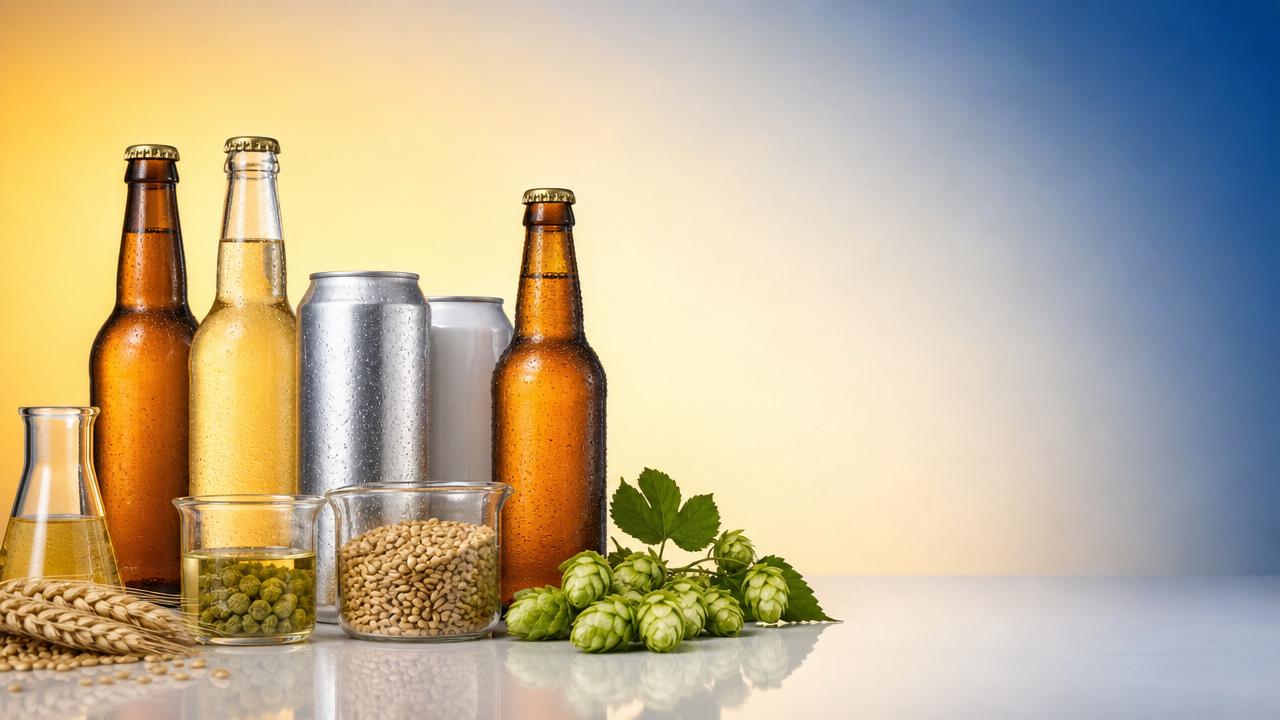
Do China beer OEM factories offer R&D support? In today’s fast-moving craft beer and beverage market, the answer is increasingly yes—and that support is becoming a key factor behind successful product launches. As consumer demand shifts toward differentiated flavors, healthier formulations, low-sugar options and visually distinctive packaging, brewing partners are expected to do far more than fill cans or bottles. Strong China beer OEM suppliers now contribute to recipe design, taste adjustment, ingredient selection, packaging development, compliance coordination and market-focused innovation. For brands exploring new beer categories, understanding what R&D support is included can reduce launch risk, shorten development cycles and improve product-market fit.
The market is moving from simple contract brewing to integrated beer development support
A few years ago, many buyers viewed OEM brewing mainly as outsourced production. That model still exists, but it is no longer enough in a crowded alcohol market. Today, when people ask, “Do China beer OEM factories offer R&D support,” they are often really asking whether a factory can help build a commercially viable beer product from concept to shelf.
This shift is especially visible in craft beer, flavored beer, sugar-free low-calorie beer and functional specialty beer. Consumers are no longer satisfied with generic products. They look for cleaner labels, better mouthfeel, local taste adaptation, seasonal flavors and stronger brand storytelling. As a result, leading Chinese OEM breweries are investing in pilot brewing systems, sensory evaluation, formulation testing and packaging compatibility studies to support product innovation rather than just production volume.
For companies such as Jinpai Beer, which focuses on craft beer R&D, production and distribution, this integrated model aligns with real market demand. A product idea may begin as a classic lager, German wheat or fruit-flavored beer, but reaching commercial success often depends on refining bitterness, aroma retention, sweetness balance, calorie profile, carbonation and packaging presentation before full-scale manufacturing begins.
Why the question “Do China beer OEM factories offer R&D support” matters more now
The growing importance of R&D support is driven by both consumption trends and operational realities. A beer product that looks attractive on paper may fail during pilot testing, transport, shelf display or repeated reorders if development work is not handled properly. This is why experienced buyers increasingly evaluate not only production capacity, but also formulation capability and market responsiveness.
In this context, the answer to “Do China beer OEM factories offer R&D support” becomes a practical decision point. It affects cost control, launch timing, repeat order quality and long-term brand consistency.
What R&D support is typically included by leading China beer OEM factories
Not every supplier offers the same depth of service, but high-level beer OEM factories usually provide a package of development functions that go well beyond brewing. When evaluating whether China beer OEM factories offer R&D support in a meaningful way, these are the services most often included:
1. Recipe development and style positioning
This includes building a formula around a target beer style, alcohol level, bitterness range, mouthfeel, color and aroma profile. It may cover classic lager, wheat beer, fruit beer, low-calorie beer or functional specialty beer. Good R&D support starts with market positioning, not just ingredient mixing.
2. Flavor optimization and sample iteration
Factories with real development strength will provide multiple sample rounds. They may adjust hop character, sweetness, acidity, fruit intensity, body or aftertaste based on feedback. This is often the most valuable part of the process because small sensory changes strongly affect acceptance in retail, bar and restaurant channels.
3. Ingredient and functional formulation guidance
For sugar-free, low-calorie or functional beer concepts, ingredient decisions are critical. R&D teams may recommend yeast strains, malt combinations, adjuncts, fruit preparations or active ingredients that support both flavor and process stability.
4. Packaging customization with technical matching
Packaging support is not limited to artwork. It can include bottle or can format selection, carton structure, filling compatibility, shelf appearance and transport considerations. If a supplier claims to offer R&D support, packaging engineering should be part of that conversation.
5. Stability, shelf-life and production adaptation
A pilot sample that tastes good in the lab may behave differently in bulk production. Better OEM factories test how a beer formula performs during filtration, carbonation, pasteurization if applicable, filling and storage. This helps prevent flavor drift or visual instability after launch.
6. Regulatory and export documentation support
For international business, development often includes label information review, ingredient documentation and support for compliance-related paperwork. This is another reason the question “Do China beer OEM factories offer R&D support” should be understood broadly rather than only as recipe design.
How these services affect product success across business channels
R&D support changes outcomes at multiple business stages. In early development, it improves the quality of concept validation. During launch preparation, it reduces packaging mistakes and specification mismatches. After commercialization, it supports repeatability and consistent consumer experience.
This matters across online and offline channels. A supermarket-oriented beer may require stronger shelf visibility and broader taste appeal, while a bar channel product may focus more on aroma complexity and draft-style drinking experience. A fruit-flavored beer sold through e-commerce may need distinctive packaging and stable flavor retention during shipping. In each case, whether China beer OEM factories offer R&D support directly influences how well the final product matches its intended sales environment.
- Better channel fit through style and packaging adjustment
- Fewer delays caused by reformulation after trial orders
- Higher probability of repeat orders through taste consistency
- Improved differentiation in competitive craft beer segments
- Stronger alignment between concept, label and consumer expectation
What to examine before choosing a beer OEM partner in China
Since not all factories define R&D support in the same way, evaluation should go beyond a simple yes-or-no question. Asking “Do China beer OEM factories offer R&D support” is only the starting point. The more important issue is how deep, structured and commercially useful that support really is.
- Sample development process: Check how many formulation rounds are available and how feedback is incorporated.
- Beer style range: Confirm experience with lager, wheat, fruit, low-calorie and specialty functional beers.
- Scale-up capability: Ask whether pilot formulas can be transferred reliably into commercial production.
- Packaging resources: Review support for cans, bottles, labels, cartons and private label presentation.
- Compliance awareness: Verify export market documentation and labeling coordination abilities.
- Communication efficiency: A strong R&D partner should translate commercial goals into technical decisions clearly and quickly.
The smarter next step is to treat OEM selection as an innovation decision
So, do China beer OEM factories offer R&D support? The best ones clearly do, and that support now plays a strategic role in successful beer brand development. In a market shaped by craft segmentation, health-oriented demand, flavor experimentation and global channel expansion, production capacity alone is no longer enough.
A capable partner should help transform ideas into commercially ready products through recipe development, flavor testing, packaging customization, technical adaptation and compliance coordination. That is especially relevant for businesses planning to launch classic lager, German wheat, sugar-free low-calorie beer, fruit-flavored beer or functional specialty beers with private label or OEM/ODM models.
If a beer project is being evaluated, the most effective approach is to begin with clear product goals: target taste, category position, packaging format, sales channel and destination market. From there, compare how potential China beer OEM partners support development—not just manufacturing. A supplier with strong R&D collaboration can shorten time to market, improve differentiation and build a stronger foundation for long-term growth. Jinpai Beer’s integrated capabilities in craft beer R&D, production, wholesale supply and customized solutions reflect the direction the industry is moving toward: beer OEM partnerships built around innovation, adaptability and market readiness.
Thank you very much for writing to us. Please leave your message and contact information, we will reply to you within 24 hours.