



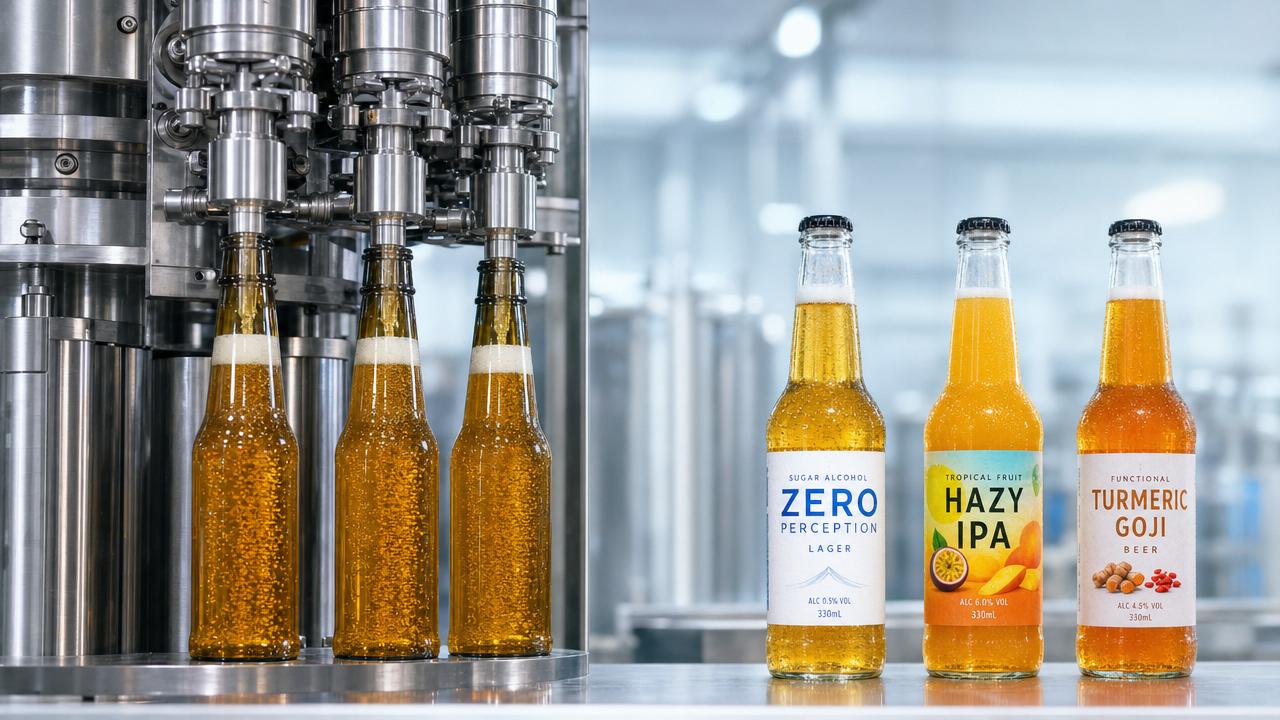
As Beer OEM partnerships surge 32% across APAC amid tightening 2026 brewing capacity, craft brewers are increasingly outsourcing production to scale efficiently—without capital-intensive expansion. For decision-makers navigating supply constraints and rising demand for diverse styles—from sugar-free lagers to functional fruit beers—strategic OEM partnerships offer speed, flexibility, and market agility. Jinpai Beer, a full-service craft beer OEM/ODM provider, empowers global brands with R&D-backed formulations, scalable production, and compliant distribution across online and offline channels. Discover how partnering with an agile, quality-certified brewer can turn capacity pressure into competitive advantage.
Why Beer OEM Is No Longer Optional—It’s Operational Necessity
APAC’s craft beer market grew 18.4% YoY in 2025—but brewing infrastructure lagged. Independent forecasts confirm over 60% of mid-tier craft breweries face ≥12-week lead times for contract fermentation slots by Q2 2026. Regulatory bottlenecks, energy cost volatility, and skilled labor shortages compound the strain.
OEM isn’t about cutting corners—it’s about reallocating capital from capex-heavy brewhouse builds to brand development, consumer insight, and channel expansion. When shelf space tightens and flavor innovation accelerates, owning the tank no longer guarantees market share.
7-Point Beer OEM Evaluation Checklist
- Verify ISO 22000 + HACCP certification—and confirm audit reports cover *all* production lines used for your batch, not just pilot facilities.
- Require full ingredient traceability down to malt lot numbers and hop harvest year—not just supplier declarations.
- Test sample batches under *your* target storage conditions (e.g., 30°C ambient for tropical markets) for 90 days to validate shelf-life claims.
- Confirm formulation IP ownership terms upfront: retain full rights to recipes, yeast strains, and sensory profiles—even if co-developed.
- Validate cold-chain handoff protocols for draft or unpasteurized products—including temperature logs at loading docks and third-party carrier SLAs.
- Require real-time production dashboards showing tank fill %, fermentation temp variance, and QC pass/fail timestamps—not just weekly PDF reports.
- Assess scalability beyond current volume: confirm minimum order quantities (MOQs) remain stable at ±40% demand swing without retooling fees or formula recalibration.
Scenario-Specific OEM Execution Notes
Sugar-free & low-calorie variants: Demand surges require precise enzymatic control—not just “light” brewing. Jinpai deploys proprietary amyloglucosidase dosing calibrated per wort gravity, verified via HPLC residual dextrose testing pre-packaging.
Fruit-flavored & hazy IPAs: Fruit puree integration demands strict pH buffering and cold-side stabilization. We conduct 72-hour centrifuge stability trials before canning to prevent haze reformation post-distribution.
Functional specialty beers (e.g., adaptogen-infused, vitamin-enhanced): Regulatory compliance varies sharply across APAC jurisdictions. Jinpai maintains country-specific dossier libraries—including Singapore’s HSA pre-market notifications and Australia’s TGA ingredient exemptions—to accelerate approvals.
Commonly Overlooked Risks in Beer OEM Agreements
Yeast bank access is rarely addressed—but critical. If your house strain crashes during fermentation, can you retrieve a certified backup within 72 hours? Jinpai maintains dual-location cryo-banks with quarterly viability validation.
Label compliance often fails at the font level. Japanese FOSHU claims require JIS X 0208 character sets; Thai FDA mandates 12-pt minimum font for allergen statements. Jinpai’s prepress team validates every regional label against live regulatory databases—not static checklists.
Carbonation consistency gets ignored until complaints mount. We calibrate CO₂ volumes per SKU using inline mass flow meters—not manual pressure gauges—and log deviations >±0.05 v/v as non-conformances.
Actionable Next Steps for Timely 2026 Launches
- Initiate technical due diligence now—even if launching Q1 2026. Allow 10–12 weeks for recipe adaptation, trial batches, and packaging line validation.
- Request Jinpai’s APAC Compliance Matrix: a live-updated spreadsheet mapping 17 regulatory requirements (labeling, additives, health claims) across China, Japan, Korea, Australia, and ASEAN nations.
- Book a free formulation workshop: bring your concept (e.g., “non-alcoholic mango-ginger sour with 5g protein”) and receive a feasibility report—including raw material lead times, COGS sensitivity analysis, and 3 packaging-ready mockups—within 5 business days.
Turn Constraints Into Catalysts
The 32% rise in Beer OEM partnerships signals a structural shift—not a temporary workaround. Capacity scarcity forces clarity: brands that master speed-to-market, regulatory precision, and sensory consistency will capture shelf space while others wait for tanks.
Jinpai Beer delivers more than fermentation slots. We provide end-to-end formulation stewardship—from lab-scale sensory panels to export-ready logistics—and maintain dedicated capacity buffers for APAC partners launching between August and December 2026.
Ready to align your 2026 product roadmap with proven OEM execution? Contact Jinpai’s APAC OEM Team today for a confidential capacity assessment and tailored launch timeline—no NDA required to begin.
Thank you very much for writing to us. Please leave your message and contact information, we will reply to you within 24 hours.