



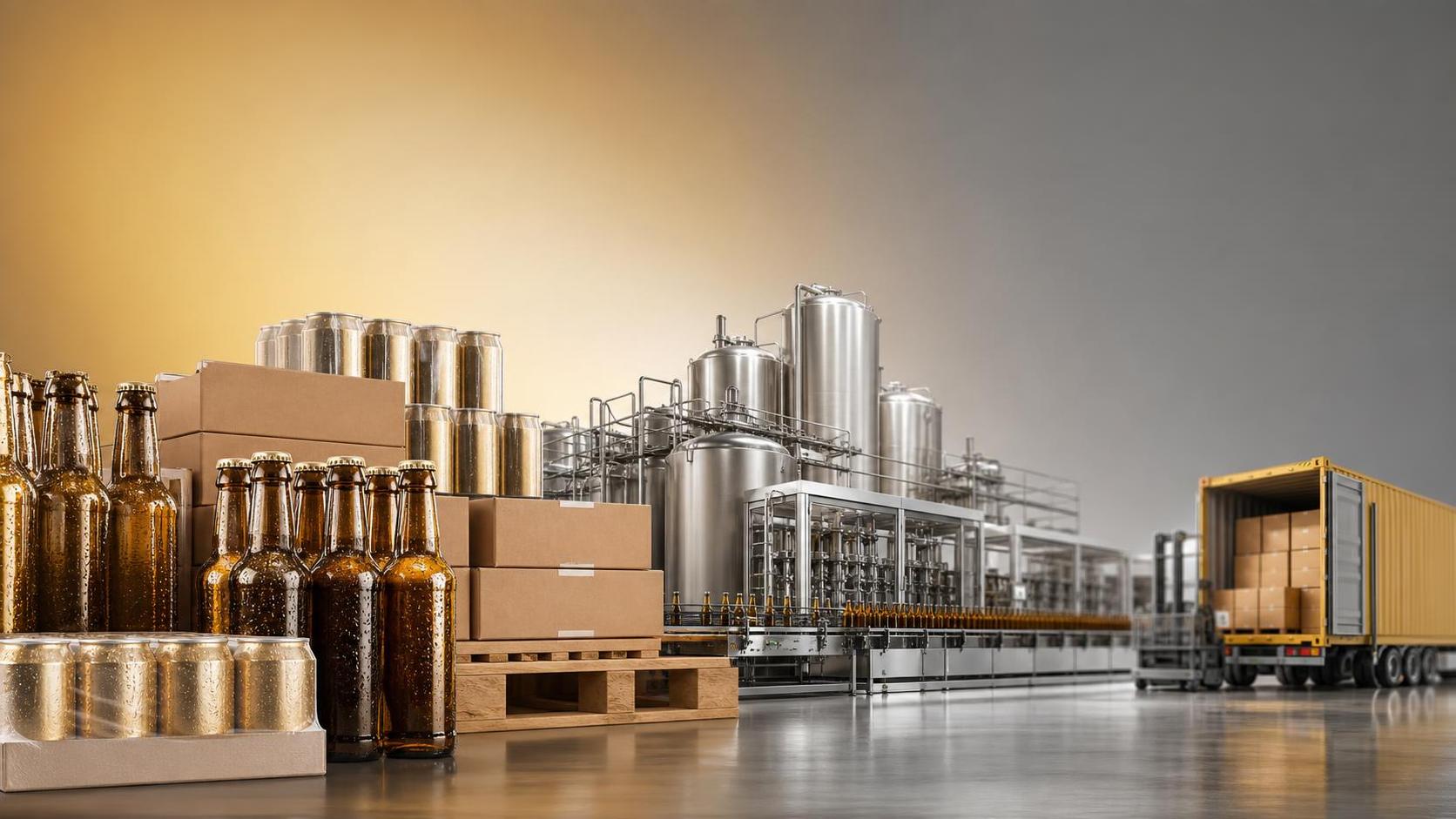
Beer OEM Cost Breakdown: Packaging, Brewing, and Logistics
Understanding Beer OEM costs is essential for financial decision-makers evaluating margins, scalability, and supplier reliability. From brewing formulas and packaging choices to shipping and compliance expenses, every detail affects total landed cost. This article breaks down the key cost components behind Beer OEM projects and shows how working with an experienced manufacturer like Jinpai Beer can support better budgeting, product positioning, and long-term profitability.
If you approve beverage sourcing budgets, the fastest way to lose margin in a Beer OEM project is to focus on quoted unit price too early. A supplier can offer an attractive ex-factory number while hiding the real cost drivers in packaging, minimum order structure, freight assumptions, and rework risk. In beer, small specification changes can move the full landed cost more than many buyers expect.
What usually helps is a working checklist: not a theory list, but the questions people ask after they have already seen projects run over budget. That is the angle here.
Start with the cost model, not the sample can
Before comparing suppliers, ask for a cost structure that separates at least these buckets: liquid production, primary packaging, secondary packaging, filling, warehousing, domestic transport, export documentation, and international shipping if quoted. If all you receive is one all-in number, finance has no way to stress-test the project.
For Beer OEM, this matters because recipe cost and packaging cost do not move together. A fruit-flavored beer in a decorated slim can may cost more because of packaging than because of the beer itself. A classic lager in a standard can might be the opposite. If your internal team compares SKUs only by alcohol content or style category, the budget model will be too rough to support a buying decision.
- Ask whether the quote is based on standard recipe parameters or a customized formula.
- Confirm whether carton design, tray type, and pallet configuration are included.
- Check whether the price assumes one SKU or a mixed production run.
- Make sure taxes, duties, and destination charges are not being casually bundled into assumptions they cannot control.
Brewing cost is shaped by formula discipline
Buyers often treat brewing as the stable part of the quote. It is not. Brewing cost depends on ingredients, process time, alcohol target, filtration approach, and whether the product is a standard line or something that interrupts normal production planning.
A straightforward lager is usually easier to budget than a specialty product. Once you move into German wheat, sugar-free low-calorie beer, fruit beer, or functional specialty beers, the production discussion becomes more technical. Not necessarily expensive in every case, but less forgiving. Additional ingredients, flavor stability work, or extra validation may affect yield and scheduling. That should be visible in the commercial conversation.
A useful approval question is simple: what exactly makes this recipe cost more than the base SKU? If the supplier cannot explain it in operational terms, the quote is probably not mature yet.
Jinpai Beer’s product range matters here because a manufacturer already working across classic and specialty segments usually has a better chance of giving realistic guidance on formula-to-cost tradeoffs. That does not replace due diligence, but it tends to reduce guesswork during product definition.
Packaging is where many budgets quietly drift
In many Beer OEM projects, packaging is the first big source of cost drift. Not because buyers ignore it, but because they approve “design direction” before confirming what that design requires in procurement and line compatibility.
Can versus bottle is only the starting point. You also need to look at can size, bottle weight, closure type, label format, shrink sleeve requirements, tray or carton style, and whether the secondary pack is shelf-ready for retail. Premium-looking details often add cost in several places at once: materials, slower line speed, higher damage exposure, and more complicated logistics.
This is where experienced buyers slow the project down for a day and save money for a year.
- Check whether artwork is printed directly, labeled, or sleeved. Each route affects lead time and minimum order logic.
- Confirm if packaging materials are standard stock or custom-made for your brand only.
- Ask what happens to leftover packaging inventory if you change design after the first run.
- Review transit strength, especially for export channels serving supermarkets, bars, and mixed retail distribution.
One common mistake: approving premium packaging for a market that buys on price and promotions. Another: chasing the cheapest bottle option and then absorbing breakage or weak shelf appearance later. Packaging has to fit the route to market, not just the mood board.
MOQ, changeover, and SKU count can distort the real unit cost
When finance asks why the first quote and the final purchase order look different, the answer is often hidden in production structure. Minimum order quantity is not just a negotiation point. It is tied to brewing batch size, filling efficiency, packaging procurement, and warehouse handling.
A single large SKU usually carries a cleaner cost base than four small variants with different flavors and artwork. That is obvious in theory, but many importers still build an opening order around too many SKUs because sales wants variety. The result is usually higher unit cost, more complexity in labeling review, and slower stock turnover. For a financial approver, SKU discipline is often the cheapest form of risk control.
Ask suppliers to quote two scenarios: the range you want, and the range you can run efficiently. The gap between those two numbers is where the real commercial conversation starts.
Freight is not one line item
Logistics cost in beer is sensitive because beverages are heavy, bulky, and packaging-dependent. Small improvements in container loading can matter more than people expect. The supplier should be able to explain pallet pattern, carton dimensions, and loading assumptions clearly enough that your team can compare scenarios.
A quote that looks competitive ex-works may become weak once inland transport, port handling, export paperwork, ocean freight, destination charges, and customs-related costs are added. Those items vary by market, Incoterm, season, and shipment size. If someone offers an oversimplified “shipping included” number without support, treat it as provisional.
For imported beer programs, the landed cost model should separate controllable supplier-side costs from buyer-side market costs. That keeps later freight volatility from being misread as manufacturing inefficiency.
- Verify the Incoterm being quoted.
- Check whether palletization is required by your channel or optional.
- Review container utilization, especially for glass packaging.
- Confirm who bears the cost of delays caused by document corrections or packaging non-compliance.
Compliance can be a budget issue long before customs
Some of the most expensive mistakes in Beer OEM are not brewing mistakes. They are specification mistakes that show up during label review, product registration, ingredient disclosure, or destination market checks. Requirements differ by country, and they should be confirmed against current local rules and import procedures【待核实】.
Do not assume a label prepared for one market can be reused elsewhere with only language edits. Alcohol declaration, allergen rules, deposit or recycling marks, importer details, and barcode setup can all affect packaging readiness. If you approve packaging before market compliance is cleared, you may end up paying for reprinting, relabeling, or delayed shipment.
The practical checklist is short:
- Who is responsible for label content approval?
- Which market documents must be prepared before mass production?
- What testing or product information may be requested by the importer or local authority【待核实】?
- What is the cost consequence if packaging has to be revised after materials are purchased?
Do not ignore working capital and timing
Financial buyers usually catch this quickly, but commercial teams sometimes do not: payment terms and production timing can change project economics almost as much as unit price. Custom packaging often requires earlier commitment. Specialty products may need longer planning windows. Export shipments can add another layer of timing exposure.
If the project depends on a launch window, a promotional season, or synchronized retail rollout, ask when packaging orders are locked, when liquid production is scheduled, and how long finished goods can be held before shipment. Beer is not a category where timing errors are harmless.
This is also where supplier stability matters. A manufacturer with integrated R&D, production, and distribution capabilities can often coordinate commercial and operational steps more cleanly than a fragmented setup. Jinpai Beer’s OEM/ODM and wholesale model is relevant here because it suggests a broader service scope across formulation, production, and channel supply, which can simplify handoffs if validated during supplier review.
Questions worth asking before you approve the PO
At the approval stage, the best questions are rarely dramatic. They are the ones that force clarity.
- Which part of this Beer OEM quote is most likely to change after artwork, compliance review, or final order mix?
- What assumptions are built into the current landed cost that are outside the supplier’s control?
- If volume doubles in the next order, which costs improve and which do not?
- What is the fallback plan if one packaging component is delayed?
- What inventory, if any, becomes obsolete if the market response is weak?
A reliable supplier should be able to answer these without turning every point into a sales pitch.
The cleanest Beer OEM decisions usually come from a simple discipline: break the quote into its real moving parts, pressure-test packaging and logistics early, and keep the first order commercially realistic. For finance teams, that means approving a project based on total delivered economics, not just factory price. For buyers evaluating manufacturers such as Jinpai Beer, the useful signal is whether the supplier can translate recipe choice, packaging structure, and export execution into a cost model you can actually manage over multiple orders.
Thank you very much for writing to us. Please leave your message and contact information, we will reply to you within 24 hours.