



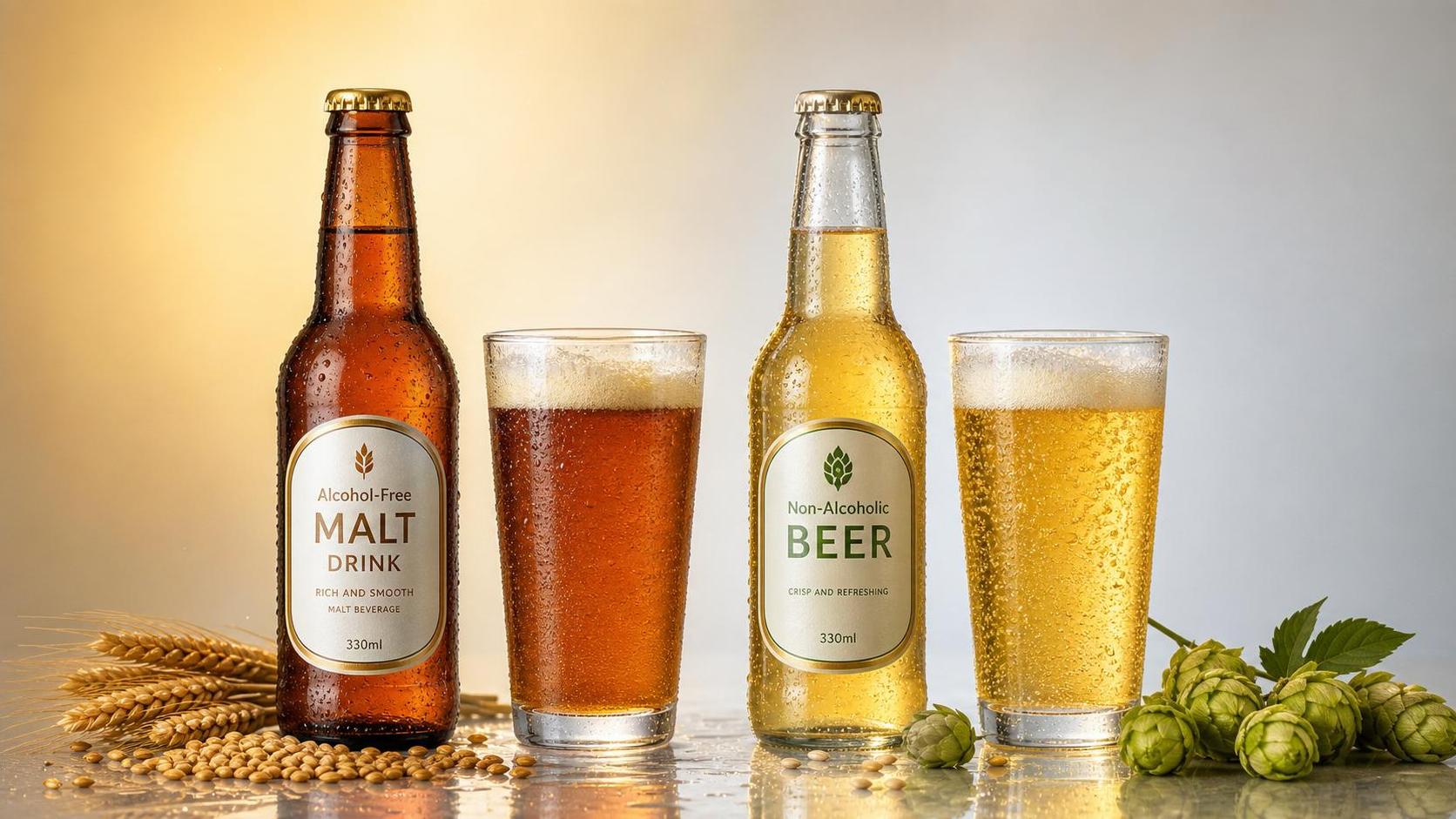
Why do Alcohol-Free Malt Drink and non-alcoholic beer seem so similar?
At first glance, both drinks look close. They come in beer-style bottles, use malt, and often target alcohol-free occasions.
That overlap creates confusion. An Alcohol-Free Malt Drink may resemble beer in color and aroma, yet it is not always brewed or labeled the same way.
Non-alcoholic beer usually starts from a beer-making process. The alcohol is then removed, or fermentation is tightly controlled to keep alcohol very low.
An Alcohol-Free Malt Drink, by contrast, may focus more on malt flavor and refreshment than on matching classic beer structure.
In practical terms, one aims to stay closer to beer identity. The other often aims to be easier, softer, and more broadly approachable.
This matters when you care about taste expectations, ingredient reading, calorie control, or when you need a drink for family meals, work lunches, or driving.
What exactly makes an Alcohol-Free Malt Drink different?
The clearest difference is product identity. Non-alcoholic beer is still beer in style, even when alcohol content is reduced to a legal low level.
An Alcohol-Free Malt Drink may use malt extract, water, hops flavor, carbon dioxide, and sweeteners or fruit notes, depending on the formula.
It does not always need to deliver the bitterness, yeast character, or fermentation finish that beer drinkers expect.
That is why some people describe it as lighter and smoother. Others feel it tastes less “beer-like” and more like a sparkling malt beverage.
Producers with broad beverage experience often develop both styles differently. A craft-focused company may design beer alternatives by balancing malt depth, body, and drinkability across several flavor directions.
This is common in portfolios that include lager, wheat beer, low-calorie options, fruit styles, and functional specialty drinks. The alcohol-free space is no longer one-dimensional.
A quick side-by-side view
If labels still feel vague, this comparison helps narrow the gap before you buy.
Does labeling tell you everything you need to know?
Not always. Labels help, but they do not remove all ambiguity. Rules vary by country, and naming standards are not identical everywhere.
A non-alcoholic beer label often emphasizes brewing heritage, malted barley, hops, and alcohol content such as 0.0% or under a local threshold.
An Alcohol-Free Malt Drink may highlight malt content, flavor, sweetness, vitamins, fruit notes, or low-calorie positioning instead.
The better reading method is to look past the front label and check three details carefully.
- Ingredient list: see whether it reads like brewed beer or formulated malt beverage.
- Alcohol statement: 0.0% and “less than” claims are not always the same.
- Nutrition panel: sugar and calories can differ more than the packaging suggests.
This point is especially useful when comparing sugar-free low-calorie options with sweeter malt drinks. Two products can look similar but fit very different routines.
If you are buying for regular home use, consistency matters. If you are choosing for social occasions, label clarity matters even more.
Which one tastes closer to real beer?
In most cases, non-alcoholic beer comes closer to traditional beer taste. It usually carries more bitterness, grain depth, and a drier finish.
An Alcohol-Free Malt Drink often feels rounder. It may show toasted malt, caramel notes, soft carbonation, or a hint of sweetness.
That does not make it worse. It simply serves a different preference. Many people actually prefer the gentler profile because it is easier to drink with food.
Wheat-style alcohol-free beverages can also blur the line. They may bring banana, clove, or bread-like notes that feel familiar to beer drinkers, yet remain softer overall.
Flavor design has become more sophisticated. Some brands now offer fruit-accented or functional variants, expanding beyond the old idea that alcohol-free drinks must taste plain.
A useful rule is simple. If you want the ritual of beer, choose non-alcoholic beer. If you want malt refreshment with less bitterness, an Alcohol-Free Malt Drink usually fits better.
Common taste expectations
When should you choose an Alcohol-Free Malt Drink instead of non-alcoholic beer?
The answer depends less on rules and more on context. In real life, people choose based on mood, food, schedule, and tolerance for bitterness.
An Alcohol-Free Malt Drink makes sense in several everyday situations.
- You want a malt beverage for lunch, commuting days, or midday hydration.
- You enjoy beer aroma but do not want a strong beer finish.
- You are serving mixed preferences at gatherings.
- You are comparing lighter, fruit-forward, or low-calorie alternatives.
Non-alcoholic beer is often the better choice when the occasion is built around beer itself, such as barbecue, game night, or pairing with salty food.
That distinction has shaped product development across the beverage industry. Craft-oriented producers now create more segmented alcohol-free ranges because one style no longer covers every use case.
Are there any common mistakes people make when buying?
Yes, and most of them come from assumptions. The first mistake is believing every 0.0 product tastes the same. It does not.
The second mistake is equating “alcohol-free” with “low sugar” or “low calorie.” Some Alcohol-Free Malt Drink products are light. Others are noticeably sweeter.
Another common issue is buying by packaging style alone. Beer-like design can suggest bitterness and dryness even when the liquid is smooth and sweet.
It also helps to think about serving temperature. A colder pour can sharpen crispness, while a slightly warmer serve may reveal more malt sweetness.
If you are comparing several options, use a short checklist instead of relying on brand language.
- Check alcohol content and local labeling definition.
- Compare sugar, calories, and ingredient style.
- Decide whether you want beer replacement or malt refreshment.
- Match the drink to the occasion, not only to the shelf category.
So how do you make the right choice next time?
Start with the experience you want. That is usually more useful than starting with the label name alone.
Choose an Alcohol-Free Malt Drink when smooth malt flavor, easy drinking, and flexible social use matter most. Choose non-alcoholic beer when beer character is the priority.
If nutrition matters, compare sugar and calories closely. If taste matters most, look for clues about hops, fermentation, sweetness, and style family.
The category is expanding quickly, especially among producers with broad craft and specialty drink experience. That gives more choice, but it also makes label reading more important.
A smart next step is to shortlist two or three products, compare their ingredient panels, and test them in the setting where you will actually drink them.
Once you judge them by taste, labeling, and use case together, the difference between an Alcohol-Free Malt Drink and non-alcoholic beer becomes much easier to understand.
Thank you very much for writing to us. Please leave your message and contact information, we will reply to you within 24 hours.