



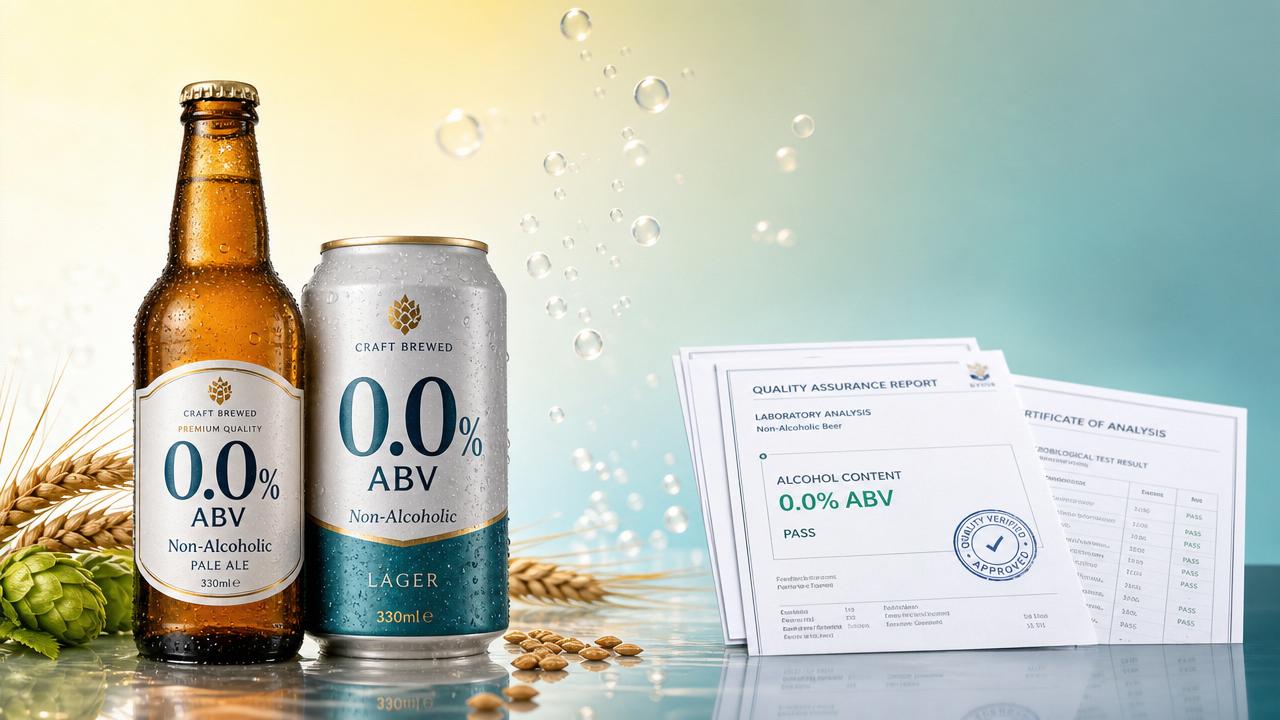
As demand for mindful drinking grows, many consumers are comparing 0.0% Alcohol beverages with non-alcoholic drinks—but the labels do not always mean the same thing. Understanding these differences is essential for buyers, retailers, and distributors who want to make informed choices and avoid confusion around alcohol content, regulations, and product claims. This guide explains the key labeling distinctions in clear terms, helping you better evaluate beer alternatives, functional beverages, and other alcohol-free options in today’s fast-evolving beverage market.
For beverage buyers, the issue is not only terminology. A small label difference can affect category placement, import review, shelf communication, and consumer trust.
In beer and craft beverage supply, 0.0% Alcohol positioning is especially important because shoppers often compare it with low-alcohol beer, alcohol-free beer, soft drinks, and functional beverages.
What 0.0% Alcohol Means on Beverage Labels
A 0.0% Alcohol label usually signals that the finished drink is marketed as containing no measurable alcohol, often displayed as 0.0% ABV.
However, alcohol measurement depends on testing method, rounding practice, and local rules. Buyers should treat 0.0% as a claim requiring documented production control.
ABV, Rounding, and Practical Testing
ABV means alcohol by volume. In commercial beverages, laboratories may test alcohol level using methods with defined detection limits and tolerances.
For procurement teams, a 0.0% Alcohol claim should be supported by batch testing, typically reviewed before shipment or during periodic quality audits.
Common internal controls may include 3 checks: raw material review, fermentation or dealcoholization monitoring, and finished product verification before release.
How 0.0% Alcohol Differs From “Low Alcohol”
Low-alcohol beverages are not the same category. They may contain alcohol below a local threshold, such as 0.5%, 1.2%, or another defined limit.
A beer with 0.3% ABV may be considered non-alcoholic in some markets, yet it cannot always be labeled as 0.0% Alcohol.
Why the Difference Matters for Retailers
Retailers need accurate shelf tags because parents, drivers, health-conscious consumers, and religiously observant buyers may interpret 0.0% Alcohol very strictly.
For bars, supermarkets, and restaurants, unclear labeling can create 2 problems: consumer complaints and incorrect menu descriptions across online and offline channels.
- Use “0.0% Alcohol” only when the product specification and test report support that statement.
- Avoid mixing “zero alcohol,” “low alcohol,” and “non-alcoholic” unless each term matches the destination market.
- Review at least 4 label areas: front panel, ingredient list, nutrition panel, and marketing claims.
Non-Alcoholic Drinks: A Broader Labeling Category
Non-alcoholic drinks include a wide range of products, from alcohol-free beer to soda, sparkling water, tea beverages, fruit drinks, and functional drinks.
The term is broader than 0.0% Alcohol. It may describe beverage type, consumer use occasion, or legal classification in a specific country.
Key Labeling Differences at a Glance
The table below summarizes common label distinctions buyers should review when comparing 0.0% Alcohol beer alternatives with general non-alcoholic drinks.
The key conclusion is simple: 0.0% Alcohol is a more specific claim, while non-alcoholic is often a wider commercial category.
Distributors should not rely on product names alone. A 5-minute label scan may prevent costly relabeling, customs delays, or customer misunderstanding.
Where Confusion Usually Starts
Confusion often appears when beer-style drinks are merchandised beside sodas, energy drinks, kombucha, or flavored sparkling beverages.
Some drinks are fermented during production, while others are blended without fermentation. This process difference may influence alcohol traces and label wording.
- Check whether fermentation is used and whether dealcoholization follows.
- Review whether alcohol content is declared as 0.0%, below 0.5%, or not applicable.
- Confirm if the drink is marketed for adults, families, sports occasions, or hospitality venues.
- Match product wording with local import, retail, and advertising requirements.
Regulatory and Market Considerations for B2B Buyers
B2B buyers should treat alcohol labeling as a compliance topic, not only a marketing decision. Rules may differ by region and channel.
A distributor selling across 3 or more countries may need separate label versions, even when the beverage formula remains unchanged.
Regional Thresholds Can Vary
Many markets define non-alcoholic beverages by thresholds. Common commercial reference points include below 0.5% ABV or a stricter 0.0% declaration.
The safest approach is to verify requirements for the destination country before finalizing carton artwork, bottle labels, and online product pages.
Label Elements to Review Before Ordering
A practical review should cover at least 6 elements: alcohol claim, ingredient list, nutrition facts, allergens, storage instructions, and responsible-use statements.
For beer alternatives, barley, wheat, hops, yeast, flavoring, and sweeteners may all influence labeling, positioning, and consumer perception.
- Alcohol claim: verify whether “0.0% Alcohol” is allowed and properly supported.
- Nutrition panel: confirm calories, sugar, carbohydrates, and serving size.
- Allergen declaration: identify malted barley, wheat, or other cereal ingredients.
- Shelf life: check typical 6–12 month targets depending on packaging and formula.
- Storage: define ambient, chilled, or temperature-controlled requirements.
Marketing Claims Need Evidence
Claims such as sugar-free, low-calorie, vitamin-added, electrolyte, or functional benefits should be reviewed separately from alcohol content.
For example, a 0.0% Alcohol fruit-flavored beer may still require clear sugar, calorie, and additive declarations for supermarket buyers.
If a label contains 2 or more strong claims, buyers should ask the supplier for specification sheets and artwork confirmation before mass production.
Choosing the Right Product Type for Your Channel
The best choice depends on where the beverage will be sold, who will drink it, and how the product is positioned on the shelf.
Jinpai Beer supports craft beer R&D, production, distribution, OEM/ODM services, wholesale supply, and customized solutions for global beverage channels.
Channel-Based Product Matching
Different retail channels require different formulations, packaging sizes, and claim strategies. The following table provides a practical selection reference.
This comparison shows that labeling is linked to sales execution. A correct claim improves shelf confidence and reduces training pressure for sales teams.
For distributors, 0.0% Alcohol products can be positioned as beer alternatives, while broader non-alcoholic drinks may serve family or daily refreshment occasions.
Product Options in Craft Beer Supply
Jinpai Beer offers classic lager, German wheat, sugar-free low-calorie beer, fruit-flavored beer, and functional specialty beer for different buyer needs.
For OEM/ODM projects, buyers can discuss 4 core specifications: flavor profile, alcohol claim, packaging format, and channel-specific label language.
Packaging and Specification Points
Common packaging options may include cans, glass bottles, and cartons. Each format affects logistics, display, chilling speed, and retail price strategy.
Before confirming an order, procurement teams should align serving size, case count, pallet plan, label artwork, and expected delivery cycle.
How to Evaluate Suppliers for 0.0% Alcohol Projects
Supplier evaluation should combine product development capability, production stability, documentation support, and communication speed. Price alone is not enough.
A strong 0.0% Alcohol project usually needs 5 coordinated steps from concept confirmation to sampling, testing, label review, and shipment planning.
A Practical 5-Step Procurement Workflow
Using a structured workflow helps information researchers compare suppliers objectively before making recommendations to purchasing or category management teams.
- Define the target claim, such as 0.0% Alcohol, alcohol-free, sugar-free, or low-calorie.
- Confirm the target market and list label requirements before artwork design begins.
- Request samples and evaluate taste, aroma, carbonation, mouthfeel, and aftertaste.
- Review product specifications, test results, shelf-life expectations, and packaging details.
- Finalize MOQ, lead time, shipping method, and reorder communication for ongoing supply.
For many customized beverage projects, sampling and artwork discussions may take 2–4 weeks depending on formula complexity and label revisions.
Wholesale supply may be faster when buyers select existing products, while OEM/ODM orders usually require additional confirmation steps.
Questions to Ask Before Cooperation
Information researchers should prepare supplier questions in advance. Clear questions reduce back-and-forth communication and reveal operational readiness.
- Can the supplier provide batch-level alcohol content documentation for 0.0% Alcohol products?
- What is the expected production lead time for existing SKUs and customized SKUs?
- How are label claims checked before bottle, can, carton, and online materials are finalized?
- What packaging formats and carton configurations are available for restaurants or supermarkets?
- How does the supplier support distributors, agents, and long-term channel partners?
Risk Control for Long-Term Supply
Risk control should include formula consistency, packaging inspection, label version management, and logistics coordination across seasonal demand cycles.
For international distribution, buyers should also review language translation, carton markings, expiry format, and destination-specific documentation before shipment.
Common Misunderstandings About 0.0% Alcohol Labels
Even experienced buyers can misunderstand 0.0% Alcohol labels when product names, claims, and legal categories are used interchangeably.
The following points are useful when training sales staff, preparing retail descriptions, or comparing supplier quotations across 2 or more markets.
Misunderstanding 1: Non-Alcoholic Always Means 0.0%
This is not always correct. Some non-alcoholic beer products may legally contain trace alcohol below a permitted threshold.
If your customers require strict zero positioning, request a product specifically designed and documented for a 0.0% Alcohol claim.
Misunderstanding 2: Label Claims Are Only for Consumers
Label claims also affect import paperwork, shelf classification, digital listings, bar menus, and distributor training materials.
A single inconsistent claim can require 1 extra artwork revision cycle, delaying launches by several days or longer.
Misunderstanding 3: Flavor Is Separate From Labeling
Flavor choices influence ingredients, additives, allergen declarations, and nutrition panels. Fruit-flavored beer alternatives may require more detailed label review.
For sugar-free low-calorie products, sweetener declarations and calorie statements should be aligned before sales materials are distributed.
Practical Advice for Information Researchers
When comparing suppliers, build a simple scorecard using 4 dimensions: label accuracy, product taste, documentation readiness, and channel support.
This approach helps decision makers compare 0.0% Alcohol beer alternatives against non-alcoholic drinks without relying only on marketing descriptions.
Building a Clearer Beverage Strategy With the Right Partner
The difference between 0.0% Alcohol and non-alcoholic drinks is more than a label detail. It shapes compliance, positioning, and buyer confidence.
For restaurants, supermarkets, bars, online stores, distributors, and agents, clear terminology supports better category planning and smoother product launches.
Jinpai Beer provides craft beer development, production, wholesale supply, OEM/ODM support, and customized beverage solutions for international cooperation.
Whether you are evaluating classic lager, German wheat, fruit-flavored beer, low-calorie options, or functional specialty beers, label clarity should come first.
If you need a 0.0% Alcohol product plan or a tailored non-alcoholic beverage supply proposal, contact us to discuss product details and customized solutions.
Thank you very much for writing to us. Please leave your message and contact information, we will reply to you within 24 hours.