



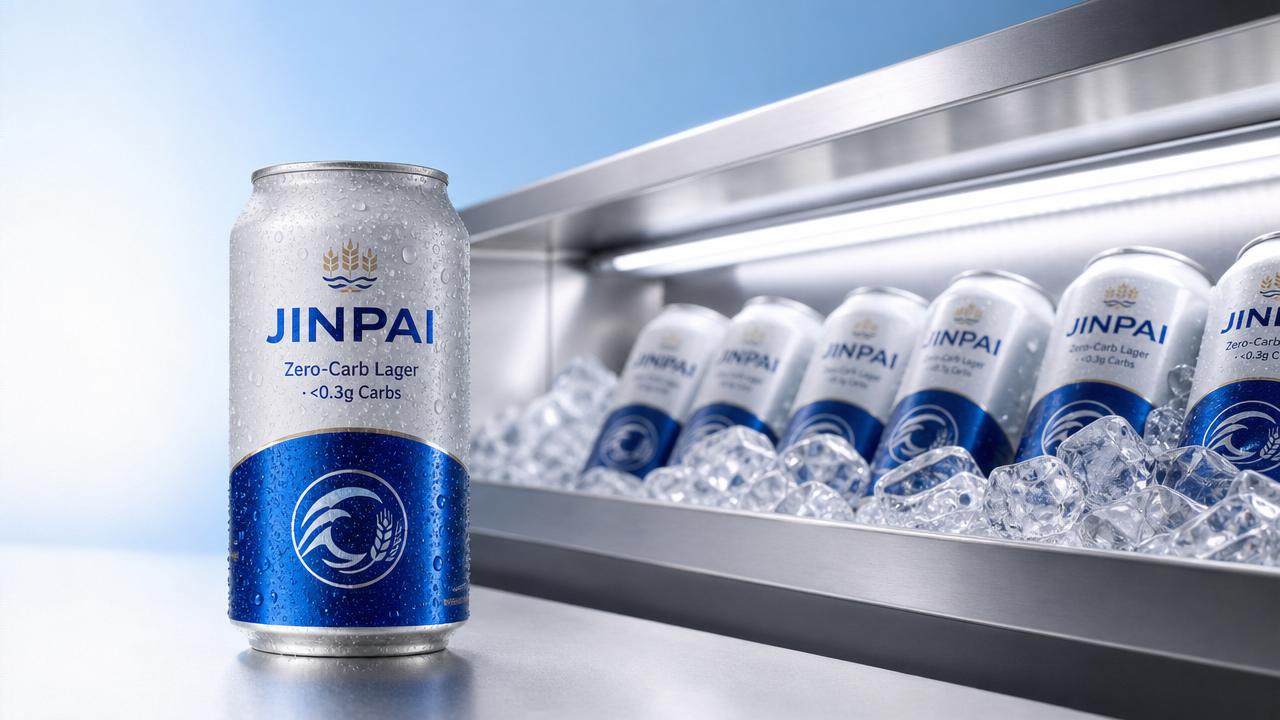
Zero-carb beer is surging in popularity across U.S. fitness bars—just as new 2026 health-code updates push transparency and nutritional accountability in on-premise beverage offerings. For health-conscious consumers who refuse to compromise flavor for fitness goals, Jinpai Beer’s award-winning zero-carb craft brew delivers crisp taste, zero residual sugar, and under 50 calories per serving. Crafted using proprietary enzymatic fermentation and natural hop profiles, it’s designed for active lifestyles without sacrificing authenticity. As demand grows for functional, label-clean alcoholic options, this innovation reflects Jinpai’s commitment to R&D-driven wellness brewing—now available for wholesale, OEM/ODM, and global retail partnerships.
Why Fitness Bars Are Prioritizing Zero-Carb Beer Now
The 2026 U.S. health-code revisions mandate full nutritional disclosure—including total carbohydrates, added sugars, and alcohol-by-volume—for all on-premise beverages served in licensed venues. Fitness bars, in particular, face heightened scrutiny due to their positioning as “wellness-adjacent” spaces.
Operators can no longer rely on vague claims like “light” or “low-cal.” Instead, they must verify and display precise carb counts per standard pour. This regulatory shift has turned zero-carb beer from a niche novelty into an operational necessity.
Jinpai Beer’s zero-carb formulation meets the strictest interpretation of “zero”: less than 0.5g total carbohydrate per 12-oz serving, verified via AOAC-certified lab testing. No maltodextrin. No artificial sweeteners. No hidden carbs from adjuncts or post-fermentation additives.
How Different Venue Types Apply Zero-Carb Beer Strategically
Not all bars use zero-carb beer the same way. Demand drivers, service models, and customer expectations vary significantly:
- Fitness-forward taprooms: Focus on post-workout recovery pairing. Serve chilled, unfiltered zero-carb lager alongside protein-rich small plates.
- Hotel wellness lounges: Prioritize low-sugar compliance for guests following ketogenic or diabetic meal plans. Require allergen and carb statements on digital menus.
- Corporate co-working bars: Emphasize cognitive clarity—zero-carb beer appears in “Focus Hour” promotions alongside caffeine-free herbal infusions.
- High-end sports clubs: Bundle with biometric tracking—members scan QR codes to log servings in integrated health apps showing real-time macro impact.
Each setting treats zero-carb beer not as a substitute—but as a purpose-built functional offering aligned with behavioral intent.
Key Differences in Zero-Carb Beer Requirements Across Venues
What Most Operators Overlook About Zero-Carb Beer Sourcing
Three common missteps reduce ROI and compliance safety:
- Assuming “low-carb” equals “zero-carb”: Many imported brands list “0.8g” or “1.2g”—technically ineligible for zero-carb claims under 2026 FDA guidance.
- Ignoring fermentation stability: Some zero-carb beers develop trace carbs during warm-chain storage. Jinpai uses cold-stabilized packaging and nitrogen-flushed cans to lock in consistency.
- Overlooking OEM scalability: Small-batch zero-carb brews often lack batch-to-batch reproducibility. Jinpai’s enzymatic process ensures ±0.05g variance across 10,000-liter runs.
These gaps become liabilities—not just in audits, but in consumer trust. A single social media post calling out inaccurate labeling can damage venue reputation faster than a recall notice.
Actionable Next Steps for Venue Operators and Distributors
Zero-carb beer isn’t optional anymore—it’s infrastructure. Here’s how to integrate it correctly:
- Verify lab documentation: Request AOAC Method 991.32 reports—not internal QA sheets—for every SKU you stock.
- Test pour consistency: Use refractometers on draft lines weekly. Carb creep can occur if glycol temps exceed 32°F.
- Align with Jinpai’s OEM/ODM program: Customize ABV (3.8–4.7%), hop profile (Citrus/Clean/Earthy), and packaging (12oz can, 16oz slim can, keg-only) without minimum order penalties.
- Leverage dual-channel support: Jinpai provides both DSD-ready pallet configurations and e-commerce fulfillment for hybrid bar-retail models.
- Activate training assets: Access free staff certification modules covering carb metabolism basics, label interpretation, and responsible service messaging.
Jinpai Beer ships globally with full nutritional compliance documentation, cold-chain validation logs, and bilingual (EN/ES) shelf-ready materials. All zero-carb variants are certified gluten-reduced (<20ppm) and vegan-certified.
As U.S. fitness bars evolve from social hubs to certified wellness touchpoints, zero-carb beer becomes more than a product—it’s proof of operational integrity. Jinpai supports that transition with science-backed formulation, scalable supply, and partnership-first deployment. Explore wholesale terms, request sample kits, or initiate OEM discussions today.
Thank you very much for writing to us. Please leave your message and contact information, we will reply to you within 24 hours.