



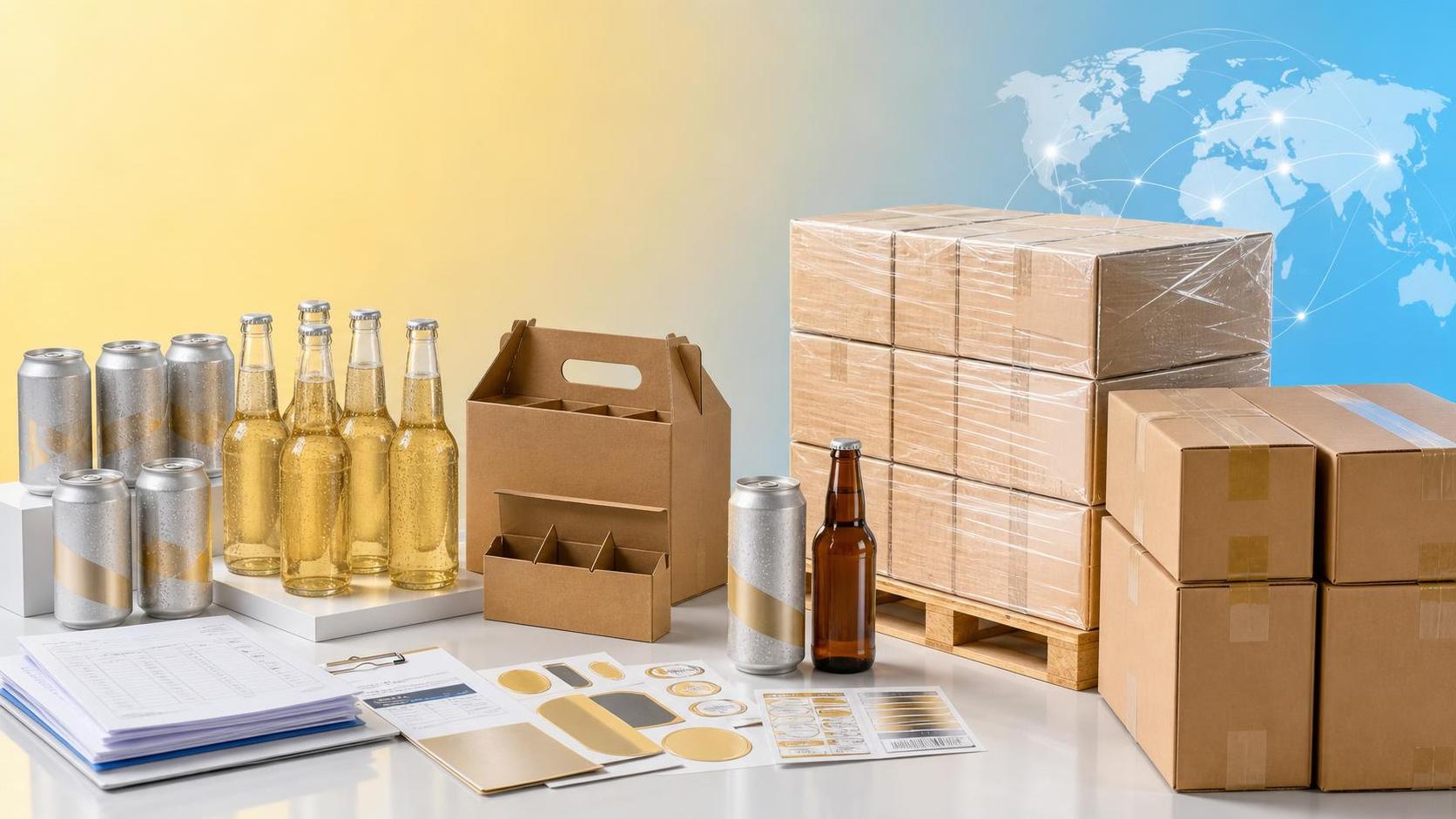
Zero-Carb Beer Sourcing: Cost Risks, MOQ, and Supply Questions
Sourcing zero-carb beer can look straightforward until the commercial details start moving under your feet. A quoted unit price may be acceptable, but then you find the MOQ is tied to one SKU, the formula needs import-market label adjustments, or the supplier can only support one packaging format at a time. For procurement teams buying for retail, bars, chain restaurants or distribution, the real job is not just finding a factory that can brew zero-carb beer. It is making sure the supplier can keep cost, taste, compliance and delivery stable after the first order.
This is the checklist I would use before putting a zero-carb beer supplier into approval. Some points are obvious. Some only become obvious after a delayed shipment, a reformulation discussion, or a distributor complaint about repeat orders tasting slightly different.
Start with the definition, not the brochure
“Zero-carb beer” is not interpreted the same way in every market. Before comparing prices, ask how the product is being defined for your destination market. Is it formulated to meet a specific local nutrition-label threshold? Is the claim supported by test reports for the final packaged product, or only by recipe calculation? That distinction matters.
For buyers, this is the first filter:
- Ask what “zero-carb” means on the supplier side.
- Request the nutrition basis used for the claim.
- Confirm whether the claim is suitable for the target country’s labeling rules【待核实】.
- Check whether the supplier can hold that claim consistently across batch production, not only for pilot samples.
A lot of sourcing trouble starts here. Buyers assume “zero-carb” is a universal specification. It is not. If your sales channel includes supermarkets or regulated import markets, vague answers at this stage are a warning sign.
Do not compare price until you lock the product scope
A cheap offer means very little if one supplier priced a plain lager-style zero-carb beer in cans and another priced a customized fruit-flavored version in glass bottles with retail cartons. Procurement teams sometimes push for quote comparison too early, then discover later that the lowest price excluded tray packing, private label support, or even freight-ready secondary packaging.
Before requesting final pricing, lock these points in writing:
Without this, you are not comparing offers. You are comparing assumptions.
MOQ is not one number
When suppliers say MOQ, ask which MOQ they mean. There is factory production MOQ, packaging-material MOQ, per-SKU MOQ, and sometimes a separate MOQ for custom cartons or printed cans. On paper, the beer itself may be flexible. In practice, packaging is what locks you in.
For a buyer testing a new zero-carb beer line, the useful questions are more specific:
- Can the first order mix multiple SKUs in one container?
- Is MOQ lower for standard packaging than for private label packaging?
- If the product uses custom lids, cans, neck labels or gift cartons, what are the separate material minimums?
- Can excess packaging material be carried over to repeat orders?
This matters most for importers and distributors who need a controlled launch. A supplier willing to support a reasonable first-order mix can save you from dead stock if one variant underperforms.
Watch the cost drivers that usually get ignored
With zero-carb beer, buyers often focus on brew cost and miss the rest. Total landed cost usually moves because of packaging choice, decoration method, order size, freight conditions and market-specific document work.
A few cost points deserve blunt discussion early:
- Slim cans, printed cans, small-batch bottles and premium cartons can move your cost faster than the liquid itself.
- Low-volume OEM runs are almost always less efficient. If the quote looks unusually low, check whether something has been left out.
- Formula customization, especially if tied to flavoring or functional positioning, may require more development rounds and more sample lead time.
- Freight sensitivity is real. Beer is heavy, and packaging format changes container economics immediately.
Ask for a cost breakdown at least by liquid, primary packaging, secondary packaging and documentation/add-on services. Not every supplier will disclose full internal detail, but serious partners usually can explain the big cost levers clearly.
Formula consistency matters more than the first sample
Procurement teams sometimes approve a supplier after a strong sample round, then get caught by batch variation later. Zero-carb beer buyers should pay close attention to repeatability, because the commercial promise is often tied to both taste and nutrition positioning.
Ask how the supplier manages batch consistency. Ask what internal controls are used during brewing and packaging. Ask whether there is a retained sample process. You do not need trade secrets; you need to know whether the factory runs with discipline.
One practical move: request confirmation of the product specification sheet, shelf-life statement, and sample-to-production alignment process before PO issue. If the answer is loose, expect disputes later.
Check whether the supplier can actually support your channel
The right supplier for a bar chain is not always the right supplier for supermarket retail or cross-border distribution. Some breweries are excellent at making good beer but weak at the administrative side of export supply. Others can handle large OEM volumes but are too rigid for trial launches or mixed channel programs.
Use channel-based questions:
- For retail: can they support barcode, shelf-ready carton requirements, and stable reorder scheduling?
- For bars and restaurants: can they supply practical pack sizes and dependable short-cycle replenishment?
- For distributors: can they handle mixed SKU loads, regional label versions and repeat documentation requests?
Jinpai Beer’s product range, from classic lager and German wheat to sugar-free low-calorie beer, fruit-flavored beer and specialty functional lines, is relevant here because wide-format suppliers usually have more room to support OEM/ODM variations and channel-specific programs. That said, buyers still need to verify actual production scheduling, not just range on a catalog.
Documentation is part of supply, not an afterthought
If you import, documentation quality will affect cost and timing just as much as brewing. Ask upfront what export documents the supplier routinely provides and which market-specific documents may require extra lead time or third-party handling. Do not assume every factory has the same experience by destination.
Keep this practical. You want to know:
- Who prepares labels for compliance review?
- Who checks ingredient declaration and nutrition presentation for the destination market【待核实 locally】?
- Can the supplier support required batch records, test records or origin-related paperwork where applicable?
A supplier that treats paperwork as “something to solve later” usually creates delays you end up paying for.
Lead time should be discussed in two parts
There is sample lead time, and there is repeat-order lead time. They are not the same, and buyers should stop treating them as one promise. A supplier may turn around a sample quickly but still need a longer window for mass production, can sourcing, carton printing or booking container space.
Ask for lead time by stage: formula confirmation, packaging approval, production slot, packaging procurement, finished goods release. This is where capacity claims get tested. If the answers stay vague, you probably do not have a reliable schedule yet.
Test the supplier’s response quality before you test the beer
A very simple procurement rule: the way a supplier handles questions before contract is usually the cleanest they will ever be. If communication is slow, technical answers are inconsistent, or quote revisions keep changing scope, treat that as operating data.
Good signs are boring signs: clear specification sheets, direct answers on MOQ, realistic timelines, visible familiarity with OEM/ODM workflow, and no hesitation when you ask about repeat-order support. Those signals are often more valuable than an aggressive opening price.
A short final screen before supplier approval
Before moving ahead with a zero-carb beer supplier, I would want yes-or-no clarity on these points:
- The zero-carb claim basis is understood and suitable for the target market【待核实】.
- The quotation matches the actual product, package and trade terms.
- MOQ is clear by SKU, packaging material and customization level.
- The supplier can explain cost movement drivers honestly.
- Production consistency and sample-to-batch control are documented.
- The factory can support your channel, not just make the product.
- Documentation and label responsibility are assigned early.
- Lead time is broken down by stage, not offered as one loose number.
That is usually enough to separate a workable supply partner from a risky one. In this category, the cheapest quote is often only cheap before the first change request, the first compliance check, or the second order. Buyers who stay disciplined on scope, MOQ structure and supply support usually make better decisions than buyers who spend all their energy negotiating unit price.
Thank you very much for writing to us. Please leave your message and contact information, we will reply to you within 24 hours.