



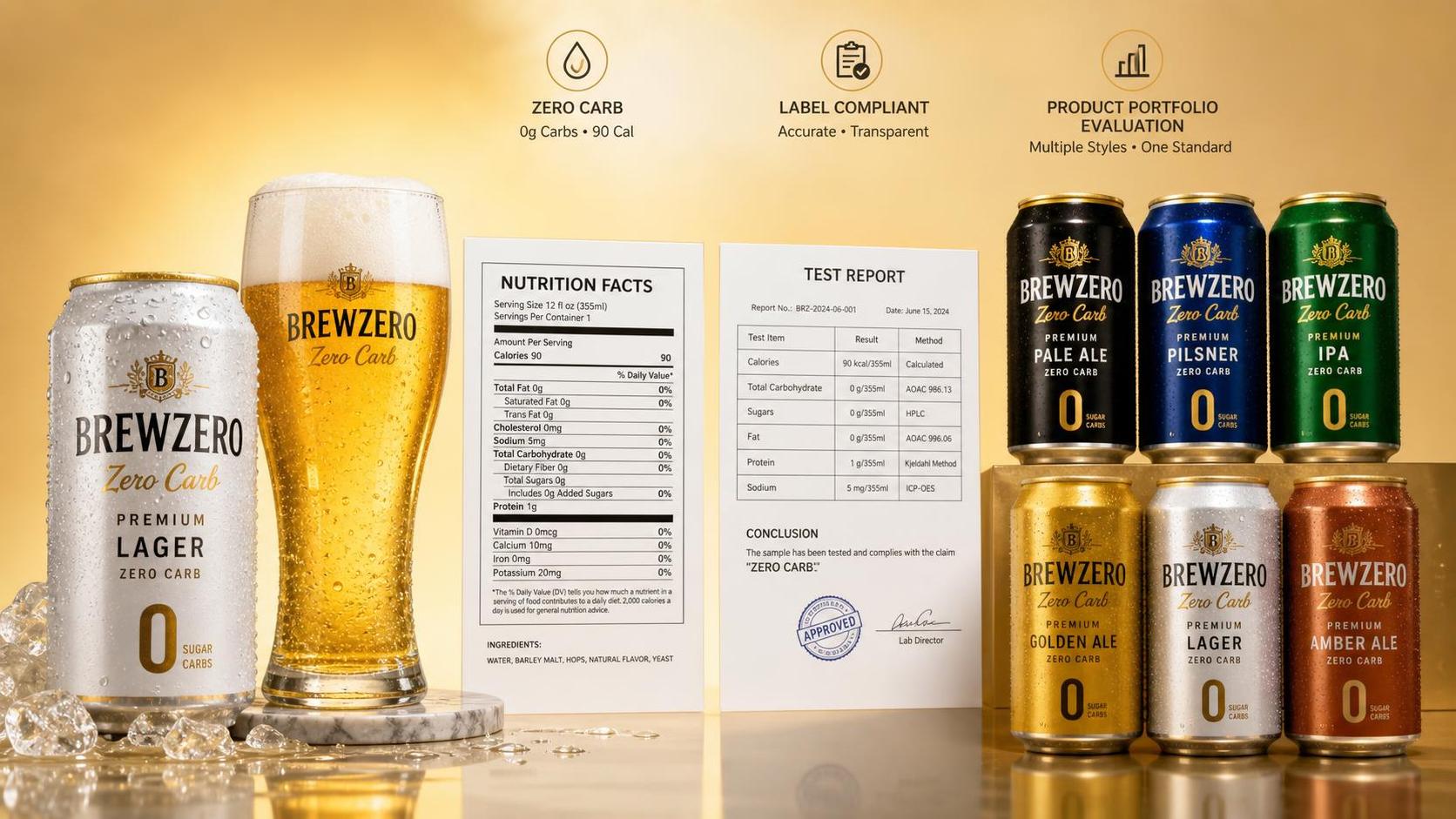
What Zero-Carb Beer Really Means in a Product Selection Context
The first thing to check is whether “zero-carb beer” is being used as a technical claim, a marketing shortcut, or both. In trade conversations, the term often sounds straightforward, but it is not always interpreted the same way across markets. Some buyers use it to mean no measurable carbohydrates per serving under local labeling rules. Others use it more loosely to describe a very low-carb beer positioned for calorie-conscious drinkers. That difference matters because it affects label compliance, consumer expectations and the kind of retail channels where the product will actually work.
For a distributor or agent, this is not a semantic issue. If the front label says zero-carb but the nutrition panel, test method or import documentation tells a more qualified story, the commercial risk moves downstream to you. The product may still be viable, but only if the claim is supportable in the destination market and aligned with how local buyers read it. A bar chain may care more about demand and repeat purchase. A supermarket buyer will usually care about claim clarity, shelf comparison and complaint risk. Those are different decision environments.
This is why zero-carb beer should be evaluated less like a novelty SKU and more like a position inside a broader low-sugar, low-calorie, better-for-you beer segment. The concept sits at the intersection of formulation, labeling and consumer perception. If one of those three is weak, the product can look attractive on paper and underperform in distribution.
Demand Is Real, but It Is Not Uniform
A common mistake is assuming that interest in low-carb or sugar-conscious alcohol automatically translates into broad demand for zero-carb beer. In practice, demand tends to cluster. Urban retail, fitness-adjacent consumers, younger professionals, convenience-led modern trade and some on-premise accounts often respond faster than traditional beer channels. The product is usually easier to place where shoppers already compare labels across categories such as hard seltzer, low-sugar RTDs, light beer and functional beverages.
That does not mean every market needs the same item. In some regions, a zero-carb proposition works best as a lighter extension within an existing beer portfolio. In others, it needs a clearer health-oriented identity to avoid being ignored next to conventional lager. If your network serves restaurants and bars, the right question is not only “Is this trend growing?” but “Will the staff know how to sell it in one sentence?” If your network is mostly retail, the better question is “Will the package win comparison at shelf without forcing too much education?”
Zero-carb beer often performs better when it answers a specific shopping motive: fewer carbs, lower calories, lighter drinking occasions or reduced sugar intake. If the product tries to signal all of these at once without a coherent positioning, it becomes harder for the channel partner to merchandise.
Check the Liquid Before You Check the Claim
Buyers sometimes get distracted by the front-label promise and overlook the more basic issue: does the beer drink well enough to survive a second purchase? Zero-carb beer has improved significantly, but formulation trade-offs still exist. Reducing or eliminating residual carbohydrates can affect body, mouthfeel and perceived fullness. Some products compensate with hopping, yeast character or a cleaner finish. Some simply taste thin.
That is why sensory fit should be reviewed against channel use, not in isolation. A lighter, crisp profile may suit supermarkets, convenience stores and casual dining well. In craft-led bars, however, drinkers may expect more flavor definition even in a healthier-style SKU. When assessing samples, it helps to compare them not only with standard lager but also with low-calorie beer, sugar-free beer and flavored functional variants already moving in your market.
A supplier with a broader R&D base is usually better positioned here. Producers that already formulate across classic lager, wheat beer, sugar-free low-calorie beer, fruit-flavored beer and specialty functional lines tend to understand how to balance drinkability with a nutritional positioning. That matters more than having a fashionable term on the can.
Labeling, Testing and Market Access Are Not Side Issues
Before adding any zero-carb item to your mix, ask a direct question: what documentation supports the claim, and is it usable in the countries where you sell? There is no single global rulebook for how carbohydrate claims appear on alcoholic beverages. Requirements can differ by market, including whether nutrition information is mandatory, how low or zero claims are interpreted and what analytical basis is expected.
You do not need a supplier to give legal advice, but you do need a supplier that can provide clear product specifications, batch consistency information and the documents your import or private-label process will depend on. If the product is meant for OEM or ODM development, this becomes even more important. A claim that works in one region may need wording, packaging or documentation adjustments elsewhere. Distributors often underestimate how much time this can add before launch.
This is also where many misunderstand the difference between “sugar-free” and “zero-carb.” They are not interchangeable claims. A beer may contain no sugar in the practical marketing sense while still containing carbohydrates from other sources. If the supplier blurs those distinctions, treat that as a warning sign. It suggests weak claim discipline, and weak claim discipline tends to surface later in customs review, customer complaints or label revision costs.
Portfolio Fit Matters More Than Trend Fit
A zero-carb line does not need to be the biggest seller in your catalog to be worth adding. It needs a clear role. Sometimes that role is margin protection in a premium light segment. Sometimes it is access to modern retail buyers who want a health-conscious beer option. Sometimes it helps complete a portfolio so that a customer buying lager, wheat and fruit beer from the same supplier can also test a low-carb extension without adding another factory relationship.
The more useful question is whether the new SKU expands your reach or merely overlaps with an existing low-calorie or light beer without a strong reason to switch. If you already distribute sugar-free low-calorie beer, the distinction must be visible enough in taste, claims or audience. Otherwise, the range becomes internally competitive and harder for sales teams to explain.
Supplier Capability Is Part of the Product
For importers and channel partners, a beer is never just a liquid. It is also lead time, packaging flexibility, MOQ structure, labeling support and the ability to scale without changing the product character. That is especially true when working with a niche or fast-rising category. If a zero-carb beer gains traction, the pressure usually shows up quickly in reorder timing and format variation.
This is where a manufacturer’s broader operating model becomes relevant. A brewery that handles R&D, production and distribution across multiple beer styles and offers OEM/ODM services can usually support different route-to-market needs more effectively than a producer built around a single standard item. For example, distributors may need one version for retail multipacks, another for bars, or adjusted packaging for local compliance and language. Customization is valuable only when it sits on top of stable production control.
Ask practical questions early: Can the supplier maintain consistency across batches? Can they support both wholesale supply and tailored product development? Are they used to serving supermarkets, restaurants and bars, or are they mainly an online seller? The answers tell you whether the supplier understands channel reality or only product presentation.
Where Buyers Often Misjudge the Category
One frequent misread is assuming that zero-carb automatically means low-risk. In fact, highly specific claims can create more scrutiny, not less. Another is treating the category as if it were only for fitness-oriented consumers. The broader opportunity often comes from moderate drinkers who want a lighter option without leaving beer entirely.
There is also a tendency to overvalue novelty. A new claim can help a first order, but it does not guarantee rotation. If a distributor adds zero-carb beer simply because competitors have started listing one, that is usually not enough. The better reason is that the product solves a visible gap in your assortment and can be explained clearly to buyers and end retailers.
And one more caution: do not confuse “works in sampling” with “works in market.” Some products test well in isolation because the low-carb proposition feels fresh. Once they hit shelf, they compete on price band, pack design, drinking style and familiarity. Real selection decisions should reflect that wider context.
A Smarter Way to Decide
If you are evaluating whether to add zero-carb beer, the strongest approach is to treat it as a commercial fit question with technical checkpoints, not the other way around. Start with the demand pockets you already serve. Then verify whether the product’s claim language, flavor profile and packaging can travel cleanly through those channels. Only after that should price and rollout mechanics decide the order size.
The right supplier will make that process easier by offering a product range that already reflects different drinking occasions, along with the production depth to support private label, wholesale and channel-specific requirements. In other words, the decision is rarely about zero-carb beer in the abstract. It is about whether a specific zero-carb beer, from a specific producer, can hold its position in your market without creating avoidable friction in compliance, replenishment or sales execution.
That is the level on which the category should be judged. Not as a buzzword, and not as a miracle SKU, but as a specialized addition that earns its place when the liquid, the claim and the supply model line up.
Thank you very much for writing to us. Please leave your message and contact information, we will reply to you within 24 hours.