



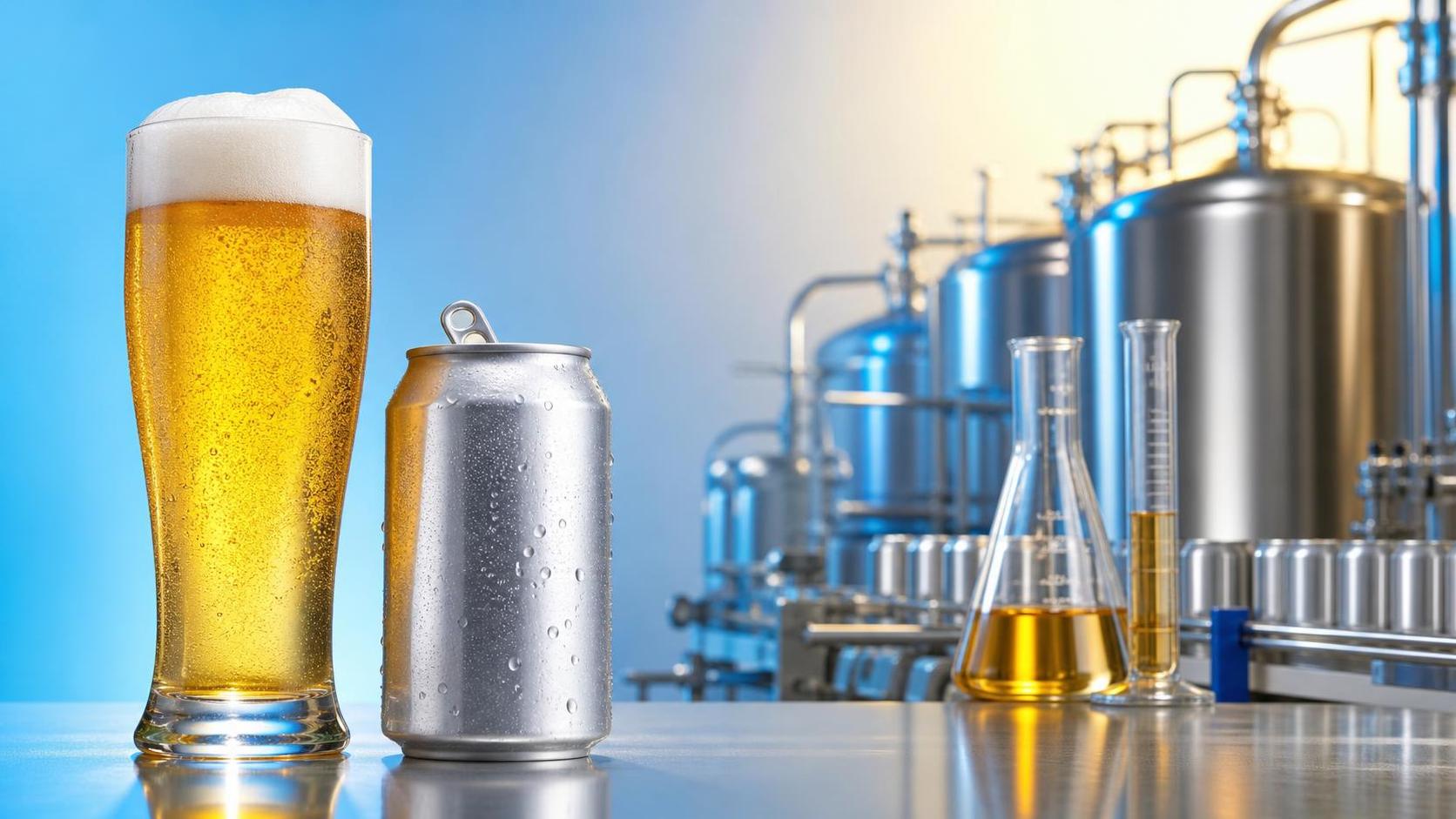
Zero-carb beer is not the same thing as “beer with no sweetness”
The first mistake in evaluating zero-carb beer is to treat carbohydrate reduction as a single-variable exercise. In practice, removing residual carbohydrates changes far more than nutrition labeling. It alters fermentability, flavor persistence, foam behavior, palate weight, and often the way a beer ages in package. A beer can meet a low- or zero-carb positioning and still fail on drinkability if attenuation is pushed without a plan for body, bitterness balance, and oxidative stability.
In brewing terms, the central issue is simple: most of the “body” consumers associate with beer comes from compounds that are either reduced, transformed, or made less perceptible when fermentable and dextrin-like fractions are driven down. That is why zero-carb beer is better understood as a process-control category rather than a branding category. The technical question is not only whether carbohydrates are minimized, but how the brewery reaches that state without producing a thin, harsh, or unstable result.
Where the style is really decided: fermentability before fermentation
The sensory profile of zero-carb beer is largely shaped before yeast has finished its work. Malt selection matters, but mash design matters more. Brewers aiming for very high attenuation usually build a wort with a higher proportion of fermentable sugars and a lower proportion of unfermentable dextrins. That can be done through mash temperature strategy, mash time, grist composition, and in many cases exogenous enzyme use.
This is where technical assessment should become specific. A beer described as zero-carb may have achieved its specification through aggressive enzymatic conversion, through broader formulation changes, or through a combination of both. Those paths do not behave the same way in production. Enzymes such as amyloglucosidase are commonly associated with very high attenuation because they can break down dextrins into fermentable sugars that yeast can consume. The result is efficient carbohydrate reduction, but also a strong tendency toward dryness and lower palate density.
That is not automatically a flaw. In a clean lager-type product, a crisp finish may be desirable. The issue is whether the brewery has designed the beer around that outcome. If bitterness, mineral profile, alcohol level, and carbonation are not adjusted accordingly, the product can feel hollow rather than refreshing.
Why zero-carb beer often tastes “thinner” even when alcohol is normal
Technical evaluators often hear a commercial claim that modern process optimization has “solved” thinness. Sometimes it has been managed well; often it has only been masked. Body in beer is not one component. It is a sensory impression created by residual extract, glycerol, proteins, carbonation texture, alcohol warmth, hop load, and even serving temperature. When carbohydrates are reduced to very low levels, several of those cues become more exposed.
This is why mouthfeel compensation matters. Some breweries adjust protein contribution through raw material choice. Some rely on process tuning and carbonation structure. Others use flavor architecture: a softer hop profile, restrained bitterness, or fruit/flavor additions in specialty variants can shift perception away from the absence of residual extract. None of these approaches is universally correct. The right question is whether the compensation method is compatible with the product’s positioning and shelf-life target.
A useful evaluation principle is to separate “dry” from “watery.” Dryness can be intentional and style-consistent. Watery character usually signals that the brewery reduced carbohydrates faster than it rebuilt balance.
Flavor stability becomes harder, not easier
There is a common assumption that fewer residual carbohydrates automatically make a beer cleaner and more stable. The reality is less convenient. Highly attenuated beers can be very sensitive to small production deviations because there is less flavor cushion. Minor oxidation, fermentation stress, sulfur imbalance, or package oxygen pickup may become more obvious in a leaner matrix.
In zero-carb beer, stability should be judged on two levels. One is microbiological and physical stability, which follows the normal discipline of sanitary design, filtration or pasteurization strategy where applicable, and package integrity. The other is sensory stability. A beer that starts crisp but turns papery, sulfury, overly bitter, or sharply alcoholic after storage was not truly stable in a commercial sense, even if it remained technically safe.
Packaging conditions therefore carry unusual weight. Dissolved oxygen control, fill consistency, light protection, and cold-chain assumptions all matter, but they matter more when the beer has little residual softness to hide defects. For technical buyers assessing OEM/ODM capability, this is often the dividing line between a promising pilot sample and a product that can survive real distribution.
What to look for when reviewing a production approach
A competent zero-carb beer program usually shows control in a few areas at the same time. Looking at one metric in isolation is rarely enough.
This is also why sensory review should include warm and cold tasting, fresh and aged comparison where possible, and more than one package format if the beer will be sold in can and bottle. A zero-carb beer that performs well only immediately after packaging has not yet answered the real commercial question.
The labeling question is more technical than it appears
“Zero-carb beer” is a market-facing phrase, but the acceptability of that phrase depends on destination market rules, analytical methods, and nutrition-label thresholds. There is no single global definition that can be assumed across all regions. For that reason, technical review should not stop at formulation. It must include verification of how carbohydrates are measured, what unit is declared, and whether “zero,” “no sugar,” “sugar-free,” or “low-carb” are treated differently under the applicable regulation.
This matters especially in export, private label, and customized production. A beer that is operationally low in residual carbohydrate may still require a different front-label claim depending on local rules. Any brewery offering OEM/ODM solutions in this segment needs to align product design, lab testing, and claims review from the start rather than treating compliance as a final packaging step.
Not every zero-carb beer should be built like a light lager
Another weak assumption is that all beers in this category should converge on the same sensory model. In reality, the production logic changes with style direction. A clean, classic low-calorie lager usually depends on precision, restraint, and defect control. A fruit-flavored or functional specialty beer may use adjunct flavor systems to reshape the consumer experience, but it still needs a stable base beer underneath. Wheat-derived styles bring another challenge, because the style expectation includes texture and fullness that carbohydrate reduction can undermine.
That is where manufacturing experience becomes relevant. A brewery working across classic lager, German wheat, sugar-free low-calorie beer, fruit-flavored beer, and functional specialty beers is usually better positioned to judge when a process can be transferred and when it must be redesigned. Zero-carb beer is not one formula repeated across labels; it is a control philosophy applied differently depending on the sensory target and route to market.
A better way to judge readiness
If the goal is technical evaluation rather than trend chasing, three questions cut through most of the noise. Can the brewery repeatedly achieve the intended carbohydrate level without batch drift? Has the loss of residual extract been compensated in a way that matches the target style? And does the beer remain commercially convincing after packaging, transport, and normal shelf exposure?
When those questions are answered with process evidence, sensory consistency, and claim discipline, zero-carb beer stops being a novelty claim and becomes a credible product category. When they are not, the beer may still test well on one specification sheet while underperforming where it matters most: in repeat production and in the glass.
Thank you very much for writing to us. Please leave your message and contact information, we will reply to you within 24 hours.