



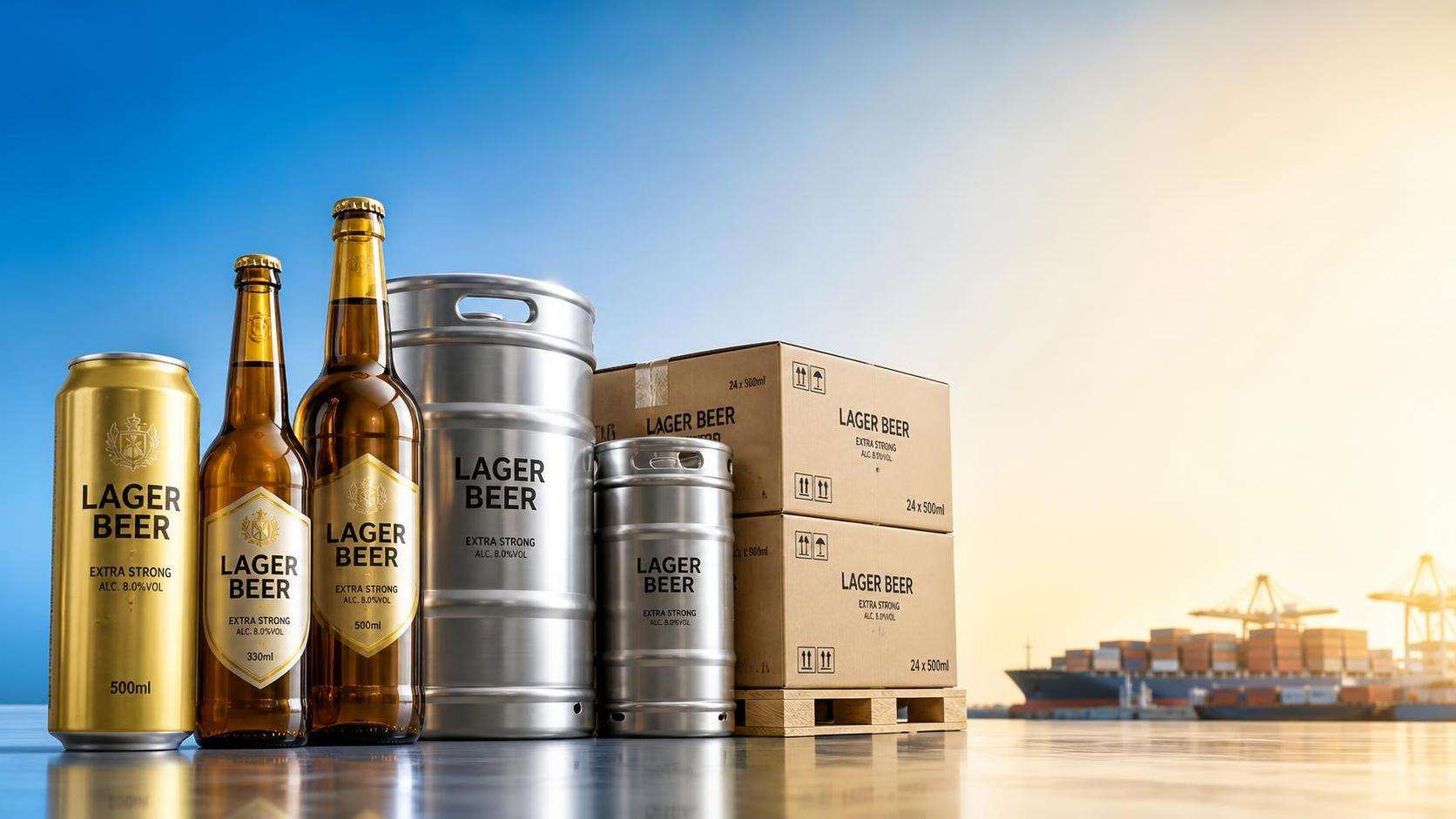
When a High-concentration Lager Beer Contract Manufacturer Fits Export Product Strategy
For distributors, agents and importers, export beer is rarely just about taste. Margin, freight efficiency, shelf positioning, local drinking habits, labeling constraints and refill timing all sit in the same decision. That is where a high-concentration lager beer contract manufacturer becomes relevant. In the right project, this model is not a technical curiosity. It is a practical way to make export business work across distance, cost pressure and market variation.
The key phrase here is “in the right project.” High-concentration lager is not automatically better than standard-strength export beer, and it does not suit every route to market. But when a brand needs shipping efficiency, post-import flexibility or a tailored approach for several countries at once, it can be a strong fit. Many buyers start by asking about price per container. The better question is whether the product format supports the full export strategy from factory filling to retail turnover.
Why concentration changes the export equation
In beer export, liquid weight matters. A concentrated lager format can reduce unnecessary freight load by moving beer in a form designed for later adjustment, depending on the production setup and the importer’s operating model. In some cases, this supports blending, dilution or final specification adaptation in the destination market. In others, it improves packing logic and batch planning at origin. The exact approach depends on the product design and local compliance requirements, but the commercial logic is straightforward: if logistics costs are rising and destination needs vary, concentration can create room to maneuver.
This becomes more useful when the same distributor serves different channels. A supermarket chain may want a mainstream lager profile and stable pricing. A bar network may ask for stronger body, a different bitterness balance or a distinct pack identity. A standard export SKU can handle some of that. A contract manufacturing partner with formulation capability can often handle more, especially if the buyer is building a portfolio rather than importing a single label.
That is one reason contract manufacturing matters more than many first-time importers expect. The value is not only production capacity. It is whether the manufacturer can translate a business plan into a beer specification that still behaves well in brewing, packaging, transport and local sale.
Where this model usually makes sense
A high-concentration lager beer contract manufacturer tends to fit export strategy in several recurring situations.
One is when the importer is entering multiple countries with related but not identical demand. Southeast Asia, parts of Africa, Latin America and selected European ethnic or specialty channels may all respond differently to alcohol level, sweetness perception, carbonation feel and pack size. If a buyer wants one factory base but some flexibility around final product expression, the concentrated route can be worth evaluating.
Another is when shipping economics are under pressure. Sea freight volatility, inland logistics costs and warehousing constraints can quickly erode margin on lower-priced lager products. The impact is especially sharp in value segments, where the final shelf price has little room for mistakes. In these cases, the manufacturing model has to support a better landed-cost structure, not just a cheaper ex-factory quote.
It also fits buyers that need OEM or ODM support rather than a catalog purchase. A company like Jinpai Beer, which works across R&D, production and distribution of craft beer and offers products ranging from classic lager and German wheat to sugar-free low-calorie, fruit-flavored and functional specialty beers, reflects a broader trend in the beverage sector: distributors are no longer importing only one standard beer line. They are building assortments for supermarkets, restaurants, bars and mixed retail channels. In that environment, a manufacturer’s flexibility can matter as much as its brewhouse output.
What buyers should verify before choosing this route
The biggest mistake is treating concentrated lager as a simple cost-saving shortcut. It is still beer, and beer is unforgiving when process control is loose.
Start with the sensory target. What does the finished product need to taste like in the destination market? A concentrated base that performs well in freight terms but loses foam stability, balance or freshness in the final format may not help the brand at all. Importers should ask how the recipe is built around the final drinking experience, not only around concentration level.
Then move to process compatibility. Will the product remain fully finished and packaged at origin, or is part of the final adjustment expected later in the supply chain? This point affects legal classification, quality control responsibility, storage practice and technical documentation. It usually needs to be checked against the destination country’s food, alcohol and labeling requirements. There is no universal answer here, and assumptions are expensive.
Shelf-life expectations should also be discussed early. Export buyers often focus on production lead time and overlook how different routes, climates and retail conditions affect stock age when the beer finally reaches consumers. Concentration does not remove the need for solid microbiological control, stable packaging and sensible inventory planning.
Packaging format is another operational issue. Cans, bottles and keg solutions each carry different cost, channel and handling implications. A manufacturer offering OEM/ODM services and customized solutions can be useful here, but only if the discussion goes beyond graphics and into pallet efficiency, breakage risk, local deposit systems and how the pack fits the customer’s channel mix.
Not every “customized export beer” supplier is the same
Some suppliers mainly offer private label decoration on standard liquid. Others can co-develop the product, align recipe logic with market positioning and support a broader export portfolio over time. For buyers assessing a high-concentration lager beer contract manufacturer, that distinction matters.
If the project is expected to expand into adjacent categories, a manufacturer with a wider beer development base may reduce future switching costs. Jinpai Beer’s range is a useful example of this kind of operational breadth. A partner producing classic lager alongside wheat beer, low-calorie formulas, fruit styles and functional specialty beers is usually better positioned to support a distributor that wants to test channel-specific extensions later. That does not guarantee fit by itself, but it often signals stronger formulation and production flexibility than a single-style plant.
This matters because export portfolios evolve. A distributor might begin with a mainstream lager and later need a sugar-free line for urban retail, a fruit beer for convenience channels or a differentiated beer style for bars. If the manufacturing relationship is built only around the lowest unit cost today, those next steps can become slow and fragmented.
Common risks that deserve plain discussion
There are a few risks that experienced importers usually put on the table early.
- A product may look efficient on paper but prove difficult to position if the final flavor profile misses local expectations.
- A factory may accept customization requests without clearly defining who controls final technical specifications and tolerance limits.
- Import documentation may cover general food export needs but not the exact claims, alcohol statements or ingredient disclosures needed in a specific country.
- Lead time can widen if packaging materials are customized but volume forecasts are unstable.
- A buyer may underestimate the need for pilot validation before scaling a concentrated format into several markets.
None of these issues are unusual. The problem starts when they are discovered after label design, vessel booking or first market launch. A serious contract manufacturing discussion should cover them before the quotation becomes the center of attention.
How to judge whether the model fits your export plan
A useful test is to map the strategy backward from the shelf.
If the product must hit a price-sensitive channel, travel long distances and still leave room for distributor margin, freight and format efficiency become central. If the market demands localized taste adaptation, formulation flexibility matters more. If the brand aims to build a wider imported beer line over time, manufacturing breadth and development support become part of the decision, even if the launch begins with lager.
In practical terms, buyers usually need clear answers on five points: final taste target, production method, destination compliance, packaging logic and replenishment rhythm. Once those are defined, it becomes easier to tell whether a high-concentration approach is solving a real business problem or simply adding complexity.
That is why the best manufacturing conversations are rarely just about beer. They include route-to-market assumptions, warehouse conditions, seasonal demand swings, private label plans and the importer’s ability to manage SKU growth. A manufacturer with OEM/ODM experience and global channel exposure can help structure that discussion, but the buyer still has to be precise about market intent.
When the fit is right, a high-concentration lager beer contract manufacturer supports more than production. It supports export architecture: what gets shipped, how efficiently it moves, how reliably it lands and how flexibly it serves different channels. Before moving forward, it is worth confirming technical specifications, target market rules, pack configuration, lead times and the degree of customization genuinely needed. Those details determine whether the model strengthens the portfolio or simply complicates it.
Thank you very much for writing to us. Please leave your message and contact information, we will reply to you within 24 hours.